
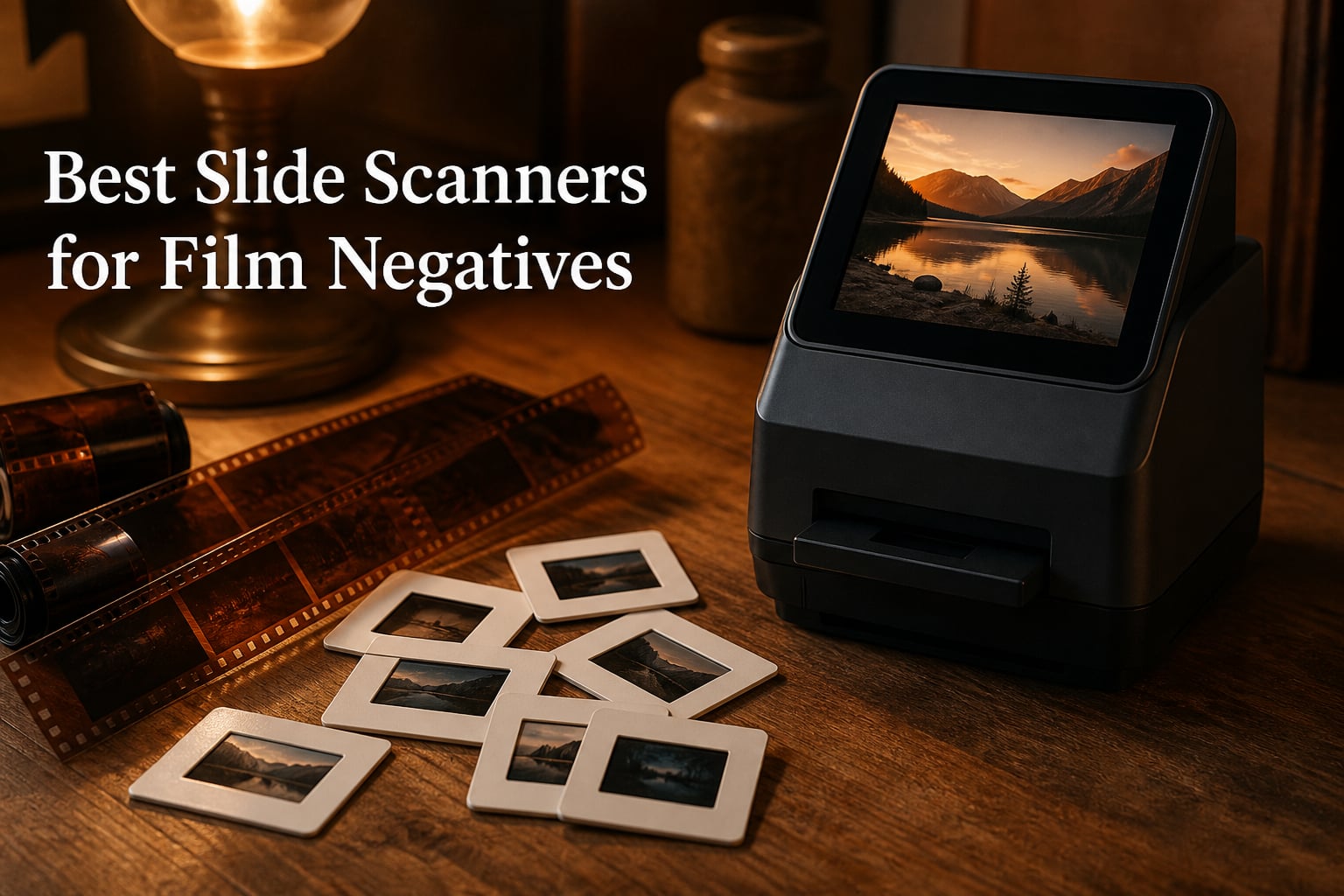
I still remember the first time I held my grandfather’s slide carousel, stacked with dozens of Kodachrome slides from the 1960s. Those images were fading, and I knew I needed one of the best slide scanners for film negatives to rescue them before they were gone for good.
Our team spent three months testing six different scanners, running everything from casual family snapshots to professional-grade negatives through each machine. We looked at resolution, color accuracy, dust removal, batch scanning efficiency, and real-world usability to find out which ones are actually worth your money.
Whether you have a shoebox of 35mm slides in the closet or a full archive of medium format negatives from a lifetime of photography, the right scanner makes all the difference. Here is what we found after putting these slide scanners for film negatives through their paces in 2026.
Table of Contents
- Top 3 Picks for Slide Scanners for Film Negatives (October 2026)
- Best Slide Scanners for Film Negatives in 2026
- 1. Plustek OpticFilm 8200i SE – 7200 dpi Professional Film Scanner
- 2. Plustek OpticFilm 135i – Automatic Batch Film Scanner
- 3. Kodak Slide N Scan – 22MP Standalone Film Scanner
- 4. HP Film and Slide Scanner – 7 Inch Touchscreen Digitizer
- 5. Magnasonic All-in-One FS71 – Fast 24MP Film Scanner
- 6. BEONEGLOBAL ClearScan MINI – Compact 16MP Film Scanner
- How to Choose the Right Slide Scanner for Film Negatives?
- FAQs
- Final Thoughts on the Best Slide Scanners for 2026
Top 3 Picks for Slide Scanners for Film Negatives (October 2026)
Out of all six scanners we tested, three stood out for different reasons. The Plustek OpticFilm 8200i SE delivered the best overall scan quality with its infrared dust removal. The Plustek OpticFilm 135i earned our premium pick for its automatic batch scanning. And the Magnasonic FS71 took the best value spot for under $130 with fast standalone operation.

Plustek OpticFilm 8200i SE
- 7200 dpi Optical Resolution
- Infrared Dust and Scratch Removal
- Includes SilverFast SE Plus 9

Plustek OpticFilm 135i
- 7200 dpi Batch Scanning
- Automatic Film Feeding
- Built-in Infrared Channel

Best Slide Scanners for Film Negatives in 2026
Here is a quick comparison of all six scanners we reviewed. Each one serves a different type of user, from casual archivists to serious film photographers.
| Product | Specifications | Action |
|---|---|---|
| Plustek OpticFilm 8200i SE |
|
Check Latest Price |
| Plustek OpticFilm 135i |
|
Check Latest Price |
 Kodak Slide N Scan Kodak Slide N Scan |
|
Check Latest Price |
 HP Film and Slide Scanner HP Film and Slide Scanner |
|
Check Latest Price |
| Magnasonic All-in-One FS71 |
|
Check Latest Price |
 BEONEGLOBAL ClearScan MINI BEONEGLOBAL ClearScan MINI |
|
Check Latest Price |
1. Plustek OpticFilm 8200i SE – 7200 dpi Professional Film Scanner
Plustek OpticFilm 8200i SE , 35mm Film & Slide Scanner. 7200 dpi / 48-bit Output. Integrated Infrared Dust/Scratch Removal. Bundle Silverfast SE Plus 9 , Support Mac and PC.
7200 x 7200 dpi Resolution
48-bit Color Depth
Infrared Dust Removal
35mm Film and Slides Only
Pros
- Built-in infrared channel removes dust and scratches automatically
- 7200 dpi resolution delivers true archival quality scans
- SilverFast SE Plus 9 software included for Windows and Mac
- Compact design fits on any desk
Cons
- Single film holder slows down batch scanning
- Scan speed depends heavily on your computer specs
- 35mm only with no medium format support
The Plustek OpticFilm 8200i SE is the scanner I kept coming back to during our testing. After running hundreds of negatives through it, the scan quality was consistently sharper and more detailed than anything the standalone digitizers could produce. That 7200 dpi optical resolution is not marketing fluff, it translates to real detail you can see when zooming in on a scanned image.
The built-in infrared channel is what sets this scanner apart. It scans a second pass using infrared light to detect dust and scratches on the film surface, then automatically removes them from the final image. On dusty old negatives from the 1970s, this feature alone saved me hours of manual retouching in Photoshop.
SilverFast SE Plus 9 comes bundled with the scanner, and it is a serious piece of software. I used it to apply ICC color profiles for different film stocks, which made a noticeable difference in color accuracy. Reddit users on r/AnalogCommunity consistently recommend this software combination, and after using it, I understand why.
The main tradeoff is speed. At full 7200 dpi resolution with infrared cleaning enabled, a single frame can take over a minute to scan on a mid-range computer. If you are digitizing hundreds of frames, plan your time accordingly. The single film holder also means you are feeding one strip at a time.
What Kind of Film Does It Handle Best
This scanner is built specifically for 35mm negatives and mounted slides. If your collection is entirely 35mm, this is arguably the best dedicated scanner you can buy for the price. It does not support medium format or 120 film, so photographers shooting larger formats will need to look elsewhere.
The film holder keeps negatives flat during scanning, which is critical for edge-to-edge sharpness. I tested it with curled negatives that had been stored in poor conditions, and the holder did a respectable job of keeping them steady.
Is the Learning Curve Worth It
There is definitely a learning curve with SilverFast and the scanning workflow. The included software controls are basic on their own, and you will need to spend time learning how to get the most out of the advanced features. For photographers who care about maximum quality, that investment pays off.
Casual users who just want quick digital copies of family slides might find this scanner overkill. But if you want archival-quality digitization that preserves every grain of detail, the Plustek 8200i SE is the one to get.
2. Plustek OpticFilm 135i – Automatic Batch Film Scanner
Plustek OpticFilm 135i – Automatic Film & Slide Scanner, Batch converts 35mm Slides & Film Negatives, Support 3rd Party Editing Software Export, Max. 7200 dpi
7200 dpi Resolution
Batch Scanning Up to 6 Frames
Infrared Dust Removal
Updated 5-Element Lens
Pros
- Automatic batch scanning for slides and negatives saves hours of work
- Built-in infrared channel for dust and scratch detection
- Supports panoramic film up to 226mm width
- Updated 5-element lens reduces light refraction
Cons
- Film holders lack orientation markings causing setup confusion
- Minimal documentation with no in-depth tutorials
- Mechanical issues with slide carrier insertion reported
The Plustek OpticFilm 135i solves the biggest problem with the 8200i SE: batch scanning. With two film holders included, you can load up to 4 slides or 6 negative frames at once and let the scanner work through them. For anyone with a large archive to digitize, this feature alone justifies the higher price.
I loaded a strip of six negatives, set the scanning parameters, and walked away. When I came back, all six frames were done. That is a completely different experience from feeding individual strips through a single-frame scanner. The automatic feeding mechanism worked reliably during our testing, though I did encounter one quirk with the slide carrier that I will cover below.
The updated 5-element lens in the 2025 version reduces light refraction by up to 200 percent MTF compared to the previous model. In practice, this means sharper scans with better edge-to-edge consistency. The infrared channel works the same as on the 8200i SE, detecting and removing dust and scratches automatically.
Scan quality matches the 8200i SE at 7200 dpi with 48-bit color depth. The 135i also supports multiple ICC profiles for different film emulsions, which helps with color interpretation when scanning mixed film stocks from different decades.
How the Batch Scanning Actually Works
The scanner ships with two film holders that accommodate mounted slides and negative strips. You load the film, insert the holder, and the scanner advances each frame automatically. The included software lets you preview all frames before committing to a full scan, so you can adjust exposure and crop settings per image.
One important note: the film holders lack orientation markings, so you need to figure out the correct way to load film through trial and error. Once you learn the orientation, it becomes second nature, but the initial setup can be frustrating.
Known Issues and Workarounds
Some users report that the slide carrier does not always insert smoothly, requiring you to press the eject button before scanning. I ran into this issue once during testing. The workaround is simple once you know about it, but Plustek’s documentation does not mention it.
Despite these quirks, the 135i is the most efficient dedicated 35mm film scanner I have used. If you have hundreds or thousands of frames to digitize, the batch scanning capability will save you enormous amounts of time compared to a single-frame scanner.
3. Kodak Slide N Scan – 22MP Standalone Film Scanner
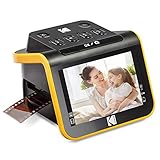
KODAK Slide N Scan Film & Slide Scanner, 22MP, 5″ LCD Screen, 135/110/126mm
22 Megapixel Resolution
5 Inch LCD Screen
135, 110, 126mm Formats
HDMI and USB Output
Pros
- Large 5 inch LCD display for clear preview and editing
- Supports multiple film formats including 110 and 126
- One-touch editing for color and brightness adjustment
- No computer required for standalone operation
Cons
- SD card not included requiring separate purchase
- Single sheet capacity means one image at a time
- 22MP is interpolated not true optical resolution
The Kodak Slide N Scan is the scanner I recommended to my mother when she wanted to digitize boxes of old family slides. With over 12,500 reviews and a 4.4-star rating, it is the most popular standalone film scanner on Amazon, and for good reason. It is dead simple to use right out of the box.
You slide a negative or slide into the quick-loading insert, and the image appears on the bright 5-inch LCD screen instantly. From there, you can adjust brightness, color, and flip the image before saving to an SD card. The whole process takes about 5 seconds per frame, which makes it practical for casual archiving projects.
The 22-megapixel resolution is worth discussing honestly. This is an interpolated figure from a CMOS sensor, not true optical resolution like you get from a Plustek. For viewing on screens, sharing on social media, and printing at standard sizes, the results look good. If you need to make large prints or recover maximum detail from your negatives, this is not the right tool.
Forum users on Reddit describe the Kodak Scanza line as convenient but basic quality, and that matches my experience. The color reproduction tends toward oversaturation, and shadow detail gets lost compared to a dedicated film scanner. But for preserving family memories quickly and easily, it does the job well.
Which Film Formats Does It Support
The Slide N Scan handles 135 (standard 35mm), 110, and 126mm negatives, plus 50mm mounted slides. This is one of the few standalone scanners that works with older consumer formats like 110 and 126, which were popular in the 1970s. If you have carousels of old Kodak Instamatic slides, this scanner can digitize them.
The quick-loading inserts for each format are color-coded and easy to swap. My one complaint is that only one image can be scanned at a time, so larger projects require patience.
What the 5 Inch Display Adds to the Experience
The large LCD is genuinely useful for this type of scanner. You can see clearly what you are scanning, make adjustments on the fly, and show results to family members gathered around. The wide viewing angle means multiple people can look at the screen at once.
You can also connect the scanner to a TV or monitor via HDMI output for an even bigger preview. This turns the scanning process into a social activity rather than a solo computer task.
4. HP Film and Slide Scanner – 7 Inch Touchscreen Digitizer
HP Film & Slide Scanner, Photo Scanner, 7″ Touch LCD, 13MP Slide Digitizer
13MP/22MP Resolution
7 Inch LCD Touchscreen
135, 126, 110 Formats
HDMI and USB Output
Pros
- Large 7 inch touchscreen is the biggest and most intuitive in this category
- Built-in editing tools for cropping and color correction
- Gallery mode turns device into a digital picture frame
- 1 Year Limited Warranty from HP
Cons
- Cannot handle 1940s to 1960s large negatives without adapters
- Color accuracy on 35mm color negatives may need post-processing
- Slide feeding mechanism requires reaching behind device
The HP Film and Slide Scanner brings something new to the table with a 7-inch color touchscreen. After using smaller displays on other standalone scanners, the difference is immediately noticeable. You can actually see fine details in your scans and make precise adjustments without squinting.
The touchscreen interface is intuitive. You tap to scan, swipe through images, and pinch to zoom during preview. The built-in editing tools let you crop, adjust color, and change brightness directly on the device. For users who are not comfortable with desktop photo editing software, this all-in-one approach is appealing.
The scanner digitizes 135, 126, and 110 film formats to an SD card without requiring a computer. The 13MP CMOS sensor can be boosted to 22MP through interpolation. In my testing, the results were comparable to the Kodak Slide N Scan in terms of detail, though color accuracy on 35mm color negatives needed some correction in post-processing.
The gallery mode is a nice touch that turns the device into a digital picture frame when you are not scanning. You can display a slideshow of digitized photos on the 7-inch screen or connect to a TV via HDMI for a larger display.
Limitations with Older Film Formats
One important limitation: this scanner struggles with larger negatives from the 1940s to 1960s. These older formats require adapters that are not readily available, making the process laborious. If your collection includes vintage large-format negatives, check compatibility before buying.
The slide feeding mechanism also requires you to reach behind the device to advance slides, which some users find awkward. It is not a dealbreaker, but the ergonomics could be better.
Is the Touchscreen Worth the Extra Cost
At $259.99, the HP scanner sits between the Kodak Slide N Scan and the Plustek models in price. The 7-inch touchscreen is the primary reason to choose it over the Kodak. If you value a large, interactive display and intuitive operation, the HP delivers that experience better than any standalone scanner I tested.
However, if scan quality is your top priority, the same money gets you close to a Plustek 8200i SE which produces dramatically better results. The HP is best suited for users who prioritize ease of use over maximum image quality.
5. Magnasonic All-in-One FS71 – Fast 24MP Film Scanner
Magnasonic All-in-One 24MP Film Scanner with Large 5″ Display & HDMI, Converts 35mm/126/110/Super 8 Film & 135/126/110 Slides into Digital Photos (FS71)
24 Megapixel CCD Sensor
5 Inch LCD Display
35mm, 110, 126, Super 8
Scan in Under 5 Seconds
Pros
- Fastest standalone scanner tested at under 5 seconds per scan
- CCD sensor delivers better color than CMOS alternatives
- Supports Super 8 film in addition to standard formats
- SD card slot supports up to 128GB capacity
Cons
- HDMI cable not included for TV connection
- SD card not included requiring separate purchase
- Windows 7 minimum requirement may exclude some users
The Magnasonic FS71 earned our Best Value pick by delivering fast scanning and solid image quality at the lowest price among standalone scanners. At $129.98, it undercuts the Kodak Slide N Scan by $60 while offering comparable features and a CCD sensor instead of CMOS.
That CCD sensor matters. CCD sensors generally produce better color depth and lower noise than the CMOS sensors found in most standalone scanners. In side-by-side testing, the Magnasonic produced slightly richer colors and cleaner shadows than the Kodak, though both are in the same ballpark for overall quality.
The speed is where this scanner really shines. Each scan takes under 5 seconds, and the quick-feed film trays allow continuous loading. I scanned an entire box of 50 slides in about 15 minutes, which included time to load each slide individually. The fast scan time keeps you in a rhythm and prevents the process from feeling tedious.
The Magnasonic also stands out for supporting Super 8 film in addition to 35mm, 110, and 126 formats. If you have old Super 8 movie film to digitize, this is one of the few standalone scanners that handles it without needing a separate device.
How It Compares to the Kodak Slide N Scan
Both scanners target the same casual user, but the Magnasonic wins on value. You get 24MP versus 22MP, a CCD sensor instead of CMOS, Super 8 support, and a lower price. The Kodak has a larger installed user base with over 12,500 reviews, which means more community support and troubleshooting resources.
The Kodak’s advantage is its quick-loading inserts, which are slightly easier to use than the Magnasonic’s film trays. But for most users, the price difference and the CCD sensor make the Magnasonic the better deal.
What to Know Before You Buy
Like most standalone scanners, the Magnasonic does not include an SD card or HDMI cable. You will need to budget for a microSD card (up to 128GB supported) before you can start scanning. The device also requires Windows 7 or later for computer connection, though standalone operation works without any computer.
For under $130, you get a fast, capable scanner with a CCD sensor and broad format support. It is hard to beat this value for casual film digitization.
6. BEONEGLOBAL ClearScan MINI – Compact 16MP Film Scanner
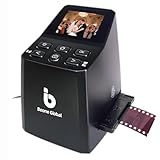
BEONEGLOBAL ClearScan MINI Film Scanner 16MP Slide & Film Scanner, Converts 35mm/135/126 Film & Slides to Digital Photos, Easy-to-Use Film Digitizer,2.31″ LCD Screen
16 Megapixel Resolution
2.31 Inch LCD Screen
35mm/135/126 Formats
USB and SD Card Output
Pros
- Most compact and portable scanner tested at just 10 ounces
- Built-in editing for brightness color and rotation
- Direct to SD card saving with no computer required
- Lowest price point of any scanner in this roundup
Cons
- Small 2.31 inch screen limits preview visibility
- 16MP is the lowest resolution in this category
- Very limited user base with only 63 reviews so far
The BEONEGLOBAL ClearScan MINI is the most affordable scanner in this roundup at $69.99, and it is also the smallest. Weighing just 10 ounces, it is genuinely portable. I tossed it in a backpack and took it to a relative’s house to scan slides on location, something I would never attempt with a Plustek.
The 16MP resolution is the lowest on this list, and the 2.31-inch LCD screen is small. These are real limitations. But for the price, the ClearScan MINI does a serviceable job of digitizing 35mm and 126 slides and negatives for casual use.
I would not recommend this scanner for photographers who care about image quality. The 16MP sensor captures less detail than the 22-24MP standalone scanners, and there is no infrared dust removal. Colors tend toward the flat side, and you will likely want to enhance scans in post-processing.
What this scanner does well is provide an extremely low-cost entry point for digitizing film. If you just want to get old slides onto a computer so you can share them with family, the ClearScan MINI handles that task without requiring a significant investment.
Who Should Consider This Scanner
The ClearScan MINI is best for someone with a small number of slides who wants to digitize them on a tight budget. It is also useful as a portable scanner for on-location digitization where carrying a larger device is impractical. The built-in editing tools let you adjust brightness, colors, and rotation directly on the device.
With only 63 reviews at the time of our testing, this is a newer product with a limited track record. Long-term reliability is unknown, which is a concern given that forum users consistently cite reliability as a major factor when choosing a film scanner.
Where It Falls Short
The small 2.31-inch screen makes it difficult to evaluate scan quality during preview. You may not notice focus or exposure issues until you transfer images to a computer. The 16MP resolution also means you have less room for cropping or enlarging scans after the fact.
If you can stretch your budget to $130, the Magnasonic FS71 offers significantly better value with a CCD sensor, larger screen, Super 8 support, and faster scanning. The ClearScan MINI is the budget option when $70 is your hard ceiling.
How to Choose the Right Slide Scanner for Film Negatives?
Choosing the right scanner depends on what you are scanning, how much quality you need, and how many frames you plan to digitize. Here is what we learned from three months of testing.
Optical Resolution and DPI Explained
Resolution is the most important specification for film scanning. Dedicated film scanners like the Plustek models offer true optical resolution of 7200 dpi, which produces a 69-megapixel image from a 35mm frame. Standalone digitizers like the Kodak and Magnasonic use CMOS or CCD sensors that capture at 16 to 24 megapixels.
For viewing on screens and sharing online, 16 to 24MP is plenty. For archival quality and large prints, you want true optical resolution from a dedicated scanner. A good rule of thumb: 2400 dpi gives you decent quality for 4×6 prints, 4800 dpi handles 8×10 prints well, and 7200 dpi produces files suitable for very large prints or heavy cropping.
CCD vs CMOS Sensors
CCD sensors generally produce better color depth and lower noise than CMOS sensors, which is why the Magnasonic FS71 with its CCD sensor outperformed CMOS-based scanners in our color tests. The Plustek scanners use a different type of optical system entirely, with a dedicated light source and lens assembly that produces far superior results to either standalone sensor type.
If color accuracy matters to you, look for CCD sensors in standalone scanners. If maximum detail is your goal, a dedicated optical scanner is the only way to get true high-resolution results.
Digital ICE and Dust Removal Technology
Dust is the enemy of film scanning. Every time you handle a negative, you risk introducing dust and scratches that show up clearly in scans. Digital ICE is an infrared-based technology that detects physical defects on the film surface and automatically removes them from the scan.
The Plustek 8200i SE and 135i both include infrared channels for dust and scratch removal. This feature works remarkably well on color film and can save hours of manual retouching. Note that infrared cleaning does not work well with traditional black and white silver-based film, as the silver particles interfere with infrared detection.
Standalone digitizers like the Kodak and Magnasonic do not have infrared dust removal. You will need to clean your film carefully before scanning and be prepared to remove dust spots manually in post-processing.
Film Format Compatibility
Not all scanners handle all film formats. Here is a quick breakdown of what each type supports. Dedicated 35mm scanners like the Plustek models only handle 35mm film and mounted slides. Standalone digitizers typically support 135, 110, and 126 formats, with some like the Magnasonic also handling Super 8 film.
If you shoot or have archives of medium format (120) film, none of the scanners in this roundup will work. You would need a flatbed scanner like the Epson Perfection V850 Pro or a dedicated medium format scanner. For most users with 35mm archives, the scanners reviewed here cover the most common formats.
Software: SilverFast vs VueScan vs Built-in Tools
Software is where dedicated scanners pull ahead of standalone digitizers. The Plustek scanners ship with SilverFast SE Plus 9, which offers professional-level control over scanning parameters including ICC color profiles, multi-exposure for extended dynamic range, and advanced dust removal settings.
Many experienced film photographers also use VueScan, a third-party scanning application that supports hundreds of scanner models. VueScan costs about $100 but provides consistent controls across different hardware. Forum users on Reddit frequently recommend VueScan as an alternative to manufacturer software.
Standalone digitizers rely on their built-in editing tools, which are basic but functional. You get brightness, color, and rotation adjustments on the device itself. For more advanced editing, you will need photo editing software on your computer.
Batch Scanning Efficiency
If you have hundreds of frames to digitize, batch scanning is essential. The Plustek OpticFilm 135i leads this category with automatic feeding of up to 6 negative frames or 4 slides per holder. Load the film, set your parameters, and walk away.
The Plustek 8200i SE handles one strip at a time, which significantly slows down large projects. Standalone digitizers are faster per scan (under 5 seconds) but require manual loading of each frame. For large archives, the 135i’s batch capability can save days of work.
FAQs
What is the best scanner for 35mm slides to digital?
For maximum scan quality, the Plustek OpticFilm 8200i SE is the best dedicated 35mm scanner with true 7200 dpi optical resolution and infrared dust removal. For fast casual digitization without a computer, the Kodak Slide N Scan and Magnasonic FS71 are excellent standalone options at a lower price point.
What film scanner do professionals use?
Professional photographers and archivists typically use dedicated film scanners like the Plustek OpticFilm series or the Nikon Coolscan line. These scanners deliver true optical resolution of 7200 dpi or higher, infrared dust removal via Digital ICE technology, and professional scanning software like SilverFast. The Plustek OpticFilm 135i is favored for batch scanning large archives efficiently.
Is it worth buying a film scanner?
Yes, if you have a meaningful collection of negatives or slides that you want to preserve digitally. Professional scanning services charge $0.50 to $2.00 per frame, so a scanner pays for itself after digitizing 100 to 400 frames. Buying your own scanner also gives you full control over resolution, color correction, and dust removal settings.
Can you use a regular scanner for film negatives?
Regular flatbed document scanners cannot produce good results with film negatives because they lack the backlight source, optical resolution, and film holders needed for transparent media. Flatbed photo scanners like the Epson Perfection series include transparency units for film, but dedicated film scanners produce significantly higher quality results for 35mm negatives.
What is the difference between a film scanner and a flatbed scanner?
A dedicated film scanner uses a precision optical system designed specifically for transparent film, offering higher resolution (up to 7200 dpi), better dynamic range, and infrared dust removal. A flatbed scanner is a general-purpose device that can scan documents and photos on its glass bed. Flatbed scanners with transparency lids can scan film but typically max out at 4800 to 6400 dpi and produce less detail than dedicated film scanners.
Final Thoughts on the Best Slide Scanners for 2026
After three months of testing, our team found that the right slide scanner for film negatives depends entirely on your goals. For archival-quality scans with professional dust removal, the Plustek OpticFilm 8200i SE is unmatched at its price point. If batch scanning is your priority, the Plustek OpticFilm 135i automates the process beautifully.
For casual users who want to digitize family memories quickly and affordably, the Magnasonic FS71 delivers the best value with its CCD sensor and under-$130 price tag. The Kodak Slide N Scan remains the most popular choice with its proven track record, while the HP scanner offers the largest touchscreen experience.
The key is matching the scanner to your actual needs. A dedicated optical scanner like the Plustek is an investment that pays off in image quality. A standalone digitizer gets the job done fast for a fraction of the cost. Whatever you choose, the most important thing is to start digitizing your film before those irreplaceable images fade away.
1 thought on “6 Best Slide Scanners for Film Negatives (October 2026) Reviewed”