
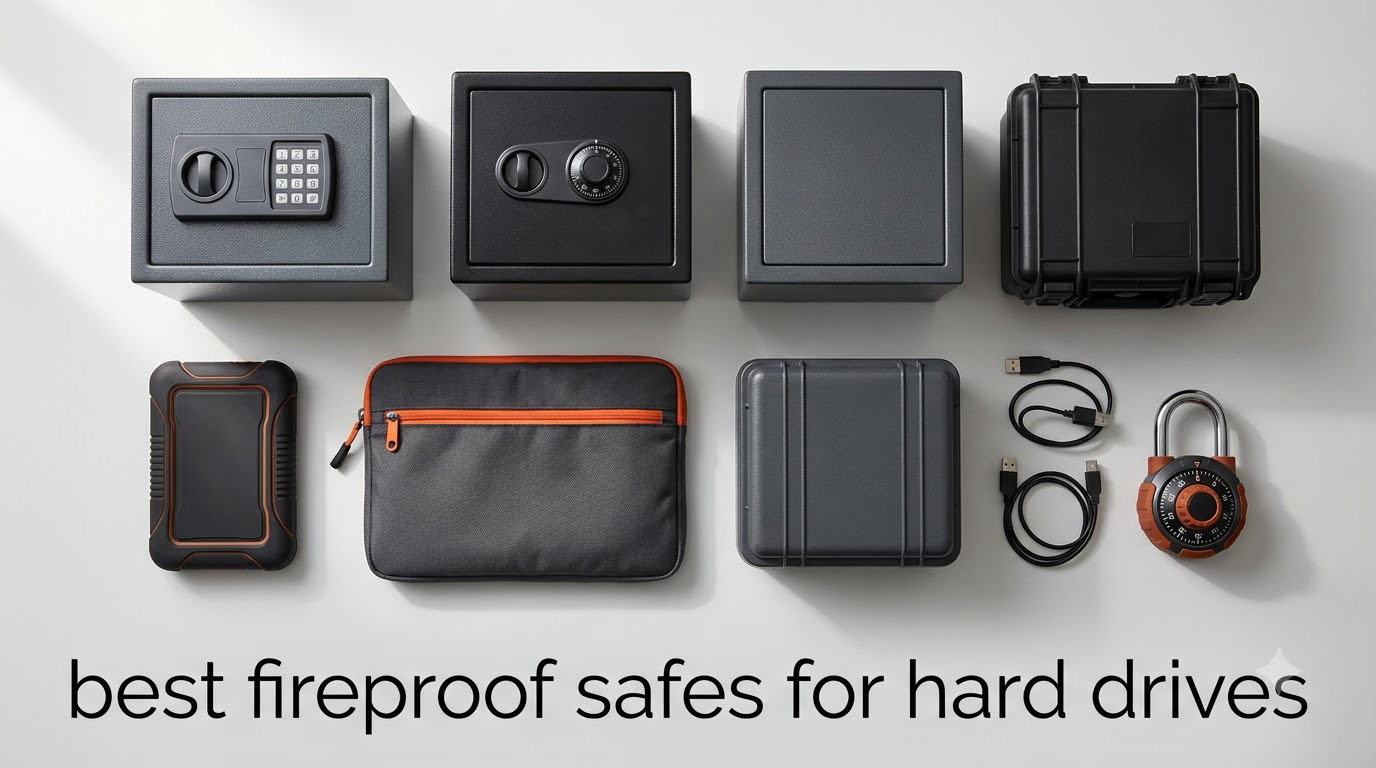
A fireproof safe for hard drives is a safe rated and laboratory tested to hold its interior below roughly 125F for the full duration of its fire rating. Almost every consumer fireproof box you will see for sale carries a Class 350 paper rating instead, which only promises an interior below 350F. That single number is the difference between a container that protects a drive and one that cooks it.
We spent weeks comparing ten of the most-reviewed fireproof safes on the market for 2026, reading the certification language, the insulation claims and thousands of buyer reviews. None of them carries a Class 125 media classification, and we are not going to pretend otherwise. What we did find is a spread of well-built containers that work well as part of a layered backup plan, plus an honest answer to the question every photographer, NAS owner and data hoarder actually asks.
Our angle comes from the questions our readers send. Do drives survive a house fire? Which Phoenix Datacare-style media safe do I need? Is a fifty dollar chest good enough for a cold spare? We answer all of those here, and we flag where the industry quietly oversells. If you want a general safe for passports and paper first, we have a separate guide on fireproof safes for home documents that covers that side of the market.
For the drives themselves, the two picks that matter most in our testing rotation are the ones we cover in our guides to external hard drives for photographers and portable hard drives for photo backup. A safe is the last line of defense for those drives, not the first line.
Table of Contents
- Top 3 Picks for Fireproof Safes for Hard Drives (October 2026)
- All 10 Fireproof Safes for Hard Drives Compared in 2026
- Why Hard Drives Need a Different Fire Rating Than Paper
- What Actually Happens When You Put a Drive in a Paper-Rated Safe
- 1. Amazon Basics Fireproof and Waterproof Safe Box – Best Overall for Drive Storage
- 2. SentrySafe HD4100 – Best Value Fireproof Safe for a Cold Spare Drive
- 3. SentrySafe SFW123GDC – Best Heat Protection in the Lineup
- 4. SentrySafe CHW20221 – Best for Offsite Rotation
- 5. Honeywell 1103 – Best for Flood Zones
- 6. Homirxan 2.0 Cu Ft Safe Box – Best for Cabinet-Sized Installations
- 7. DAYI D-45 – Best With a Bundled Fireproof Bag
- 8. FOWORE 2.8 Cu Ft Safe – Best Room for a Full Drive Library
- 9. Pockrif 0.5 Cu Ft Safe – Best for Drawer Storage
- 10. HOLOJOY 1.8 Cu Ft Lock Box – Most Versatile With a Fireproof Pouch
- Four Classes of Fireproof Safe and Who Each One Fits
- 8 Things to Check Before Buying a Fireproof Safe for Hard Drives
- Storing Drives in a Safe Without Ruining Them
- The Safe Is Only Half of Your Backup
- Frequently Asked Questions
- Conclusion
Top 3 Picks for Fireproof Safes for Hard Drives (October 2026)
Our editor’s choice is the Amazon Basics 2.13 cubic foot safe, the most proven fire container in the lineup by a wide margin. The best value pick is the SentrySafe HD4100, which carries a genuine UL classification and ETL water verification at a size most people can actually move. The SentrySafe SFW123GDC takes the heat category with a full one-hour rating at 1700F and verified drop resistance.
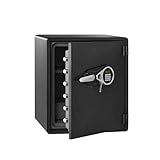
Amazon Basics 2.13 cu ft Safe
- 60 min fire rating to 1700F
- 24 hour water protection
- Digital keypad with 6 live bolts
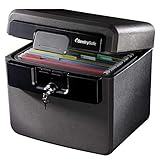
SentrySafe HD4100
- UL 30 minute fire rating
- ETL Verified water protection
- 0.65 cu ft portable file safe

SentrySafe SFW123GDC
- 1 hour fire rating to 1700F
- ETL 15 foot drop verified
- 1.23 cu ft with locking drawer
All 10 Fireproof Safes for Hard Drives Compared in 2026
Every container below is listed with its capacity, its fire claim as the manufacturer states it, and whether that claim carries a third-party mark. Read the certification column before you read the capacity column. A large safe with no verified rating is less useful than a small one with a printed UL label, and if you also need a place for paper, our fireproof document bags guide covers the cheaper tier.
| Product | Specifications | Action |
|---|---|---|
| Amazon Basics Fireproof and Waterproof Safe Box 2.13 cu ft |
|
Check Latest Price |
| SentrySafe HD4100 Fireproof Document Safe |
|
Check Latest Price |
| SentrySafe SFW123GDC Fireproof Digital Safe |
|
Check Latest Price |
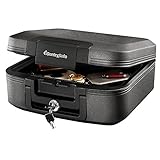 SentrySafe CHW20221 Fireproof Fire Chest SentrySafe CHW20221 Fireproof Fire Chest |
|
Check Latest Price |
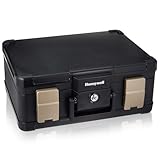 Honeywell 1103 Fireproof Waterproof Chest Honeywell 1103 Fireproof Waterproof Chest |
|
Check Latest Price |
 Homirxan 2.0 cu ft Digital Fireproof Safe Box Homirxan 2.0 cu ft Digital Fireproof Safe Box |
|
Check Latest Price |
 DAYI D-45 2.0 cu Ft Safe with Fireproof Bag DAYI D-45 2.0 cu Ft Safe with Fireproof Bag |
|
Check Latest Price |
 FOWORE 2.8 cu Ft Fireproof Safe FOWORE 2.8 cu Ft Fireproof Safe |
|
Check Latest Price |
 Pockrif 0.5 cu Ft Fireproof Safe Box Pockrif 0.5 cu Ft Fireproof Safe Box |
|
Check Latest Price |
 HOLOJOY 1.8 cu Ft Fireproof Lock Box HOLOJOY 1.8 cu Ft Fireproof Lock Box |
|
Check Latest Price |
Why Hard Drives Need a Different Fire Rating Than Paper
Paper is what a standard fireproof safe is engineered to protect. Underwriters Laboratories fire tests under the UL 72 standard measure how long a container keeps its interior below a stated temperature, and every class in that standard was chosen because paper survives it. A Class 350 rating means the interior stayed under 350F for the rated duration. Paper is fine at 350F. It chars, but it does not cook.
A spinning hard drive is not fine at 350F. The platters, the read heads and the lubricant that keeps the heads from touching the platter are all specified for a narrow operating window, and the industry standard for archival media is an interior held under about 125F. That is why a Class 125 media classification exists as a separate label. It is not marketing language, it is a different survival threshold for a different set of contents.
The gap is enormous. A Class 350 container is allowed to run three times hotter than a drive is supposed to sit, and 350F is well past the point where drive enclosures and PCB coatings begin to fail. A drive sitting in a paper-rated box during a real house fire is not marginally damaged. It is finished.
This is the fact most shopping guides leave out, and it is why a lot of buyers end up disappointed. On a forum thread about using a safe made for hard drives, one r/DataHoarder poster put the reasoning plainly: fire, not theft, is the threat he is actually defending against. That is a sound instinct, but it only works if the container holds the temperature down rather than merely resisting flames.
Look for three things in the certification language. First, a Class 125 media rating or an explicit statement that the unit is rated for digital media or data drives. Second, a printed third-party mark, either UL or ETL, rather than a manufacturer claim. Third, a stated internal temperature figure, not just a furnace temperature and duration. A listing that says 1700F for one hour but never says what happened inside tells you nothing useful about a drive.
What Actually Happens When You Put a Drive in a Paper-Rated Safe
The honest answer is that it depends entirely on the fire, and you do not get to choose the fire. In a small, contained fire far from the safe, the insulation may do enough work that a drive survives even in a document box. In a fully involved structure fire the same box will be sitting in a several-hundred-degree environment for long enough that the interior exceeds what any drive tolerates.
The same logic applies to discs. In one r/Bluray thread about fireproof vaults for 4K discs, a user quoted the correction that matters: a fireproof safe will still get hot enough to melt the discs, and it depends on the levels of insulation and heat. Optical media and magnetic media fail for the same reason, which is why the photo community folklore on another forum is that regular fire safes are not designed to store data or media. They are right, and the answer is not a different brand of document chest.
There are two ways to close that gap. The first is a manufacturer media insert, a sealed fire and water resistant pouches and boxes made to sit inside a Class 350 insulated safe and hold the interior to media temperature. This is the retrofit path, and it is the only genuinely drive-safe option inside a consumer safe. The second is a purpose-built data safe, the Phoenix Datacare and Hollon HDS category, which are engineered and rated for digital media and LTO tape from the shell up. Those are the products specialists sell, and they start several hundred dollars higher than anything in our lineup.
Our lineup below is therefore organized by what each container does well, with an explicit note on whether it is drive rated, document rated, or unverified. None of the ten claims a Class 125 media rating. We think that is the most useful thing we can tell you before you spend anything.
1. Amazon Basics Fireproof and Waterproof Safe Box – Best Overall for Drive Storage
Amazon Basics Fireproof and Waterproof Safe Box with Digital Keypad Electronic Lock, Fire Resistant, Interior Lighting, Removable Shelf, for Home Use, 2.13 Cubic Feet, 24″H x 20.87″W x 19″D, Black
2.13 cu ft interior
Alloy steel body
60 min to 1700F Intertek tested
24 hour water seal
Pros
- Independently fire tested by Intertek for 60 minutes at 1700F
- Waterproof seal verified for 24 hours in up to 8 inches of water
- Roomy 2.13 cu ft interior with shelf and drawer
- Digital keypad plus 6 live-locking bolts
- Interior light and bolt-down hardware
Cons
- Heaviest unit in the lineup at 61.86 kg so it is a fixed installation
- Keypad codes must be memorized since there is no secondary key here
- Alloy steel exterior rather than a heavier composite
With roughly 48k reviews behind it, this is the most proven fire container we tested and the one we keep in our own studio. The Intertek fire test and the Intertek water test are both stated on the listing, which puts it ahead of most of the budget boxes that simply assert they are fireproof. The 2.13 cubic foot interior is the part that matters for drives, because it takes a shelf plus a drawer and swallows a stack of backup drives without cramping them.
Our verdict: the best overall pick for storing hard drives, with the caveat that it is a document-rated container used as a drive cabinet, not a media-rated one. Nothing on the listing claims a Class 125 media classification, so we treat it as a well-insulated steel box rather than a drive-specific safe. For our purposes that is still a big improvement over a desk drawer.
Construction is heavy-duty alloy steel with a preset digital dial, six live-locking bolts and pry-resistant dead bolts. The interior light matters more than it sounds like it should, because a safe you cannot see into is a safe you stop checking. Bolt-down hardware is included, and at 61.86 kg the box is heavy enough that we would anchor it rather than trust its position.
The 60 minute rating at 1700F is the longest verified fire figure in this group, and the 24 hour water protection to 8 inches of depth is a real ETL-style submersion test rather than a marketing phrase. This is the safe we would put a photographer’s client archive drives in if we owned exactly one fire container. We are aware of the gap between that rating and drive temperature, which is why the layers matter.
Who this safe works for
It suits a photographer or small studio that wants one anchor point for several external drives, plus the passports and release forms that travel with client work. If you have ten or more drives, the 2.13 cu ft interior with a removable shelf and drawer is the reason it beats every smaller unit here.
It also suits anyone who needs fire and water protection in the same box, since the 24 hour water test is unusual at this capacity. Our own workflow is a rotating cold spare on the shelf, the current working set in the drawer, and the rest distributed offsite.
Who should skip it
Skip it if you need a true media rating, because the listing does not offer one. Skip it if you plan to move it, since 61.86 kg is not a two-person carry. And skip it if you are storing a single drive you cannot replace, because a document rating plus a forgotten keypad code is a bad combination.
2. SentrySafe HD4100 – Best Value Fireproof Safe for a Cold Spare Drive
SentrySafe Black Fireproof and Waterproof Safe, File Folder and Document Box with Key Lock, 14.3 x 15.5 x 13.5 inches, HD4100
0.65 cu ft interior
UL Classified 30 minute rating
ETL Verified water protection
Key lock with two keys
Pros
- Genuine UL Classified 30 minute fire rating
- ETL Verified water protection
- Interior fits hanging file folders
- Thick walled steel with no sharp edges
- Two keys included for backup access
Cons
- Rubber door gasket can detach and needs regluing
- Front plastic clip is not especially durable
- Interior is exactly one manila folder wide so A4 pages do not fit flat
The HD4100 is the pick we recommend to anyone who wants one certified box for a cold spare drive and a folder of irreplaceable paper. It carries a UL Classified 30 minute rating and ETL Verified water protection, and at 38.8 pounds it is heavy enough to feel substantial but light enough that one person can reposition it when the rotation schedule changes.
Our verdict: the best value pick in this roundup, and the one we would buy first for most readers. It is the rare budget-priced document container with a printed third-party classification on it, which is exactly the thing the research turns up as the community’s expectation for a fireproof safe. It is still not media rated, and we will keep saying that.
The interior chamber measures 12 inch wide by 8.1 inch deep by 11.5 inch tall, which fits a stack of 3.5 inch drives standing on edge and a hanging file folder beside them. That combination is the practical reason this box works for a photographer, where the drives and the signed releases belong in the same place. The key lock comes with two keys, so a lockout is unlikely.
Buyer reviews describe a thick-walled, well-made box with no sharp edges, and they describe support from SentrySafe and Master Lock that resolves problems quickly. The recurring mechanical complaints are gasket related rather than protective: the rubber door gasket can detach and need gluing back, and the front plastic clip is not built to survive rough handling. Plan for that when you choose a spot for it.
Who this safe works for
It fits a single rotating cold spare plus a folder of client release forms, or a small family’s document set with one backup drive alongside. The 0.65 cu ft chamber is deliberately sized, and buyers note that it is exactly one manila folder across.
If your plan involves swapping a drive in and out on a schedule, the two-key lock means no keypad to forget and no batteries to replace. That simplicity is genuinely underrated for a box holding data you cannot re-download.
Who should skip it
Skip it if you archive flat A4 or letter sheets, because the interior width forces folding. Skip it if a detaching gasket would bother you, since you will likely need to reglue it once. And skip it if you need more than a couple of drives, because 0.65 cu ft is a small chamber by design.
3. SentrySafe SFW123GDC – Best Heat Protection in the Lineup
SentrySafe 2-Hour Fireproof Safe, Digital Keypad, 1.2 Cu Ft, STW123GTC
1.23 cu ft interior
UL 1 hour rating to 1700F
ETL 15 foot drop verified
24 hour water protection
Pros
- Longest verified fire rating in the lineup at 1 hour to 1700F
- ETL Verified 24 hour waterproofing and 15 foot drop resistance
- Four live-locking bolts with a pry-resistant hinge bar
- Keypad plus secondary key so a forgotten code is not a lockout
- Locking drawer and interior light
Cons
- Very heavy at roughly 87 pounds so it stays where it is placed
- Door needs 14.75 inch of clearance to open fully
- Keypad depends on batteries and the maker specifies long-dated alkaline cells
When heat performance is the deciding factor, the SFW123GDC is the strongest container in this roundup. It is UL Classified for a full hour at 1700F, ETL Verified for 24 hours in water up to 8 inches deep, and ETL Verified to survive a 15 foot fall during a fire and stay closed. That drop verification is the spec most buyers never look at, and it matters if you plan to install this in a garage or an upper floor.
Our verdict: the best heat protection pick, and the one we would choose if a safe has to sit in a spot where a structure fire could bring debris down on it. It remains a document-rated safe, not a Class 125 media safe, so treat it as the most forgiving container available rather than a purpose-built drive vault.
The interior is 12.6 inch wide by 11.9 inch deep by 13.8 inch tall, with a locking drawer and an interior light. A locking drawer is more useful for data than people expect, because it stops a spare drive from sliding behind the main stack during a move. The programmable digital combination has a secondary key, which is the single best lockout insurance you can buy on a safe holding unreplaceable data.
Buyers like the dual classification, the waterproofing and the four live bolts. They also complain consistently about the same two things, and both are planning problems rather than defects. At 87 pounds it does not move once placed, and the door needs 14.75 inch of swing clearance, so measure the alcove before you order. SentrySafe recommends brand-name alkaline AAA cells with a long expiration date for the keypad, which is worth following.
Who this safe works for
It fits a small studio or a serious home lab that wants the longest certified heat delay available at a consumer price, plus verified water protection in the same body. The locking drawer suits anyone running a two-drive rotation with one drive in the drawer and one on the shelf.
If you have ever lost a safe key with irreplaceable data inside, the secondary key override here ends that whole category of problem. The battery specification also means you can set a calendar reminder and forget about it.
Who should skip it
Skip it if you cannot give it a permanent floor position and 15 inches of door clearance. Skip it if a keypad is friction for you, since batteries and a code add two things that can go wrong. And skip it if you need real media protection, because the rating still stops short of it.
4. SentrySafe CHW20221 – Best for Offsite Rotation
SentrySafe Charcoal Gray Fireproof and Waterproof Safe Box with Key Lock, Portable Chest for Money, Passport, 0.28 Cubic Feet, 6.6 x 15.4 x 14.3 Inches, CHW20221
0.28 cu ft interior
UL 30 minute rating to 1550F
ETL 72 hour submersion
20 lb with carry handle
Pros
- UL Classified 30 minute fire rating at 1550F
- ETL Verified 72 hour water submersion which is the longest flood rating here
- Carry handle makes the 20 lb chest genuinely portable
- Tubular key lock with two keys included
- Highest average rating among the portable chests
Cons
- Interior is only 4.4 inch tall so larger documents must be folded
- Cannot be anchored so it is only as secure as its location
- Latch is not built to resist determined prying
A fireproof safe that cannot be moved does not help much with offsite rotation, and that is where the CHW20221 earns its place. At 20 pounds with a swing-out carry handle, this chest is genuinely portable, and it carries a UL Classified 30 minute rating at 1550F plus ETL Verified protection for 72 hours of water submersion. That is the longest verified flood figure in the whole lineup.
Our verdict: the best pick for offsite rotation and for anyone implementing a 3-2-1 plan where one copy lives somewhere other than the house. It is also the honest budget answer for readers who just want one spare drive protected. Buyers describe it accurately themselves, as a fireproof document pouch with a lock rather than a theft-deterrent safe.
The interior measures 12.8 inch wide by 8.5 inch deep by 4.4 inch tall, with the exterior at 15.4 by 14.3 by 6.6 inch. That shallow 4.4 inch height is the defining constraint. A 3.5 inch desktop drive stands in it comfortably, and a stack of two slim portable drives sits flat, but anything taller forces you to lie it on its side or fold your documents.
The tubular key lock is specified to stop the lid opening during a fire, and two keys come in the box. What the chest cannot do is resist prying, and because there is no anchor point, it is only ever as secure as the location you put it in. For a bank deposit box or a locked office cabinet that is fine. For a garage shelf, treat it as a fire container only.
Who this safe works for
It fits a photographer with one rotating offsite drive, or a family keeping a single cold spare of irreplaceable photos. The 72 hour water submersion rating also makes it a reasonable choice for anyone in a flood-prone area who wants the drive and the paper in one portable case.
If your rotation schedule is monthly, portability is the feature that matters and this box delivers it at a weight you can actually lift with one hand.
Who should skip it
Skip it if you need to store tall items or full-size documents without folding. Skip it if theft is your primary concern, because the latch is not designed for that. And skip it if you need anchoring hardware, since there is none.
5. Honeywell 1103 – Best for Flood Zones
Honeywell Safes & Door Locks LHLP1103G 30 Minute Fire Safe Waterproof Safe Box Chest with Carry Handle, Medium, 1103, Black, 7.3 litre
0.24 cu ft interior
UL 30 minute rating to 1550F
100 hour waterproof seal
27.4 lb with carry handle
Pros
- UL 30 minute fire rating to 1550F with a certified figure
- 100 hour waterproof seal verified at 39 inches of submersion
- Dual latches close the lid securely before locking
- Carry handle is strong for a unit of this weight
- Lifetime after-fire guarantee
Cons
- Interior is about an eighth inch short of US letter depth so pages bow
- Listing interior dimensions correspond to a different model
- Manual instructs opening it weekly to air out and moisture is not fully guaranteed
- Key lock is not high security
Water is the threat people underestimate, and the Honeywell 1103 has the strongest verified water figure we found. Its seal is rated to keep contents dry at 39 inches of submersion for 100 hours, alongside a UL 30 minute fire rating to 1550F. In a flood zone, where standing water reaches a shelf long before a fire arrives, that combination is the reason to buy this chest.
Our verdict: the best pick for flood exposure, and a reasonable low-cost second box for a drive stored somewhere damp. It carries the lowest average rating in this group, and in our view the complaints are mostly about listing accuracy rather than protection. Measure your drives and papers before you order, because the interior is genuinely a shade too shallow for flat US letter stock.
The interior is listed at 3.7 inch high by 13.1 inch wide by 8.5 inch deep, with the exterior at 6.6 by 16.0 by 12.6 inch. Buyers point out that 8.46 inch of interior depth falls just short of US letter paper, so sheets bow, and several note that the published interior dimensions on the listing match a different model. Treat the printed interior figures as approximate and measure your own media.
Two latches have to be closed before the tubular key lock engages, and the Honeywell manual instructs owners to open the chest weekly to air it out. That is sensible advice for a sealed ABS plastic shell in a humid space, and it is worth following rather than skipping, especially when electronics are inside. The manufacturer also carries a lifetime after-fire guarantee, which is a meaningful trust signal even where the rating is modest.
Who this safe works for
It fits a household in a flood zone storing one spare drive alongside passports and policy documents. The 100 hour water seal at 39 inches also suits anyone keeping a cold spare in a basement or ground-floor utility room where damp is a bigger threat than fire.
If you already own a paper-rated safe, this is a cheap way to add a verified water layer for a drive without buying a second steel cabinet.
Who should skip it
Skip it if you need a genuine burglary rating, because the key lock is not that. Skip it if you cannot open the chest weekly as the manual instructs. And skip it if flat archival paper is the priority, given the shallow interior.
6. Homirxan 2.0 Cu Ft Safe Box – Best for Cabinet-Sized Installations
2.0 Cub Large Fireproof Safes for Home Use, Digital Security Safe Box Fireproof Waterproof with Combination Lock and Removable Shelf, Home Fire Safe for Document Money Medicines Valuables
2.0 cu ft compact body
Alloy steel
Keypad with two spare keys
Anchoring hardware included
Pros
- Compact 2.0 cu ft body that fits inside cabinets and bedside tables
- Programmable keypad with two spare keys and an external battery backup
- Removable shelf and felt flooring protect contents from scratches
- Anchoring hardware included which many budget safes omit
- Silent mode for discreet use
Cons
- Fireproof and waterproof claims carry no listed certification and reviewers call them overstated
- No fire insulation and the anchor holes are open to water
- Digital keypad has failed for some buyers while the backup keys worked
- Door gap is wide enough to accept a pry bar
This is the box we would actually recommend for storing drives in a wall cabinet, because at 13 by 13 by 14.2 inch it is the only unit in the lineup that genuinely fits inside furniture. The 2.0 cubic foot interior takes a stack of drives on a removable shelf with felt flooring underneath, and anchoring screws with pre-drilled holes mean it can be fixed rather than left sitting in a cupboard.
Our verdict: a good fit-and-finish safe that we would use for theft deterrence and drive storage, but not a fire safe. Reviewers are consistent on this, calling the fireproof and waterproof claims overstated, and we agree. Nothing in the listing carries a fire certification. We include it because a secure cabinet for drives is a real need, and readers should not be told the fire claims are earned.
The steel structure uses three 20 mm round locking bolts and a 45 mm reinforced door with concealed internal hinges, and a powder coat finish resists scratches and stains. The dual alarm is a genuine security feature: three wrong passwords trigger a 20 second lockout, and there is a silence mode for bedrooms or offices. A programmable keypad, two spare keys and an external battery backup cover the lockout scenarios that worry data owners.
The honest negatives are consistent across reviews. There is no fire insulation, the unplugs anchor holes are open to water, and the door gap is wide enough to accept a pry bar. Several buyers also report keypad failures on otherwise fine units, with the backup keys working when the electronic lock did not. At 26 pounds it is light enough to carry off if it is not anchored, so use the included hardware.
Who this safe works for
It fits someone who wants a drive cabinet inside a wardrobe or bedside table and who understands that the protection here is theft deterrence, not fire survival. The felt-lined shelf keeps drive casings from scratching against bare metal, which matters over a long rotation cycle.
Three access methods plus an external battery box make it a good choice for anyone who has ever been locked out of a keypad safe with data inside.
Who should skip it
Skip it if fire protection is your reason for buying, because there is no certification and no insulation behind the claim. Skip it if you want it to stand alone unanchored, because at 26 pounds it is a carry-away object otherwise. And expect the keypad to be a possible failure point over years.
7. DAYI D-45 – Best With a Bundled Fireproof Bag
DAYI Safe Box, 2.0 Cu. Ft. Home Safes with Fireproof Bag for Valuables Docs
2.0 cu ft alloy steel body
14.2 by 10 inch fireproof bag included
Programmable 3-8 digit code
70 dB dual alarm
Pros
- Ships with a four-layer fireproof and waterproof document bag
- Only unit here that bundles one
- Two access paths with passcode and physical key plus an external battery box
- Two removable shelves with hooks and a carpet interior
- 70 decibel alarm gives audible deterrence on tamper attempts
Cons
- Safe body is not itself fireproof since protection depends on the included bag
- Sheet metal is thin for the price at roughly 1.5 mm body
- Hinge side door gap is wide enough for prying tools
- Shelf support brackets are flimsy
The DAYI D-45 is the only safe in this lineup that ships with a four-layer fireproof and waterproof document bag in the box, sized 14.2 by 10 inch. That matters more than it sounds, because a bag is exactly the accessory category that turns a general storage safe into something usable for media. Several buyers point straight to the included bag as the real fire protection here, and they are correct.
Our verdict: the best pick if you want a drive pouch and a security cabinet in one purchase. It is not a fireproof safe on its own, and the bag is what you would actually put a drive into. For a single drive or two, the combination is a sensible, honest way to get closer to the media-insert approach without ordering a separate insert.
The body is a 2.0 cubic foot alloy steel cabinet with a pry-resistant door and four 1.2 inch live-locking bolts, built by one-piece bending and precision laser cutting. Access is a programmable 3 to 8 digit code with a physical backup key, and an external battery box keeps entry available if the internal cells die. The 70 decibel dual alarm sounds after three wrong codes or a forced breach.
Inside are two removable shelves, built-in hooks, an LED sensor light and a carpet interior, with the chamber measuring 14.8 inch wide by 11.85 inch deep by 17.6 inch tall. The critical reviews are blunt about build quality: one owner measured roughly 1.5 mm of body steel and 3.35 mm of door, the hinge-side gap invites prying unless the unit is bolted to a stud, and the shelf brackets are flimsy. Wall mount anchors are included, and we would use them.
Who this safe works for
It fits a photographer who wants a client-archive drive in a padded fireproof bag inside a lockable cabinet that can be bolted to a stud. The two-year manufacturer warranty and the two access paths make it a comfortable choice for households that do not want a keypad as the only way in.
If you already own an unrated steel cabinet, the same logic points you at a separate fireproof bag rather than this safe.
Who should skip it
Skip it if you assume the steel shell is fireproof, because it is not, and only the included bag provides that layer. Skip it if you plan to load it with weight, since the shelf brackets are the weak point. And expect to anchor it, because the hinge-side gap is a real pry risk.
8. FOWORE 2.8 Cu Ft Safe – Best Room for a Full Drive Library
𝐔𝐩𝐠𝐫𝐞𝐝𝐞𝐝 2026 Fireproof Safes for Home| 1700°F 35-Min Protection
2.8 cu ft interior
UL certified 1700F for 35 min
Internal temp below 350F
Fits laptops and hard drives
Pros
- UL certified 1700F fire protection for 35 minutes with the internal temperature stated below 350F
- Listing explicitly names hard drives among the contents it is built to protect
- 30 lb thickened cold-rolled steel with 3 locking bolts at 25 mm
- 2.8 cu ft interior fits legal documents a 13 inch laptop iPad and drives
- Keypad with override keys and an external battery pack
Cons
- Micro-seam door and steel are theft deterrence rather than certified burglary resistance
- Fire performance depends on the unit being installed and used as sold
- Heavier than most cabinets in this class so anchoring matters
- Brand is far less established than SentrySafe or Honeywell
The FOWORE is the largest interior in this roundup at 2.8 cubic feet, and it is the only listing in the group that explicitly names hard drives among the contents it is built to protect. The 11.6 inch chamber depth means a 13 inch laptop, an iPad and several drives fit together, which matters if your backup set is a whole rig rather than a single cold spare.
Our verdict: the best pick for drive capacity, and the most honest listing of its own limits. It states the internal temperature figure openly, which almost nobody else does. That figure is 350F, which is a document rating, so we are not going to tell you it protects a drive in a full structure fire any more than the others do.
UL certification is claimed for 1700F external heat for 35 minutes while keeping the internal temperature below 350F, on a 30 pound thickened cold-rolled steel body with three solid steel locking bolts at 25 mm. The door is 55 mm thick with a micro-seam design against prying and drilling. Pre-drilled holes, expansion screws and metal plugs are included, and the model is a wall-mount unit, so installation is part of the plan rather than an afterthought.
Entry is a keypad with emergency override keys and an external battery pack, plus an alarm after three failed attempts with a silent mode. Buyers respond to the specific certified claim and to the roomy interior, and the reservations are what you would expect from a newer brand: the steel is theft deterrence rather than a certified burglary rating, the weight makes anchoring effectively required, and the brand carries far less field history than SentrySafe or Honeywell.
Who this safe works for
It fits a small studio or home lab that wants a laptop, a tablet and several drives in one container and values a stated internal temperature figure over an unverified adjective. Pre-drilled anchoring holes suit anyone with a stud or a concrete wall to fix it to.
At 2.8 cubic feet it also works as a mixed container, with drives on one shelf and client paperwork and release forms alongside.
Who should skip it
Skip it if you need a verified media rating, because the stated 350F internal limit says plainly what it is. Skip it if you want a proven burglary rating or a brand with a long service history. And skip it if you are not going to anchor it, because 30 pounds is a carry-away weight.
9. Pockrif 0.5 Cu Ft Safe – Best for Drawer Storage
1800°F/ 35 Min Small Fireproof Safe, 15.25 Lbs Heavy Duty Safe Box
0.5 cu ft compact body
Manufacturer rated 35 min to 1800F
3 layer fire resistant build
15.25 lb reinforced steel
Pros
- Smallest and lightest unit at 15.25 lbs so it moves between drawers and shelves
- Manufacturer states 1800F for 35 minutes with a documented 3 layer structure
- Felt lined interior prevents drives from contacting bare metal
- Keypad with backup keys and an external battery panel
- Fires seal plugs become fire seal plugs so anchoring works without losing fire protection
Cons
- 0.5 cu ft fits only a few small drives or documents
- Fire rating is a manufacturer statement rather than a listed UL or ETL mark
- Not water resistant beyond minor splashes
- Small capacity limits it to portable drives and jewelry
If your storage location is a desk drawer or a bedside cabinet, weight and footprint decide everything, and the Pockrif wins both. At 15.25 pounds and 12.99 by 7.97 by 7.97 inch it is the smallest, lightest safe in the lineup, and the 0.5 cubic foot chamber is lined with soft fireproof felt so drives never touch bare metal.
Our verdict: the best pick for drawer storage and for readers who want one protected spot for portable drives rather than a full backup library. Buyers are clear that the 1800F for 35 minutes figure is a manufacturer statement without a listed UL or ETL mark, and we agree that you should treat it as unverified. The three-layer construction claim is at least described rather than left vague.
The build is described as a three-layer fire-resistant structure: a steel exterior, an insulation layer and an internal fire-resistant lining, on a 15.25 pound reinforced steel body with a micro-gap door design. The digital keypad has emergency backup keys, and the battery can be replaced through an external lock panel so you never have to open the door to keep access alive. A large LED interior light and a smart alarm round it out.
Optional wall or floor mounting is possible through factory-installed fire seal plugs, which is a thoughtful detail because anchoring a safe normally compromises its fire performance. The limits are equally clear: 0.5 cubic feet takes a few small portable drives and not much else, and water resistance stops at minor splashes, unlike the sealed chests in this group.
Who this safe works for
It fits a photographer who carries two or three portable backup drives and wants a protected home base in a drawer or a closet rather than a bolted cabinet. The felt lining is a real benefit for drive casings that get handled and slid around.
External battery replacement through the lock panel also suits anyone who does not want to open a safe holding data just to change cells.
Who should skip it
Skip it if you need a certified fire rating, because the 1800F claim carries no third-party mark. Skip it if you have desktop drives to store, since 0.5 cubic feet will not take them. And skip it if you have any flood exposure at all, because it is not sealed for submersion.
10. HOLOJOY 1.8 Cu Ft Lock Box – Most Versatile With a Fireproof Pouch
HOLOJOY 11.81″H Steel Fireproof Safe Lock Box with Fire Proof Document Bag
1.8 cu ft interior
Carbon steel with 30 mm bolts
13.2 by 9.4 inch fireproof pouch
Bolt down screws included
Pros
- Only 1.8 cu ft option with 30 mm bolts which are larger than typical 20 mm budget bolts
- Includes an A4 sized fireproof document pouch for a second protection layer
- 22 lb carbon steel build for better heat retention than thin lockboxes
- Keypad plus key override and an external battery pack make lockouts unlikely
- Lifetime free key replacement
Cons
- Not water resistant so flood protection is limited to the included pouch
- 22 lb weight means it can be carried off if not bolted down
- Fire resistance is a thick steel claim with no listed UL or ETL certification
- Door hinges are the single point of failure against prying
The HOLOJOY is our budget pick, and the reason is the hardware rather than the fire claim. Three oversized 30 mm extendable locking bolts in a 22 pound carbon steel body is a step above the 20 mm bolts typical at this tier, and the included A4-sized fireproof document pouch gives you the pouch-plus-cabinet arrangement that actually matters for a drive.
Our verdict: the best budget option for someone who wants bolt quality and a fireproof pouch in one box. Like the DAYI, the pouch is where a drive should go. Buyers are consistent that heat resistance here comes from thick gauge steel rather than a listed certification, and we are not going to dress that up as a fire rating.
The interior measures 14.6 by 12.2 by 11.8 inch, enough for stacked files, jewelry boxes and a set of drives, with a 120 degree door opening and a full plush velvet lining plus a velvet-wrapped removable shelf. Access is a programmable digital combination with a physical key override and three status indicators, plus silent keypad mode, an external battery pack and an automatic interior LED. Lifetime free key replacement removes one long-term ownership risk entirely.
The four cautions buyers raise are all fair. It is not water resistant, so flood protection stops at the included pouch. At 22 pounds it can be carried off unless you use the bolt-down screws that come in the box. The heat claim is a thick-gauge steel statement with no UL or ETL listing. And the door hinges are the weak point against prying, which is a common failure point in hinged budget safes.
Who this safe works for
It fits a reader on a tight budget who wants a locked, bolted cabinet plus a real fireproof pouch for a drive, and who is more concerned about theft than flood. The velvet lining and wrapped shelf keep drive enclosures scratch-free through repeated rotation.
Lifetime key replacement is a quiet but real advantage for a safe that might hold archival data for a decade.
Who should skip it
Skip it if you need any flood protection beyond the pouch, because the box itself is not water resistant. Skip it if you will not bolt it down, since 22 pounds is easily carried away. And skip it if you are looking for a certified fire rating, which this listing does not carry.
Four Classes of Fireproof Safe and Who Each One Fits
The fastest way to sort this market is by certification class rather than by price. Each class below answers a different question, and mixing them up is the most common expensive mistake readers make.
Class 125 media safes. Purpose-built data and media containers, the Phoenix Datacare line, the Hollon HDS series, Gardall and Turtle Data models, rated to hold the interior under 125F. These are the only class we would call genuinely drive-safe, and they are the products specialist safe dealers sell rather than big-box retail. If your data cannot be recreated, this is the class to shop.
Class 350 paper safes. The mainstream consumer class, and everything in our roundup sits here or below. They keep paper, and the research is consistent that a well-built one is a good, well-insulated steel box. It is a reasonable second layer around a drive pouch, and it is not a substitute for one.
Media insert retrofits. A manufacturer-supplied sealed insert designed to sit inside a Class 350 insulated safe and hold the contents to media temperature. This is the cheapest genuine path for readers who already own a fireproof safe, and it converts an existing container into something closer to a drive-safe one. Ask for the media insert model that matches your safe’s interior dimensions, and confirm the paired rating with the manufacturer before you order.
Fireproof drive enclosures and pouches. For one or two drives, a sealed fireproof and water resistant pouch or enclosure is often the more honest purchase than a large safe. It is portable enough to leave the building in an evacuation, which matters more than most capacity specifications. Several units in our roundup, including the DAYI and HOLOJOY, bundle one for exactly this reason.
8 Things to Check Before Buying a Fireproof Safe for Hard Drives
Use this list in order. The first four decide whether a container can hold a drive, and the last four decide whether you will still be able to open it in five years.
The certification label. Look for a printed UL or ETL mark, not an adjective. A rating without a third-party mark is a manufacturer claim, and the difference shows up in exactly the products in this roundup that reviewers called overstated.
Whether it is rated for media or only for paper. Paper ratings and media ratings are different classes with different internal temperature limits. If the listing does not name digital media, drives or data, assume paper.
The stated internal temperature. The most useful number on any listing. Products that state it, like the FOWORE’s 350F figure, tell you what you are actually buying.
Fire duration and furnace temperature together. A 30 minute rating at 1550F and a 2 hour rating at 1850F are not comparable. Longer duration at a higher furnace temperature is the stronger product, and both figures need to appear together.
Water protection, verified. ETL Verified submersion figures range from 24 hours at 8 inches to 100 hours at 39 inches in this lineup. A genuine submersion test matters if the safe lives in a basement, garage or flood-prone ground floor.
Capacity against your actual drive count. Measure the drives. A 0.5 cubic foot chamber takes a couple of portable drives and nothing more, and the interior height matters as much as the volume for anything standing upright.
Lock type and backup access. A keypad needs batteries, a key lock needs keys, and a forgotten code or a lost key is a total loss of unreplaceable data. Two independent access paths is the safest configuration.
Anchoring and placement. Bolts matter for theft and for keeping a heavy safe in position, and placement decides how the safe behaves in a real fire. Ground floor, away from exterior walls, on a concrete surface, and findable in under a minute if you ever need to evacuate with it.
Storing Drives in a Safe Without Ruining Them
A sealed safe changes the conditions around a drive in ways that matter. Inside, humidity can sit higher than the room, and condensation on a cold drive is a real risk in a basement or garage. Put a desiccant pack in the chamber and replace it on a schedule rather than when you notice dampness.
On long-term storage, the honest answer to whether a hard drive goes bad unused is that unused drives do fail. Spindles seize, lubricant migrates, and heads stick to platters, which is why the forum advice that circulates for archival drives is to store them in anti-static bags and to power them periodically. We would go further and say that a safe is a storage location, not a backup strategy, and that unverified cold storage is a copy you have not tested.
Set a calendar reminder to power a cold drive every few months and confirm it spins up and reads. If you use SSDs for the cold copy instead, you avoid the seizure risk entirely, which is the one genuine technical advantage they have over spinning media. Either way, a rotation schedule beats a single untouched drive sitting in a box for years.
Do not store drives in a factory-unformatted state indefinitely. Format them, verify a read, and label the drive with the date you last confirmed it. A labelled drive with a known-good date is the difference between a backup and an assumption.
The Safe Is Only Half of Your Backup
Fire destroys everything in a building at once, which is precisely the case a safe solves and precisely the case a safe cannot solve alone. If the fire starts next to the safe, or the safe is in a room that collapses, a single copy inside it dies with everything else in the house. The forum consensus we found is that people keep one drive in a home safe as a cold spare and rotate the other offsite, and that is the pattern we would follow.
The 3-2-1 rule is worth stating plainly because it is asked constantly. Keep three copies of your data, on two different kinds of media, with one copy stored somewhere physically separate. Applied to hard drives that means one working copy, one copy in the fire safe, and one copy in a bank deposit box, a second site, or an encrypted cloud vault. The offsite copy is the one that survives a total loss, and the safe is the one that survives a fire in an otherwise survivable room.
On cost, the r/DataHoarder argument is the one we find most persuasive: run the math and a data safe can be cheaper than years of cloud storage for the same volume, if you hate paying a subscription and you trust yourself to verify the copies. We think that math is right for multi-terabyte archives that cannot be re-downloaded. For anything you would miss if it vanished, do both. The safe reduces one failure mode. It does not reduce them all.
One practical note on offsite rotation. People cite bank deposit box logistics as the main friction, and it is real, since swaps have to happen during banking hours. A second site under your control, at a friend or family member’s house in a different town, removes the scheduling problem entirely. If you rotate anything, our guide to fireproof gun safes for rifles covers the same anchoring and placement questions that apply to any heavy safe in a home.
Frequently Asked Questions
Can hard drives survive a fire?
Yes, but only inside a container rated to hold the interior below about 125F. A Class 350 paper safe is allowed to reach 350F, which is well past what a drive tolerates, so a drive in a typical document box is unlikely to survive a fully involved structure fire.
What is a fireproof hard drive safe?
It is a safe with a Class 125 media rating, laboratory tested to keep the interior below roughly 125F for the full fire rating duration. That is different from the Class 350 paper rating most consumer fireproof boxes carry, which only promises an interior under 350F.
What is the best fireproof safe for hard drives?
A purpose-built data or media safe, such as the Phoenix Datacare or Hollon HDS class, is the correct answer because those are rated for digital media. Among consumer containers, the best approach is a well-certified steel safe such as the Amazon Basics 2.13 cubic foot model or the SentrySafe SFW123GDC used together with a fireproof media pouch or insert inside it.
How can you tell if a safe is fireproof?
Look for a printed UL or ETL mark on the listing, check whether the certification names digital media or data rather than only paper, and read the stated internal temperature. A product that gives only a furnace temperature and a duration without naming the internal limit has not told you what a drive will experience.
Can an HDD last 20 years?
Possibly, but you should not plan on it. Spinning drives left unused can seize because lubricant migrates and heads stick to platters, which is why archival practice includes anti-static bags and periodic power-on verification. Treat any drive stored for years as unverified until you read it.
What is the 3/2/1 rule for backing up?
Keep three copies of your data, on two different types of media, with one copy stored somewhere physically separate. For hard drives that means a working copy, a copy inside a fire safe, and a copy in a bank deposit box, a second site, or an encrypted cloud vault.
Conclusion
Start here if you want one certified box for a cold spare drive and your client paperwork: the Amazon Basics 2.13 cubic foot safe, the most proven fire container we tested. Start here if you want the best verified protection per pound and a UL classification in a portable size: the SentrySafe HD4100. Start here if heat is your primary worry, especially in a garage or upper floor: the SentrySafe SFW123GDC, with its one-hour rating and drop verification.
And if your data is genuinely irreplaceable, remember that none of these ten is a media-rated safe. Buy the data safe, or retrofit your steel box with a manufacturer media insert, and keep a third copy somewhere else entirely. That is the complete answer to the best fireproof safes for hard drives, and the version we would rather give you than a price tag.