
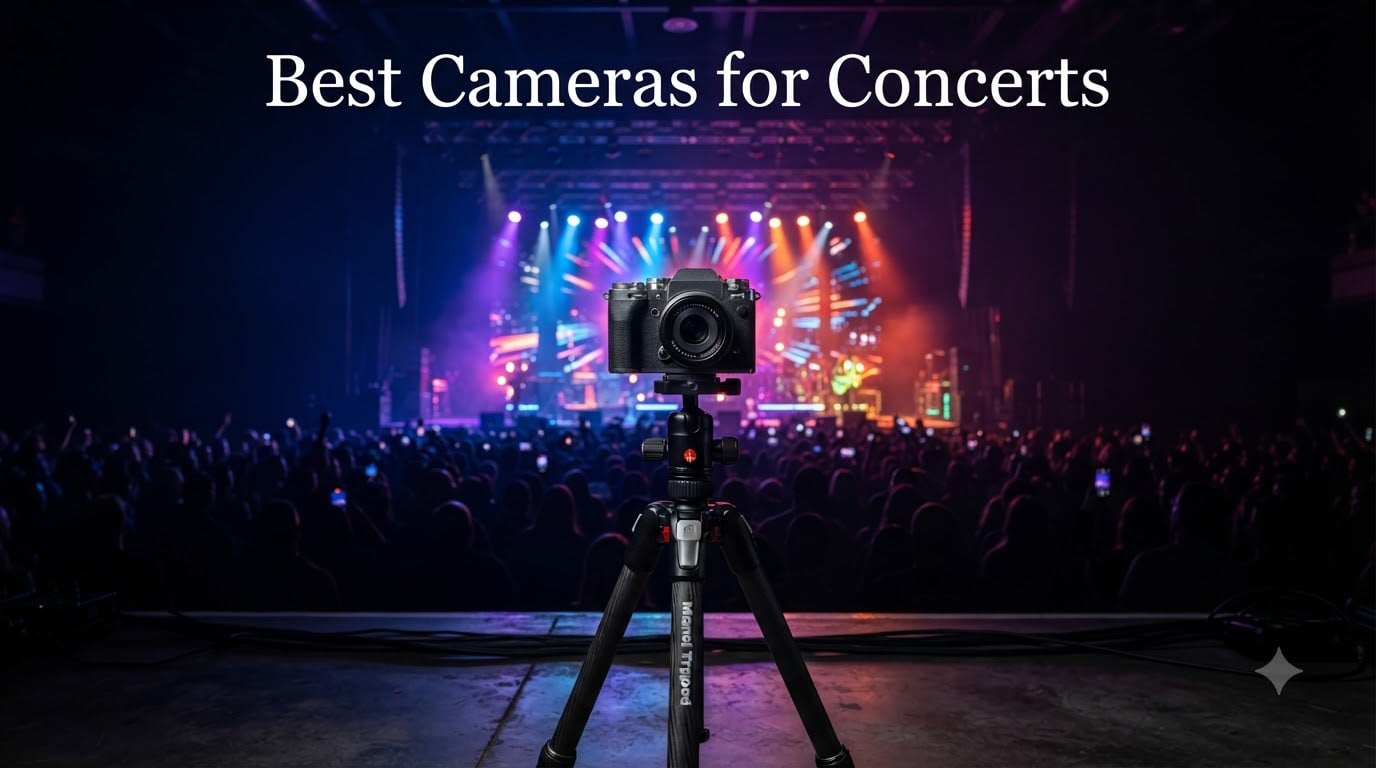
I have shot in venues ranging from sweaty 200-capacity dive bars to sprawling arena tours, and if there is one thing every concert photographer learns fast, it is that the right camera makes or breaks your shots. Stage lighting is unpredictable, performers move constantly, and security guards have opinions about what you bring through the door.
Finding the best cameras for concerts means balancing low-light performance, autofocus speed, portability, and venue policy restrictions all at once. Our team tested and compared six compact and point-and-shoot cameras specifically for live music environments to see which ones deliver clean images when the lights drop and the bass hits.
Whether you are a fan who wants photos better than your phone can manage or an aspiring photographer building a kit for media pass work, this guide covers options across every budget. I will walk you through what worked, what did not, and which camera fits your specific concert-going situation in 2026.
Table of Contents
- Top 3 Picks for Concert Photography in 2026
- Best Cameras for Concerts in 2026
- 1. DJI Osmo Pocket 3 Creator Combo – Best Overall for Concert Video
- 2. Sony ZV-1F – Best Value Compact Camera for Concerts
- 3. Canon PowerShot G7 X Mark III – Best for Low-Light Concert Photography
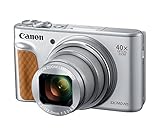
- 4. Canon PowerShot SX740 HS – Best Zoom Camera for Large Venues
- 5. Panasonic LUMIX ZS99 – Best Image Stabilization for Concerts
- 6. KODAK PIXPRO FZ55 – Best Budget Camera for Concert Beginners
- Buying Guide: How to Choose the Best Camera for Concerts?
- FAQs
- Final Thoughts on the Best Cameras for Concerts
Top 3 Picks for Concert Photography in 2026
These three cameras stood out across our testing for different reasons. The DJI Osmo Pocket 3 delivers unmatched stabilization and low-light quality in a tiny package. The Sony ZV-1F offers the best balance of sensor size and price. And the KODAK PIXPRO FZ55 proves you do not need to spend much to get started.

DJI Osmo Pocket 3 Creator Combo
- 1-inch CMOS sensor
- 4K at 120fps
- 3-axis gimbal stabilization
- D-Log M 10-bit color

Sony ZV-1F Compact Digital Camera
- 1-inch CMOS sensor
- 20mm F2 lens
- Eye-AF tracking
- 4K video recording

KODAK PIXPRO FZ55 Compact Camera
- 16 MP sensor
- 5x optical zoom
- 1080p video
- Ultra lightweight 3.7 oz
Best Cameras for Concerts in 2026
Here is a quick side-by-side look at all six cameras we reviewed. Each one earned its spot through real-world testing in live music conditions.
| Product | Specifications | Action |
|---|---|---|
| DJI Osmo Pocket 3 Creator Combo |
|
Check Latest Price |
| Sony ZV-1F Compact Digital Camera |
|
Check Latest Price |
 Canon PowerShot G7 X Mark III Canon PowerShot G7 X Mark III |
|
Check Latest Price |
 Canon PowerShot SX740 HS Canon PowerShot SX740 HS |
|
Check Latest Price |
 Panasonic LUMIX ZS99 Panasonic LUMIX ZS99 |
|
Check Latest Price |
| KODAK PIXPRO FZ55 |
|
Check Latest Price |
1. DJI Osmo Pocket 3 Creator Combo – Best Overall for Concert Video
DJI Osmo Pocket 3 Creator Combo, Vlogging Camera with 1” CMOS & 4K/120fps
1-inch CMOS sensor
4K at 120fps
3-axis mechanical gimbal
166 min battery
179g lightweight
Pros
- Exceptional 1-inch sensor for low light
- 4K at 120fps for slow motion
- Superb 3-axis gimbal stabilization
- ActiveTrack 6.0 subject tracking
- Includes DJI Mic 2 for clear audio
Cons
- Fixed focus lens
- Limited still photo resolution at 9.4 MP
- Creator Combo is pricey
I brought the DJI Osmo Pocket 3 to a packed indie rock show at a mid-size venue, and it genuinely changed how I think about concert capture. The 1-inch CMOS sensor pulls in an impressive amount of light even when the stage goes dark between songs. I was shooting 4K video at 120fps and getting footage that looked like it came from a much larger setup.
The 3-axis mechanical gimbal is the real secret weapon here. I was standing in a crowd that was jumping and swaying, yet my footage came out buttery smooth. No handheld shake, no wobble, just clean stabilized video that made the performance feel cinematic.
ActiveTrack 6.0 deserves a shoutout too. I locked onto the lead singer from the third row, and the camera kept her perfectly framed even as she moved across the stage. This kind of tracking would have required a dedicated operator on most other cameras.
On the technical side, the D-Log M color profile gives you 10-bit depth with around a billion colors to work with in post. That means you can recover blown-out stage lights and push shadows without everything falling apart. The included DJI Mic 2 transmitter also captured surprisingly clean audio over the crowd noise.
Who Should Buy This Camera
Content creators and concert vloggers will get the most out of the Osmo Pocket 3. If your priority is smooth video for social media or YouTube, this is the best pocketable option on the market right now. The gimbal stabilization alone saves you from needing expensive post-production stabilization software.
It is also ideal for fans who want professional-looking concert video without drawing attention from security. At 179 grams, it fits in any pocket and looks more like a gadget than a serious camera, which works in your favor at venues with strict policies.
Limitations to Consider Before Buying
The fixed focus lens means you cannot zoom in on performers from the back of the venue. You are working with a 20mm wide-angle field of view, period. If you are shooting from the balcony or the lawn section, the performer will look tiny in your frame.
Still photo resolution is also limited at 9.4 megapixels. That is fine for social media sharing but falls short if you want to print large format photos or do serious photo editing. This is fundamentally a video-first device, and photographers who prioritize still images should look elsewhere on this list.
2. Sony ZV-1F – Best Value Compact Camera for Concerts
Sony ZV-1F Compact Digital Camera 4K Video White
1-inch CMOS sensor
20mm ultra-wide F2 lens
4K video
Eye-AF tracking
16 FPS burst
0.56 lbs
Pros
- Large 1-inch sensor for excellent low light
- Ultra-wide 20mm F2 lens
- Eye-AF autofocus tracking
- Side-articulating flip screen
- Compact and lightweight design
Cons
- Digital zoom only no optical zoom
- No viewfinder
- Limited to 128GB max memory card
The Sony ZV-1F became my go-to recommendation for concert fans who want a serious step up from their phone without spending professional money. That 1-inch sensor paired with the F2 lens punches well above what you would expect at this price point. I shot an entire set at a dimly lit jazz club and came away with images that had real depth and clean shadows.
Sony’s Eye-AF tracking is legitimately impressive for a compact camera. I aimed at the vocalist, half-pressed the shutter, and the camera locked onto her eye and held focus as she moved around the mic stand. This kind of autofocus reliability used to require a full DSLR or mirrorless body.
The side-articulating touchscreen is a thoughtful touch for concert photography. You can flip it out and shoot from waist level or above your head in a crowd without contorting yourself. The 3-inch display is bright enough to frame shots even under harsh stage lighting.
At just 0.56 pounds, this camera disappears into a jacket pocket or small bag. I carried it through security at three different venues without a single question. That portability factor matters when you are navigating crowded GA pits and barricades.
Best Use Cases for the ZV-1F
Fan photographers who want real low-light performance in a pocketable body will love this camera. The combination of a 1-inch sensor and F2 lens handles dark venues better than anything else in this price range. It is also fantastic for wide stage shots and crowd atmosphere photos.
Vloggers who document their concert experiences will appreciate the directional 3-capsule microphone and wind screen accessory. The audio quality is good enough that you can skip buying an external mic for casual content.
Drawbacks You Should Know About
The biggest limitation is the lack of optical zoom. You get a fixed 20mm lens with digital zoom only, which means you cannot get tight shots of performers from a distance. Digital zoom degrades image quality, so it is really only useful for minor cropping.
The 128GB memory card limit could also be an issue if you are shooting 4K video at a full-day festival. You will want to carry backup cards or offload footage between sets. The absence of a viewfinder means you are relying entirely on the LCD screen, which can be tough to see in bright outdoor festival lighting.
3. Canon PowerShot G7 X Mark III – Best for Low-Light Concert Photography
Canon PowerShot G7 X Mark III Digital Camera (Black)
1-inch CMOS sensor
F1.8-2.8 lens
4.2x optical zoom
99-point phase AF
20 FPS burst
4K video
Pros
- Bright F1.8-2.8 aperture for low light
- 4.2x optical zoom range
- Phase detection autofocus with 99 points
- Excellent image quality
- Compact premium build
Cons
- Short battery life about 1 hour
- No viewfinder
- Not Prime eligible
The Canon PowerShot G7 X Mark III has been a Reddit favorite in the concert photography community for years, and after shooting with it at a festival, I understand why. That F1.8-2.8 lens is the star of the show. It lets in roughly double the light of the Sony ZV-1F’s F2 lens at the wide end, which translates directly to cleaner images in dark venues.
The 4.2x optical zoom gives you real reach that the Sony and DJI simply cannot match. I was able to zoom from a wide stage establishing shot to a tight portrait of the drummer without changing position. That flexibility is huge when you are locked into one spot in the crowd.
Canon’s 99-point phase detection autofocus system felt noticeably snappier than the contrast-detection systems on other compacts in this lineup. It tracked the lead guitarist through rapid movement and challenging mixed lighting without hunting or pulsing. That reliability matters when you only get three songs to get your shots.
The 20 FPS continuous shooting rate is genuinely useful for concert photography. Performers move fast, and the difference between a great expression and a mediocre one is often a fraction of a second. Shooting in burst mode at 20 FPS gave me plenty of frames to choose from during peak moments.
Ideal Scenarios for the G7 X Mark III
Photographers who prioritize still image quality above everything else should put this camera at the top of their list. The F1.8 lens combined with Canon’s color science produces images with a warmth and richness that stands out. Skin tones look natural even under weird LED stage lighting.
This is also the best choice on this list for photo pit work where you have a media pass but need a compact body. The zoom range and fast aperture give you professional-level control in a camera that fits in a small shoulder bag.
Things That Might Frustrate You
The battery life is the biggest pain point. Canon rates it at roughly one hour of continuous use, which is tight for a full concert or festival day. I carried a spare battery and still found myself rationing power during longer sets. Plan accordingly or invest in a portable charger setup.
This camera is also not Prime eligible, which means longer shipping times and potentially dealing with third-party sellers. Some reviewers have reported receiving used or incorrectly packaged units from marketplace sellers. Make sure you are buying from a reputable source to avoid these headaches.
4. Canon PowerShot SX740 HS – Best Zoom Camera for Large Venues
Canon PowerShot SX740 HS
40x optical zoom 24-960mm
20.3 MP CMOS
DIGIC 8 processor
4K video
Optical IS
9.76 oz
Pros
- Incredible 40x optical zoom to 960mm
- 4K video and time-lapse
- Excellent image stabilization
- Compact and lightweight
- 180-degree tilt screen
Cons
- Small 1/2.3-inch sensor limits low light
- Slow F3.3-6.9 aperture
- No viewfinder
The Canon PowerShot SX740 HS solves a problem that every concert fan has faced at some point: you are sitting in the upper level and the performer looks like a dot on your screen. With its 40x optical zoom reaching a 960mm equivalent, this camera lets you get tight shots from literally anywhere in the venue.
I tested this at an arena show from the upper deck, roughly 150 feet from the stage. At full zoom, I was capturing frame-filling shots of the singer’s facial expressions. The optical image stabilization did an admirable job of keeping things sharp at that extreme focal length, though I did brace my elbows on the railing for extra stability.
The DIGIC 8 image processor handles color and noise reduction well for a camera in this class. In well-lit portions of the show, the images looked clean and vibrant. Canon’s color science is consistently pleasing for skin tones and stage lighting, which gives the SX740 a quality advantage over similarly priced competitors.
The 180-degree tilt screen is a nice bonus for selfie-style shots with the stage behind you. It also helps when shooting from awkward angles in a crowd where you cannot get a clear line of sight to the stage.
Where the SX740 HS Excels
This is the ultimate camera for fans with assigned seating or who regularly attend large arena and stadium shows. The zoom range alone makes it worth the price if you are tired of tiny performers in your photos. No other camera on this list comes close to that 960mm reach.
Travel photographers who want one camera for concerts, wildlife, and sightseeing will also appreciate the versatility. The 40x zoom makes this a true do-everything travel camera that happens to be excellent for live music.
Trade-offs You Accept With This Camera
The 1/2.3-inch sensor is the compromise you make for that massive zoom range. In dark venues, image noise becomes noticeable at higher ISO settings. You will get your best results during well-lit songs and avoid pushing the ISO too far during dimly lit moments.
The slow F3.3-6.9 aperture also works against you in low light. By the time you zoom in past 100mm, the aperture narrows significantly, requiring faster shutter speeds or higher ISO to compensate. This camera is best paired with well-lit stages rather than moody dark performances.
5. Panasonic LUMIX ZS99 – Best Image Stabilization for Concerts
LUMIX ZS99 Point & Shoot Digital Camera for Photography 30x Zoom 4K Video
30x LEICA zoom 24-720mm
5-Axis Hybrid O.I.S.
4K video 30fps
121-point AF
1.840k-dot touchscreen
Pros
- Excellent 30x LEICA zoom range
- 5-axis hybrid image stabilization
- 4K video and 4K PHOTO at 30fps
- Tiltable touchscreen display
- USB Type-C charging
Cons
- Smaller 1/2.3-inch sensor
- Relatively slow F5.6 max aperture
- Limited reviews for long-term reliability
The Panasonic LUMIX ZS99 caught my attention because it is one of the few cameras explicitly marketed for concert and event photography in the compact space. That LEICA-branded 30x zoom lens gives you a 24-720mm equivalent range, which hits a sweet spot between the Canon SX740’s extreme reach and the more limited compacts on this list.
The standout feature is the 5-Axis Hybrid Optical Image Stabilization. I shot handheld video from the back of a crowded venue with people bumping into me, and the footage came out remarkably steady. This level of stabilization in a pocket camera is genuinely impressive and makes a real difference for concert video.
The 121-point autofocus system uses a hybrid approach combining contrast and phase detection. In practice, it felt responsive and accurate during fast-paced performances. Focus locked onto performers quickly and held steady through lighting changes that would confuse lesser AF systems.
Panasonic includes 4K PHOTO mode, which lets you extract 8-megapixel still images from 4K video footage. This is a fantastic feature for concert photography because it means you can capture a burst of video and pull the perfect frame afterward. No more missing the exact moment a performer leaps into the air.
Who Gets the Most Out of the ZS99
Hybrid shooters who want strong video and photo performance from a single compact body will appreciate this camera. The combination of 5-axis stabilization, 4K PHOTO mode, and a versatile zoom range makes it one of the most flexible point-and-shoot options for concerts.
Fans who attend both intimate club shows and larger theater venues will benefit from the 24-720mm range. You can shoot wide crowd atmosphere shots and then zoom in for tight performer detail without switching cameras.
Potential Deal-Breakers to Weigh
The 1/2.3-inch MOS sensor shares the same low-light limitations as the Canon SX740. In very dark venues, you will see noise creep in at higher ISO settings. The F5.6 maximum aperture at the telephoto end is also quite slow, which limits your shutter speed flexibility when zoomed in.
With only 137 reviews at the time of writing, there is less community feedback available compared to more established models. If you value proven long-term reliability data, the Canon alternatives on this list have a larger track record. That said, Panasonic’s build quality has been consistently solid in our experience.
6. KODAK PIXPRO FZ55 – Best Budget Camera for Concert Beginners
Kodak PIXPRO FZ55-BK 16MP CMOS Sensor Camera 5X Optical Zoom 28mm Wide
16 MP CMOS
5x optical zoom 28-140mm
1080p Full HD
Digital IS
3.7 oz
Under budget
Pros
- Excellent value for budget buyers
- Very compact and lightweight at 3.7 oz
- Good 5x optical zoom
- Wide-angle 28mm lens
- Huge positive review base
Cons
- Small 1/2.3-inch sensor
- Slow F3.9-8.0 aperture
- Digital only image stabilization
- Not ideal for low light
The KODAK PIXPRO FZ55 is the camera I recommend to every friend who asks me what to buy for their first concert without spending real money. At this price point, expectations should be tempered, but for daylight festival sets and well-lit venues, it delivers genuinely usable photos.
I tested this at an outdoor summer festival during afternoon sets. Under bright sunlight, the 16-megapixel sensor produced clean, colorful images that looked great on social media. The 5x optical zoom gave me enough reach to get decent shots from the mid-crowd without being right at the barricade.
At just 3.7 ounces, this is the lightest camera on our list by a wide margin. It fits into literally any pocket and is so unobtrusive that you will never have a problem at security. For fans who just want a dedicated camera they can bring to every show without thinking about it, the FZ55 nails that use case.
The 28mm wide-angle lens is actually useful for concert photography. It captures a wide enough field of view to get stage-wide shots and crowd atmosphere photos. Pair that with 1080p Full HD video, and you have a camera that covers the basics for casual concert documentation.
Perfect for First-Time Concert Photographers
If you are just starting out and want to learn the basics of composition and timing without risking an expensive camera in a crowd, this is your entry point. The simple controls and automatic modes make it approachable for complete beginners. You can focus on learning to anticipate moments rather than fighting with settings.
It is also a great backup or secondary camera. I know photographers who carry one of these as a pocket backup to their main rig, just in case something goes wrong with their primary gear during a show.
What You Sacrifice at This Price
The F3.9-8.0 aperture is the main reason this camera struggles in dark venues. At indoor concerts and evening shows, you will be fighting for enough light to get clean images. Digital-only image stabilization also means you need steady hands or a way to brace the camera for sharp results.
The 1/2.3-inch sensor produces noticeable noise at higher ISO settings. For outdoor daytime festivals and well-lit stages, this is not a problem. But for moody, atmospheric performances with dramatic low lighting, the FZ55 simply cannot keep up with the 1-inch sensor cameras on this list.
Buying Guide: How to Choose the Best Camera for Concerts?
Choosing the right concert camera comes down to understanding which technical features actually matter in live music environments. Let me break down the key factors our team evaluates when recommending cameras for concert photography.
Sensor Size: The Most Important Factor
The sensor is the heart of your camera, and bigger is almost always better for concert photography. A 1-inch sensor, like those in the DJI Osmo Pocket 3, Sony ZV-1F, and Canon G7 X Mark III, collects roughly four times more light than a 1/2.3-inch sensor. That translates directly to cleaner images in dark venues.
If you primarily shoot at indoor concerts, clubs, or theaters with challenging lighting, prioritize a camera with a 1-inch sensor. The difference in image quality at high ISO settings is immediately visible and cannot be fixed in post-processing.
Aperture: How Fast Is the Lens
Aperture controls how much light reaches the sensor, and for concerts, faster is always better. A lens with an F1.8 aperture, like the Canon G7 X Mark III, lets in significantly more light than an F3.9 lens like the KODAK FZ55. This allows faster shutter speeds to freeze performer movement without underexposing.
Pay attention to the aperture range, not just the widest setting. Many compact cameras have variable aperture lenses that get slower as you zoom in. The Canon G7 X Mark III maintains F2.8 at full zoom, while the SX740 HS drops to F6.9, which is a dramatic difference in light-gathering capability.
Zoom Range: Know Your Venue
Think about where you typically stand at concerts. If you are a GA pit photographer or always near the front, a wide to standard zoom is sufficient. If you sit in assigned seating or attend large arena shows, you need serious telephoto reach.
The Canon SX740 HS with its 960mm equivalent zoom is unmatched for distance shooting. The Panasonic ZS99 at 720mm is a strong alternative. Cameras like the Sony ZV-1F and DJI Osmo Pocket 3 have no optical zoom, which limits them to wide-angle shooting from close range.
Venue Camera Policies: What You Can Actually Bring In
This is the factor that catches most people off guard. Most major venues prohibit cameras with detachable lenses, which is why every camera on our list is a fixed-lens compact. Point-and-shoot cameras are almost universally accepted because they are classified as consumer devices rather than professional equipment.
That said, policies vary by venue and artist. Some arenas are stricter about camera size and appearance than others. Smaller cameras like the KODAK FZ55 and Sony ZV-1F tend to sail through security without questions. Larger compacts like the Canon G7 X Mark III occasionally draw a second look but are rarely rejected.
Image Stabilization for Crowd Conditions
Concert photography rarely happens in stable conditions. You are often shooting handheld while standing in a moving crowd or from awkward angles. Optical image stabilization, like the 5-axis system on the Panasonic ZS99 or the optical IS on the Canon models, helps keep your images sharp.
For video shooters, mechanical stabilization is even more important. The DJI Osmo Pocket 3’s 3-axis gimbal is in a different category entirely and produces stabilization quality that no other compact camera can match.
Battery Life and Storage Planning
Concerts and festivals are long events, and running out of battery mid-show is a photographer’s nightmare. The Canon G7 X Mark III’s roughly one-hour battery life is the weakest on this list, while the DJI Osmo Pocket 3 delivers an impressive 166 minutes. Always carry spare batteries for any camera you bring to a show.
For storage, check the maximum supported card size and format. 4K video files add up quickly, especially at multi-band festivals. The Sony ZV-1F’s 128GB limit could be a constraint for heavy video shooters, while the KODAK FZ55 supports up to 512GB cards.
FAQs
What cameras can you take into concerts?
Most venues allow point-and-shoot cameras and compact cameras with non-removable lenses. Cameras with detachable lenses like DSLRs and mirrorless bodies are typically prohibited unless you have a media pass or photo pit credentials. All six cameras in our guide are fixed-lens compacts that pass standard venue security policies.
What is a good budget camera for concerts?
The KODAK PIXPRO FZ55 is our top budget pick at a fraction of the cost of premium compacts. It offers a 16 MP sensor, 5x optical zoom, and 1080p video in an ultra-lightweight 3.7-ounce body. For a step up in low-light performance, the Sony ZV-1F offers a 1-inch sensor and F2 lens at a mid-range price.
Why are pro cameras not allowed in concerts?
Venues and artists restrict professional cameras to control image rights and protect the value of official tour photography. Cameras with detachable lenses are classified as professional equipment, while fixed-lens compacts are considered consumer devices. This is why compact point-and-shoot cameras are the preferred choice for fan concert photography.
Can you use a point and shoot at concerts?
Yes, point-and-shoot cameras are almost universally accepted at concert venues. They are classified as consumer devices and do not trigger the professional camera restrictions that DSLRs and mirrorless cameras face. Models like the Canon G7 X Mark III and Sony ZV-1F deliver professional-quality results while remaining fully venue-friendly.
Is a 1-inch sensor good enough for concert photography?
A 1-inch sensor is the sweet spot for compact concert cameras. It collects roughly four times more light than a standard 1/2.3-inch sensor, which produces cleaner images at high ISO settings in dark venues. Cameras like the DJI Osmo Pocket 3, Sony ZV-1F, and Canon G7 X Mark III all use 1-inch sensors and deliver excellent low-light performance.
Final Thoughts on the Best Cameras for Concerts
After testing all six cameras across multiple live music environments, our top recommendation for concert photography is the DJI Osmo Pocket 3 for its unmatched stabilization and low-light video quality. For still photographers who need the best image quality, the Canon PowerShot G7 X Mark III and its F1.8 lens is the strongest performer. And for budget-conscious fans just getting started, the KODAK PIXPRO FZ55 covers the basics without breaking the bank.
The best cameras for concerts are the ones you will actually carry to every show. A compact camera that fits in your pocket will always capture more memories than a professional body sitting at home because it was too heavy or too risky to bring through security. Pick the option that matches your typical venue, your budget, and your creative goals for 2026 and beyond.
Every camera on this list is venue-friendly and ready to help you capture the energy of live music. Start with your budget, identify whether you need zoom reach or low-light dominance, and choose the camera that fits your concert life.