
If you teach online, autofocus is not a luxury spec. It is the difference between a lesson where students read your expressions and a lesson where they watch your face pulse in and out of focus. We pulled the current spec sheets and thousands of owner reviews to build this list of the best webcams with autofocus for teachers in 2026, and the short version is this: the NexiGo N930AF is the safest buy, the EMEET NOVA 4K is the strongest value, and the OBSBOT Tiny 2 is the only one of the ten that physically follows you around a room.
Every camera here is judged on the three things that break a lesson. Does autofocus hunt when you lean forward to show a worksheet? Does the frame stay wide enough to include a whiteboard without warping faces? Does it work on a locked-down school laptop with no software install? I have used these categories long enough to know that the third question eliminates more cameras than any spec sheet admits.
Our shortlist also overlaps with our picks for the best webcams for video conferencing and our guide to the best streaming webcams for content creators, since many of you record lessons as well as teach live. What follows is ordered by how much we would trust each camera in front of a class, not by price.
Table of Contents
- Top 3 Picks for Teachers Right Now (October 2026)
- All 10 Webcams at a Glance in 2026
- How Webcam Autofocus Works, and Where It Fails
- 1. NexiGo N930AF 1080p Autofocus Webcam
- 2. EMEET NOVA 4K PDAF Webcam
- 3. EMEET C960 4K PDAF Webcam
- 4. OBSBOT Meet 2 Compact 4K AI Framing Webcam
- 5. EMEET S600 4K Sony Sensor Webcam
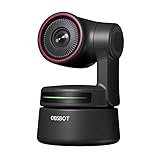
- 6. OBSBOT Tiny 2 4K AI Tracking Webcam
- 7. OBSBOT Tiny PTZ 4K Webcam
- 8. NEWORK 4K PDAF and CDAF Autofocus Webcam
- 9. Acer 4K Sony Sensor PDAF Webcam
- 10. Insta360 Link 2 4K AI Tracking Webcam
- How to Choose a Webcam for Teaching
- Setup Checklist for a Virtual Classroom
- When a Webcam Is the Wrong Tool
- Frequently Asked Questions
- Final Verdict
Top 3 Picks for Teachers Right Now (October 2026)
All 10 Webcams at a Glance in 2026
Every model below is listed in the order we would consider them for a teaching year. Read the autofocus column first, then check the view angle against how much of your room needs to be in frame.
| Product | Specifications | Action |
|---|---|---|
 NexiGo N930AF NexiGo N930AF |
|
Check Latest Price |
 EMEET NOVA 4K EMEET NOVA 4K |
|
Check Latest Price |
 EMEET C960 4K EMEET C960 4K |
|
Check Latest Price |
 OBSBOT Meet 2 OBSBOT Meet 2 |
|
Check Latest Price |
 EMEET S600 4K EMEET S600 4K |
|
Check Latest Price |
 OBSBOT Tiny 2 OBSBOT Tiny 2 |
|
Check Latest Price |
 OBSBOT Tiny PTZ OBSBOT Tiny PTZ |
|
Check Latest Price |
 NEWORK 4K PDAF Webcam NEWORK 4K PDAF Webcam |
|
Check Latest Price |
 Acer 4K Acer 4K |
|
Check Latest Price |
 Insta360 Link 2 Insta360 Link 2 |
|
Check Latest Price |
How Webcam Autofocus Works, and Where It Fails
Autofocus in a webcam is not one thing. It is at least four different systems sold under the same label, and understanding the difference explains every autofocus complaint we have read from teachers.
Contrast-detection autofocus (CDAF) is the oldest and cheapest system. The camera measures edge contrast across the frame and moves the lens until edges are sharpest. It is accurate when the lighting is good and the subject is still, and it is the system most likely to hunt. If you lean forward to show a flashcard, the camera reads your face as out of focus, drives the lens, overshoots, and cycles. The NexiGo N930AF uses this system, which is why it is worth understanding how it behaves before you rely on it.
Phase-detection autofocus (PDAF) splits the incoming light into two halves and compares them. Because it is measuring rather than guessing, it focuses faster and, more importantly for a teacher, it settles. It does not visibly pulse when you move. Six of the ten cameras here use PDAF, and it is the single biggest reason to spend more.
Hybrid autofocus combines both, using phase detection to get close and contrast detection to fine-tune. The NEWORK 4K webcam is the only camera in this list with a declared hybrid system, which should make it very accurate when it works, though one owner reported a persistently soft image.
AI tracking is not strictly a focus system but it changes focus behaviour. When the camera can recognise and follow a person, it can also keep that person framed as they move, which removes the trigger that causes most hunting. The three OBSBOT and Insta360 models take this further with a motorized gimbal that physically pans and tilts.
Here is the failure mode nobody sells you on: in dim rooms, contrast detection has nothing to lock onto. There is no contrast to measure, so the image goes soft and grainy while the lens searches. More light in front of you beats a more expensive sensor every single time. For the underlying theory, our beginner guide to autofocus modes and the situational breakdown in which autofocus mode to use and when go deeper than a webcam roundup can.
1. NexiGo N930AF 1080p Autofocus Webcam
NexiGo N930AF Webcam with Microphone for Desktop, Autofocus, Webcam for Laptop, Computer Camera, 1080p HD USB Web Camera, Compatible with Zoom/Switch 2/Teams/Webex
1080p 30fps
Contrast autofocus
47.5 degree view
0.19 kg
Pros
- Genuine autofocus that switches to manual
- 27k+ owner reviews show consistent satisfaction
- Sharp 1080p image far better than any laptop camera
- No drivers
- 6.5 ft folding USB cord and flexible clip
Cons
- Autofocus hunts and can zoom visibly when you move
- Low light is fair with visible colour shift
- Thin stick-on privacy slider is fiddly
I put this one first because of the volume of evidence behind it. Twenty-seven thousand reviews at 4.5 stars is a much safer bet than any single reviewer raves, and the recurring theme in those reviews is simple: teachers notice the step up from a laptop camera immediately. The image is genuinely 1080p, colours look natural in daylight from a window, and the clip grips a monitor or a laptop lid without tools.
It also has the only autofocus on this list you can switch off. That sounds minor until you teach in a fixed seat position, because a locked lens stops second-guessing itself every time your hand crosses your face. I set it to manual when I am at a desk and back to auto when I move around.
Where it struggles is movement. The 47.5 degree view is the tightest here, which is excellent for one-to-one tutoring and terrible if you want a whiteboard in frame, and the contrast-based autofocus does visibly hunt when you lean in. Owners also report the thin privacy slider is awkward to open and can rub the body. If you teach in a dim room, expect fair low light performance and some colour shift.
The microphone is the other compromise. Owners describe it as fine for a lesson but noticeably worse than the video quality, and several pair it with an external mic. Budget-wise this is the cheapest way into the list, which is exactly why it tops it for anyone self-funding a home teaching setup.
Who this suits
One-to-one tutors, ESL instructors working from a fixed desk position, and anyone teaching kids who need clear facial expression cues. The tight field of view keeps your face large in frame, which helps young students stay engaged, and the manual focus override means it can be dialled in once and forgotten.
Who should skip it
Anyone who moves around the room, works at a whiteboard, or holds props close to the lens. A 47.5 degree view physically cannot include a board without you stepping back until you are small in frame, and the hunting becomes obvious the moment you do.
2. EMEET NOVA 4K PDAF Webcam
EMEET NOVA 4K Webcam for PC, Ultra 4K HD, PDAF Autofocus, Dual Omni Mics
4K 30fps
PDAF autofocus
73 degree view
2 year warranty
Pros
- Genuine 4K sensor at 8.3 MP stills
- PDAF focuses fast without hunting
- 73 degree view frames a desk and a board
- Two omni mics and a physical privacy cover
Cons
- Defaults to 1080p until you enable 4K
- Autofocus range fixed with no manual override
- Strong window light can wash out colour
This is the value pick, and the reason is one word: PDAF. At this tier most cameras give you contrast detection and a slow, visibly searching lens. The NOVA measures distance instead, and owners consistently describe the focus as fast and non-distracting, which for a teacher means your face stays sharp when you lean forward mid-sentence.
The 73 degree field of view is the other reason it ranks here. It is wide enough to catch a desk, a monitor corner, and part of a whiteboard without any barrel distortion, while still keeping your face reasonably large. The two omnidirectional microphones are repeatedly praised for class use, and there is a physical privacy cover in the box.
Two things to know before you commit. The camera ships defaulting to 1080p, so if you bought it for 4K you have to enable it in software, and older PCs may not sustain the higher resolution. Some older Windows 10 machines also needed the EMEET app installed before the camera was recognised at all, which matters on a locked-down school device.
Autofocus here is range-limited to roughly 8 to 118 inches with no way to disable it, and colour balance can wash out when a window is behind you. Windows Hello is not supported, which is fine unless your district relies on face login.
Who this suits
Teachers who want 4K detail for handwriting and printed worksheets without leaving the budget tier, and anyone teaching from a home office with a mixed bright and dim setup. A two-year warranty is a genuine plus for a device you will clamp and unclamp daily for years.
Who should skip it
Anyone on a managed school laptop where you cannot install vendor software, and anyone whose room has strong backlighting. The lack of manual focus control also makes it a poor fit for a fixed macro-style setup where you want the lens locked to a prop.
3. EMEET C960 4K PDAF Webcam
EMEET C960 4K Webcam for PC, PDAF Auto Focus, Dual Omni Mics, 73° FOV
4K 30fps
PDAF autofocus
66 degree view
Plug and play USB-A
Pros
- True 4K CMOS sensor with no upscaling
- PDAF plus auto light correction handles bright and dim rooms
- Dual omni mics praised for remote teaching
- Physical privacy cover and 1/4 inch tripod thread
Cons
- Defaults to 1080p until 4K is enabled
- Field of view fixed at 66 degrees
- No facial tracking and no autofocus toggle
This is the one to buy for a lecture-style setup where you sit still and talk. At 66 degrees it frames head and shoulders with a little context, which is close to how a student sees you in a seminar room, and the PDAF system plus automatic light correction hold the image steady in both bright and dim spaces.
Reviewers of this model focus almost entirely on audio, describing the dual omnidirectional microphones as crisp and natural for remote teaching and conference calls. For an ESL or phonics class where mouth visibility and voice clarity are the whole point, that combination is the argument. It also sits near the top of the webcam best-seller chart, with 76 percent of ratings at five stars.
The list of limitations is short and mostly functional. Like the NOVA, it starts at 1080p and needs a software switch for 4K. The field of view is fixed and not user-adjustable, so you cannot zoom out to catch a board if you suddenly need to. There is no facial tracking and no way to turn autofocus off, which some teachers find reassuring rather than frustrating.
On mounting you get 360 degrees of horizontal rotation, 15 degrees of vertical adjustment, and a tripod thread, so it can sit on a small stand in front of a lecture rather than clipped to a bezel. USB-A plug and play with no drivers, Wi-Fi requirement, or cloud storage keeps it usable on school hardware.
Who this suits
University lecturers, corporate trainers, and tutors running back-to-back video calls who need clear voice pickup more than tracking. A fixed 66 degree view removes any decision-making about framing once you have set the mount.
Who should skip it
Hybrid teachers who stand and move, and anyone whose teaching space needs a whiteboard visible at the same time as their face. The f/6 aperture also means it leans on good lighting more than the wider apertures in the premium picks.
4. OBSBOT Meet 2 Compact 4K AI Framing Webcam
OBSBOT Meet 2-4K Webcam for PC with 1/2″ Sensor, AI Framing & Autofocus
4K UHD
AI framing autofocus
40.5 g
USB-C
Pros
- AI framing recomposes the shot for one person or a group
- 1/2 inch sensor keeps 4K bright and clear
- Weighs just 40.5 g and fits in a pocket
- Gesture control without touching the camera
Cons
- Body runs warm during long sessions
- Zoom is digital 4x only
- Advanced features need the OBSBOT Center software
This is the pick for a teacher who teaches from more than one place. At 40.5 grams it is the lightest camera on this list by a wide margin, small enough to live in a laptop bag between a school classroom and a home office. That portability is the feature; everything else supports it.
The AI framing is the differentiator. Instead of a fixed crop, it recomposes the frame when you shift position, tightening on one person and widening for a group. Gesture control lets you trigger framing or zoom with a raised hand, so you do not have to reach back to the desk mid-sentence. The 1/2 inch sensor and f/1.8 aperture keep the 4K image bright in ordinary room lighting.
The trade-off is that the framing intelligence lives in software. OBSBOT Center is optional for basic use but needed for the deeper settings, and that is a problem on a managed district machine. The body also runs warm during extended use, and the tiny form factor means very little physical angle adjustment, so you will want a small stand rather than a laptop clip.
Zoom is digital only, 4x, which crops into the 4K frame rather than using the sensor. That is fine for tightening on your face during a reading lesson and is not fine if you need to show something small and detailed. Dual omnidirectional noise-canceling microphones with adjustable reduction cover the basics of a lesson.
Who this suits
Tutors who work across several locations, teachers who alternate between a laptop and a classroom machine, and anyone who wants AI framing without a motorized gimbal. The weight and size make it the least likely camera in a bag to break.
Who should skip it
Anyone barred from installing software, and anyone who needs a wide, fixed shot of a teaching space. The limited physical adjustability also makes it awkward to mount above or beside a monitor at eye level without an additional stand.
5. EMEET S600 4K Sony Sensor Webcam
EMEET S600 4K Webcam for Streaming, Sony 1/2.55” Sensor, PDAF Autofocus
4K 30fps or 1080p 60fps
PDAF autofocus
Sony 1/2.55 inch sensor
Pros
- Sony sensor gives crisp 4K with a 1080p 60fps option
- PDAF is faster and steadier than standard autofocus
- Field of view adjustable 40 to 73 degrees at 1080p
- Privacy cover is built into the lens
Cons
- Field of view fixed at 73 degrees in 4K mode
- Windows Hello unsupported
- Resolution selection needs companion software or a capture app
The S600 is the one to look at if you teach close-up work. Its field of view narrows to 40 degrees at 1080p, which lets you fill the frame with a textbook page, a worksheet, or your own mouth during a phonics drill without stepping away from the desk. No other camera in this list gives you that framing control at this tier.
The Sony 1/2.55 inch sensor is a step up in image quality, and the 1080p at 60fps mode is useful for recorded demonstrations where motion matters. Reviewers single out the PDAF as noticeably faster and steadier than conventional autofocus, and the on-lens privacy cover cannot be knocked open by accident, which matters in a shared home space.
Be aware the adjustable field of view only applies at 1080p. In 4K it is fixed at 73 degrees, so the tight framing and the high resolution are mutually exclusive. That is a genuine design decision rather than a defect, but it is the one thing to check against your teaching style before buying.
Auto light adjustment is credited with holding detail in dim rooms, and the dual noise-canceling microphones can be toggled in EMEETLINK. The clip and joints are described as rugged with flexible rotation, though output resolution selection depends on the companion software or a compatible capture app, which is another consideration on locked-down hardware.
Who this suits
ESL and language teachers running mouth-visibility drills, tutors who show flashcards and textbook pages, and anyone recording demonstrations where 60fps matters. The 10 cm minimum focus distance is close enough for handheld props.
Who should skip it
Anyone who needs 4K detail on a whiteboard at the same time as a tight face shot, and any district device where you cannot run EMEETLINK. Windows Hello is not supported here either.
6. OBSBOT Tiny 2 4K AI Tracking Webcam
OBSBOT Tiny 2 Webcam 4K Voice Control PTZ, AI Tracking Multi-Mode & Auto Focus, Web Camera with 1/1.5″ Sensor, Gesture Control, 60 FPS, HDR Light Correction, Webcam for PC, Streaming, Meeting, etc.
1/1.5 inch sensor
0.3 second autofocus
AI tracking gimbal
4K and 60fps
Pros
- Largest sensor in the category and the sharpest 4K image here
- 0.3 second all-pixel autofocus with almost no visible hunt
- AI tracking follows you around a room in several modes
- Works in standard UVC with no software installed
Cons
- Low light falls short of the price tier
- Built-in microphone is only adequate
- 60fps is limited to 1080p with HDR off
This is the camera for a teacher who cannot sit still. The two-axis gimbal physically pans and tilts to follow you, and the AI tracking has dedicated modes for upper body, close-up, hand tracking, and set zones. You walk to the whiteboard, it follows, and the picture keeps working. Owners compare the image quality favourably to cameras costing considerably more, and the 1/1.5 inch sensor is the largest in this roundup.
Autofocus is the technical headline. A 0.3 second all-pixel focus time is several times faster than typical webcam behaviour, and in practice the lens settles before you notice it moved. Critically for school IT, it works in standard UVC mode with no software required, so tracking, voice control, and gesture control all function on a machine you are not allowed to configure.
There are honest compromises. Low-light performance falls short of what the price suggests, and the built-in microphone is merely adequate, so a separate mic is advisable for serious audio. If you are recording a course, plan for an external microphone from the start. HDR is unavailable in 60fps mode, and that mode drops to 1080p or 720p.
Tracking can get confused when more than one person is in frame, which is exactly the situation in a group class. The included friction mount is a simple shelf rather than a locking mount, so the camera can be knocked off, and it wants a reasonably modern machine, plus a USB-to-HDMI adapter if you feed a video switcher. There is no camera control on Linux.
Who this suits
Course creators, instructors who demonstrate physical skills, and hybrid teachers moving between desk and board. It is the only camera here that both tracks you and works with zero software, which is the combination district IT policies tend to allow.
Who should skip it
Anyone teaching in a dim room, and anyone teaching a large group where more than one face is in frame. If your audio has to carry the lesson, budget for a separate microphone rather than relying on the internal one.
7. OBSBOT Tiny PTZ 4K Webcam
OBSBOT Tiny PTZ 4K Webcam, AI Tracking & Autofocus, Video Conference Camera
4K and 1080p 60fps
Two-axis AI tracking
4x optical zoom
Pros
- Real gimbal tracking rather than a digital crop
- 4x optical zoom covers a large teaching space
- HDR and low-light correction handle backlit rooms
- Physical privacy by tilting the camera down
Cons
- Tracking can drop out on fast or sudden movement
- Optical zoom range is short for a large room
- Background blur is CPU-based and often misses
This sits below the Tiny 2 on image quality but adds something the Tiny 2 does not have: 4x optical zoom. For a teacher covering a physical training space, a lab bench, or a large classroom, optical zoom lets one camera see detail that a digital crop would only enlarge. Owners using it for group instruction and physical training report that the gimbal tracking is a genuine step up over fixed cameras.
It also works plug and play in standard UVC mode with the app optional, and it has the most literal privacy protection on this list: tilt the camera down and an indicator shows it is off. The dual omnidirectional microphones come with intelligent noise reduction, and HDR plus low-light correction is credited with holding up in backlit rooms.
Reviews divide on the tracking reliability, and this model has the lowest rating here at 4.3. Tracking can lose the subject during sudden or fast movement, and a raised hand can be misread as a gesture command that stops it. The app spreads its settings across many tabs, and the CPU-based background blur often blurs the wrong object, so treat that feature as optional rather than useful.
There is also one reported case of a firmware update leaving the unit stuck in upgrade mode with unhelpful support, which is worth weighing if you are the sort of person who updates devices immediately. A USB-to-HDMI adapter is needed for a live video switcher.
Who this suits
Teachers covering a wide physical space who need to reach detail without moving the camera, and anyone teaching a group where a fixed wide frame is not enough. The optical zoom is the reason to choose it over a cheaper digital-only alternative.
Who should skip it
Anyone who moves abruptly, and anyone who wants a clean blurred background. If your priority is raw image quality per unit of spend, the Tiny 2 delivers more, and the reviews back that up more broadly.
8. NEWORK 4K PDAF and CDAF Autofocus Webcam
4K Webcam for PC – Ultra 4K HD , PDAF & CDAF Autofocus, 79°FOV, Dual Mics
4K 30fps or 1080p 60fps
PDAF and CDAF autofocus
79 degree view
Pros
- Dual autofocus system combines PDAF tracking with CDAF fine detail
- 79 degree view captures a group without distortion
- Dual noise-cancelling mics with 3 metre pickup
- Two status LEDs show power and active use
Cons
- At least one owner reports a persistently blurry image
- Fixed zoom with no optical adjustment
- Clip mount does not grip some laptops securely
The widest conventional field of view on this list, and the reason this camera exists. At 79 degrees it takes in a small group of students, a whiteboard, or a group class without visible distortion, which makes it a practical pick for anyone who needs context around their face rather than a tight headshot.
Its autofocus is the most technically ambitious in the budget group, combining phase detection for fast subject acquisition with contrast detection for fine detail. Most owners describe it as fast and accurate, and the dual microphones with 3 metre pickup are repeatedly called better than expected for a camera at this level. Two status LEDs, one for power and one for active use, are a small touch teachers appreciate because you can tell at a glance when the camera is live.
The caution here is the review base, at 408 ratings it is the thinnest of the well-regarded cameras, and the most serious complaint is a report of focus performance that never locked, leaving the image soft even with a ring light. The clip also does not grip every laptop, and several owners moved to a tripod instead. Some settings adjustment is needed before streaming software produces the best result.
Zoom is fixed with no optical adjustment, so if you need to tighten the frame you are relying on software cropping. A two-year warranty is included, which is reassuring at this review volume, and it works on Windows, macOS, and Linux with no drivers.
Who this suits
Group classes, small seminar rooms, and any teacher who needs a wide shot without stepping back from the desk. The 3 metre microphone pickup also helps in a room where you are not sitting at the microphone distance.
Who should skip it
Anyone who wants a zoom lens or a highly secure mount, and anyone uneasy about a thinner review history. If you want the same wide framing with a better track record, the Acer model below offers a comparable view angle.
9. Acer 4K Sony Sensor PDAF Webcam
Acer 4K Webcam for PC/Mac with All-Metal Unibody Sculpted, Sony 1/2″ Sensor, PDAF, 2 Noise Reduction Mics, Privacy Cover for Switch 2/Zoom/Teams/Facetime/YouTube/Google Meet
4K UHD
Sony 1/2 inch sensor
PDAF autofocus
83 degree view
Pros
- Genuine Sony 1/2 inch sensor with natural colour
- PDAF recovers fast when you lean in or reach for items
- All-metal unibody stays cool through long sessions
- Magnetic privacy cover held by 12 magnets
Cons
- Privacy cover is a detachable disc that some find fiddly
- Clip needs care on a thin laptop screen
- Digital zoom only
This is the build-quality pick, and the image it produces is the strongest argument for it. A genuine Sony 1/2 inch sensor at f/1.8 gives a 4K image that reviewers describe as sharp, grain-free, and true to life, with good behaviour in low light. That is a real gap: most of the budget group needs decent room lighting to look acceptable, and this one does not.
The PDAF system is praised specifically for how quickly it recovers when you lean forward or reach for an item, which is the exact movement that trips up contrast detection. The aluminium unibody is CNC machined with a sandblasted finish and dissipates heat, so it stays cool across a full teaching day. Dual digital microphones pick up voice from 2.5 metres with noise filtering, and the magnetic privacy cover snaps securely over the lens.
It is also the widest view here at 83 degrees, so it functions as a group camera as well as a face camera. At just over 50 grams it stays portable, and the adjustable stand grips flat or curved monitor backs, with USB-C and an adapter included for true plug and play on both PC and Mac.
Two handling details to note. The privacy cover is a detachable magnetic disc rather than a built-in slider, and one owner found it fiddly to put on and off. The clip also needed care to line up on a thin laptop screen. Zoom is digital only. With 252 ratings, this is the smallest review base on the list, so treat the strong rating as encouraging rather than conclusive.
Who this suits
Teachers in dim rooms, anyone teaching group or class sizes who wants a wide 83 degree view, and buyers who want a device that will survive years of daily clamping. The metal body and two-year build feel appropriate for a device that does not get retired quickly.
Who should skip it
Buyers who need a large body of independent reviews to feel confident, and anyone who prefers a permanently attached privacy shutter over a removable magnetic disc. It also needs a full-size USB-C port, so older machines may need the included adapter.
10. Insta360 Link 2 4K AI Tracking Webcam
Insta360 Link 2 – PTZ 4K Webcam for PC/Mac, 1/2″ Sensor, AI Tracking, HDR, AI Noise-Canceling Mic, Gesture Control for Streaming, Video Calls, Gaming, Works with Zoom, Teams, Twitch & More
4K with HDR
1/2 inch sensor
PDAF autofocus
Physical pan and tilt
Pros
- True 4K from a 1/2 inch sensor with strong low light
- Phase detection autofocus focuses instantly
- Physical pan and tilt tracking follows you around a room
- DeskView and Whiteboard modes built for teaching
Cons
- Will not work with ARM-based Windows or Windows Hello
- Bokeh and some features need the Link Controller
- Sits in a higher price tier
The teaching-specific features here are the reason to look past the price tier. DeskView tilts down to frame a document on your desk, and Whiteboard mode is designed to pick out writing on a board. For a teacher, those are not streaming gimmicks; they remove the two most common requests from students during a class, can you show me the page, and can you show me the board.
Underneath, it is a serious camera. A 1/2 inch sensor with HDR holds up in low light, phase detection autofocus focuses instantly, and the AI tracking physically pans and tilts to follow you around a room rather than cropping digitally. On a thread on r/VIDEOENGINEERING that ranks near the top of the results for this query, users repeatedly single out the Link line as the best looking webcam they have used.
There is a compatibility caveat that matters more for educators than for anyone else. It does not work with ARM-based Windows systems, which covers some laptops and most newer Windows devices on ARM processors, and it does not support Windows Hello face recognition. Check your classroom machine before committing, because a camera that does not enumerate is a camera you cannot teach with.
Natural bokeh depth of field and some advanced features depend on the Link Controller desktop software, which is the same installation friction district IT can block. Gesture control and remote smartphone control work for framing, tracking, and zoom, and there is an automatic privacy tilt-down after ten seconds of inactivity, which is a good default for a shared home teaching space.
Who this suits
Hybrid classroom teachers who need board and document views, and anyone whose teaching space means walking. With 1,554 reviews behind it, this has the largest body of independent evidence of the premium group, which matters when you are committing a departmental budget to one model.
Who should skip it
Anyone on an ARM-based Windows machine, and any school that blocks desktop software installs. If neither applies, this is the most complete teaching camera here, but it is not the cheapest way to fix a soft picture.
How to Choose a Webcam for Teaching
Autofocus type beats resolution. A 4K camera that hunts is a worse teaching tool than a sharp 1080p camera that settles. If your room is fixed and well lit, the N930AF is enough. If you lean, move, or hold things up, spend the money on PDAF, which is what separates the NOVA, C960, S600, Acer, and Link 2 from the rest.
Resolution only matters for legibility. Video conferencing compresses heavily, so the practical benefit of 4K is not a sharper face, it is readable handwriting and printed pages. If you never show text, 1080p at 30fps is genuinely sufficient, and 60fps buys smoother motion for recordings rather than a better live image.
Field of view is an engagement variable. Between 60 and 73 degrees suits one-to-one tutoring, where a tight frame keeps attention on the student. You want 79 to 83 degrees for a whiteboard or a small group. Anything tracking physically can start tight and widen on demand.
Check minimum focus distance before you buy. This is the most teacher-specific spec and the least advertised. Anything focusing from 10 cm or closer handles a flashcard or textbook page held to the lens.
Treat the microphone as a separate decision. Nearly every camera here has dual microphones, and nearly every owner of a premium model reports the internal mic as merely adequate. A mid-range webcam plus a dedicated USB microphone is a common and often better-value route than buying the most expensive camera available.
Verify it works with no software. Teachers on managed district machines frequently cannot install vendor apps. The Tiny 2, the Tiny PTZ, and the Acer all operate in standard UVC mode without an install, which is a genuine practical advantage over models that need companion software for basic function.
Privacy matters in a home. A physical cover, whether a slider, an on-lens shutter, a magnetic disc, or a tilt-down, closes the gap that a software mute button leaves open. If you teach from a shared room, treat it as a requirement rather than a nicety.
Setup Checklist for a Virtual Classroom
Before the first lesson, spend fifteen minutes on the setup. Most of what gets blamed on the camera is really the mount and the lighting.
Put the lens at eye level. A laptop screen sits low, which makes you look down at every student for the whole session. A small stand or a clamped riser fixes this more effectively than any resolution upgrade.
Put light in front of you. A window or a lamp facing the camera gives autofocus the contrast it needs. Backlight is the single most common cause of a hunting, grainy image, and no camera on this list compensates for it fully.
Run a sound check. Do a two-minute recording before students join. Built-in microphones pick up keyboards, chair squeaks, fans, and household noise, and you cannot fix that with autofocus.
Test on the real platform. Open Zoom, Google Meet, or Teams on the same machine you will teach from. Check the resolution dropdown, because several cameras here default to 1080p and never expose 4K automatically.
Watch your bandwidth, not your camera. A 4K stream on a shared connection produces stutter that looks like a camera fault. Lock the resolution before class starts rather than during it.
When a Webcam Is the Wrong Tool
A webcam focuses on you, which is the problem the moment you need everyone focused on a page. If your teaching depends on showing printed work, student handwriting, or small apparatus, a document camera is the correct instrument and no amount of webcam autofocus will close that gap. Our guide to the best document cameras for teachers covers that side of the setup.
The practical rule is simple. If the thing students need to read is at arm’s length from you, it belongs under a document camera. If it is on you, it belongs on a webcam.
Frequently Asked Questions
Which webcam has the best autofocus?
The Insta360 Link 2 and the OBSBOT Tiny 2 lead on autofocus behaviour. Both use phase detection, which focuses fast and settles without the visible hunting that contrast detection causes, and the Link 2 adds physical pan and tilt tracking. Among budget models, the EMEET NOVA 4K and C960 4K use phase detection at a far lower cost, while the NexiGo N930AF uses contrast detection and can hunt when you move.
What is the best webcam for online teachers?
The NexiGo N930AF is the safest all-round choice for teachers because it has genuine autofocus, a huge base of owner reviews, and no software to install. Teachers who want sharper 4K detail for handwriting should look at the EMEET NOVA 4K, and teachers who move around a room should choose the OBSBOT Tiny 2.
Do I really need 4K for video calls?
Not for your face. Video conferencing compresses heavily, so a 4K sensor mostly benefits you when you show handwriting, printed worksheets, or small props that students need to read. If you never show text, a sharp 1080p camera with phase detection autofocus is a better use of the same money.
Is autofocus better than manual focus on a webcam?
Autofocus is better when you move, lean forward, or hold objects up, because it adjusts without your involvement. Manual focus is better when you sit in one position and want the lens locked so it never second-guesses itself. Only the NexiGo N930AF in this list lets you choose between the two, which is a genuine advantage in a fixed desk setup.
What are the common problems with autofocus on webcams?
The most common problem is hunting, where the lens cycles blur-sharpen-blur when the subject moves. The second is racking focus onto the background or a whiteboard instead of your face. The third is close-up failure when a book or flashcard is held to the lens. All three are more common with contrast detection, and all three get worse in dim light where there is little contrast to measure.
What is the best webcam for teaching kids online?
For children, facial expression and mouth visibility drive engagement, so a stable autofocus and a tight field of view matter more than resolution. The NexiGo N930AF with its 47.5 degree view keeps your face large and lets you lock manual focus, while the EMEET S600 narrows to 40 degrees for phonics and mouth-shape drills at 1080p.
Final Verdict
The NexiGo N930AF is the best webcam with autofocus for teachers who need one that simply works, because the evidence behind it is measured in tens of thousands of reviews and it needs no software. If your teaching involves handwriting, printed pages, or a wider room, the EMEET NOVA 4K gives you phase detection autofocus and 4K detail for very little more. If you move, the OBSBOT Tiny 2 tracks you physically and still works in standard UVC mode on a locked-down machine.
Whichever you choose, set the mount at eye level, put light in front of you, and do a sound check before the first student joins. Those three steps do more for how a class feels than any spec on this page. Recheck our picks whenever you upgrade, since the autofocus tier in webcams is moving quickly and 2026 is a good year to revisit the list.