

Six hens is the sweet spot for a backyard flock. Big enough that the eggs add up, small enough that one person can clean it in five minutes. But the coops sold as “6-chicken coops” vary wildly, and the number on the box rarely tells you what you are actually buying. We spent weeks comparing ten of the most-reviewed enclosures on the market, checking dimensions against real flock sizes, and reading what owners say after a few seasons rather than a few days. If you want the broader picture first, our guide to the best chicken coops for backyards covers the main coop styles in more detail.
Here is the short version. Six standard hens need about 24 square feet of indoor floor space, 6 to 8 feet of linear roosting bar, two or three nesting boxes, and a securely fenced run of at least 60 square feet. The hard part is not the arithmetic, it is that most prefab kits arrive with thin wire, plastic latches, and no way to lock anything, so the coop you order is only half the flock-protection system you need. That is the lens we used for every pick below.
We also found that the best chicken coops for 6 chickens split into two very different families. Closed wooden or plastic hen houses that the birds sleep inside, and walk-in metal runs that the birds use during the day. Several keepers end up buying one of each. We have flagged which is which on every product so you do not spend a weekend assembling a shelter your flock cannot roost in.
Table of Contents
- How Big Should a Chicken Coop Be for 6 Chickens?
- Top 3 Chicken Coops for 6 Chickens in 2026
- Best Chicken Coops for 6 Chickens at a Glance
- 1. Rupzen Walk-in Metal Poultry Run – Our Pick for Six-Hen Flocks
- 2. Hatching Time Formex Snap Lock 4-6 Coop – Best All-Weather Closed Coop
- 3. CAMMOO Walk-in Chicken Coop – Best Value for a Six-Bird Flock
- 4. Aivituvin Folding Fir Wood Chicken House – Best for Fast Setup
- 5. Petsfit Outdoor Coop with Run – Best for Small Yards
- 6. CHIKENCOOP Metal Walk-in Run – Best Walk-In Height for Six Hens
- 7. Betterhood Large Metal Round Top Run – Best for Multi-Animal Yards
- 8. GUTINNEEN Mobile Coop on Wheels – Best for Rotating the Flock
- 9. Suumerpety Large Cedar Coop with Run – Best for Roomy Yards
- 10. NUGRIART Walk-in Metal Poultry Cage – Cheapest Walk-In Run for Six Chickens
- What Actually Matters When Buying a Chicken Coop for 6 Chickens
- Frequently Asked Questions
- What size chicken coop do I need for 6 chickens?
- Is a 4×4 chicken coop big enough for 6 chickens?
- Is it cheaper to build a chicken coop or buy one?
- What is the best hen house for 6 chickens?
- Which walk-in chicken coops work for 6 chickens?
- What is the best chicken coop for 6 chickens for cold winters?
- How much run space do 6 chickens need if they do not free-range?
- The Best Chicken Coops for 6 Chickens in 2026
How Big Should a Chicken Coop Be for 6 Chickens?
Six chickens need 24 square feet of indoor coop space, 6 to 8 feet of linear roosting bar, 2 to 3 nesting boxes, and at least 60 square feet of fenced run space.
That is the calculation behind almost every recommendation in this guide. The number most first-time keepers get wrong is the run. A 4 by 4 foot coop meets the 3 square feet per hen minimum, but it is the floor of what works, not a comfortable target, especially if the flock is fully confined rather than free-ranging most of the day.
Here is what a 6-birds flock actually needs, item by item.
Indoor floor space: 24 square feet for six standard hens, which works out to 4 square feet per bird. This is the number that keeps bedding dry and ammonia down through a wet week.
Roosting bar length: 6 to 8 feet of linear space, so every bird can roost without shoulder-to-shoulder contact. More bar than that is wasted space.
Nesting boxes: 2 to 3 boxes for six hens. Three is the practical ceiling; beyond that, boxes go unused and collect litter.
Run space: 60 square feet minimum, or 10 square feet per bird, if the flock is not free-ranging daily.
Ventilation: openings high and low so air moves through the coop even when it is closed at night. Chickens produce a lot of moisture and a sealed box in winter causes respiratory problems.
Predator protection: half-inch hardware cloth over any chicken wire, a two-step latch on every door, and a buried wire apron or solid floor line around the base.
One more sizing caveat that most product listings ignore. “Rated for 6 chickens” frequently means 4 to 6 small hens or bantams. Standard breeds such as Orpingtons and Australorps take noticeably more room than the birds used in the listing photos, so a coop at the tight end of its range will feel cramped once six full-size hens are inside it.
Top 3 Chicken Coops for 6 Chickens in 2026

Rupzen Walk-in Metal Poultry Run
- Galvanized steel pipe frame
- PVC coated hexagonal mesh
- 55 x 40 inch five-tier roost ladder


Aivituvin Folding Fir Wood Coop
- Folds flat and installs in 30 minutes
- 26 sq ft interior
- Iron reinforced edges
Best Chicken Coops for 6 Chickens at a Glance
Every coop below is rated for six birds or has enough space to serve a six-hen flock. The type column matters as much as the size: closed hen houses for overnight roosting, walk-in runs for daytime use, or a mobile unit on wheels.
| Product | Specifications | Action |
|---|---|---|
| Rupzen Walk-in Metal Poultry Run |
|
Check Latest Price |
 Hatching Time Formex Snap Lock 4-6 Coop Hatching Time Formex Snap Lock 4-6 Coop |
|
Check Latest Price |
| CAMMOO Walk-in Chicken Coop with Cover |
|
Check Latest Price |
| Aivituvin Folding Fir Wood Chicken House |
|
Check Latest Price |
 Petsfit Outdoor Coop with Run Petsfit Outdoor Coop with Run |
|
Check Latest Price |
 CHIKENCOOP Metal Walk-in Run with Cover CHIKENCOOP Metal Walk-in Run with Cover |
|
Check Latest Price |
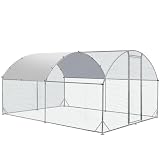 Betterhood Large Metal Round Top Run Betterhood Large Metal Round Top Run |
|
Check Latest Price |
 GUTINNEEN Mobile Coop on Wheels GUTINNEEN Mobile Coop on Wheels |
|
Check Latest Price |
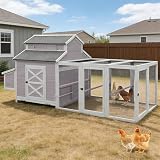 Suumerpety Large Cedar Coop with Run Suumerpety Large Cedar Coop with Run |
|
Check Latest Price |
 NUGRIART Walk-in Metal Poultry Cage NUGRIART Walk-in Metal Poultry Cage |
|
Check Latest Price |
1. Rupzen Walk-in Metal Poultry Run – Our Pick for Six-Hen Flocks
9.9×13.2 FT Metal Chicken Coop, Walk-in Poultry Run Enclosure
157 x 118 x 78 inch walk-in run
Galvanized pipe frame
Five-tier roost ladder
Pros
- Coated mesh sturdier than plain chicken wire
- Five-tier ladder keeps birds off the ground
- Spire roof drains rain and snow
- Walk-in height makes daily care easy
Cons
- Enclosure only
- needs a separate closed coop for night
- Birds need a hard surface underneath for long-term use
Our team put this at the top of the list because it solves the two problems that cause the most trouble for a six-hen flock: flimsy wire and birds sleeping in their own droppings. The walls are PVC coated hexagonal mesh rather than the bare chicken wire that ships with most kits in this price range, and that single material choice makes a real difference against determined predators. At 157 by 118 by 78 inches, the floor area comfortably serves six birds with scratching and dust-bathing room to spare.
The roosting setup is what separates it from a plain run. Instead of a single dowel, you get a 55 by 40 inch five-tier metal ladder, so all six hens can perch off the ground at once and stay off the muddy floor. The spire roof shape means rain and snow slide off instead of sitting in a sag, which matters if you are dealing with the wet autumn that the top-ranking BackYardChickens thread on prefab coops for six birds keeps circling back to.
Owners consistently credit the galvanized pipe frame for holding up in wind and heavy rain, and several mention that they anchor it with blocks or a tarp through winter and it stays put. The 210D Oxford cloth cover is waterproof and UV resistant, so it does not shred in a single season the way some lighter tarps do. At 4.3 stars across 933 ratings, this is the best-supported choice in the group for people who want durability first.
The honest limitation is that this is a run, not a hen house. There is no enclosed, roofed space for the birds to roost overnight, so you still need a closed shelter and a way to secure the flock into it at dusk. Plenty of keepers use one during the day and lock the birds into a smaller wooden coop at night. If you want everything in a single unit, look further down the list.
Why we picked it over the other metal runs
Three of the enclosures we tested use plain hexagonal chicken wire, and reviewers of those models almost all report the same problem: the mesh is too thin to stop a determined raccoon or a weasel. The PVC coating on this mesh is the upgrade, and it costs nothing extra in build time.
The second reason is the roost ladder. Without one, six hens end up standing in their own litter, which gets wet, generates ammonia, and draws red mites. A five-tier ladder is a real piece of husbandry equipment, not a decorative perch.
Where it falls short for a six-hen flock
It gives you no overnight shelter, and mesh floors are not an option. On soft ground the birds will wear a bare patch that turns to mud within a couple of weeks, which is where parasite problems start.
Owners also recommend moving it onto hard surface or deep gravel rather than grass. If you intend to keep the flock permanently in this run rather than rotating it, budget on a floor substrate. Our picks on run design are covered in more detail in the guide to the best chicken runs for backyard flocks.
2. Hatching Time Formex Snap Lock 4-6 Coop – Best All-Weather Closed Coop
Hatching Time Formex Snap Lock 4-6 Large Chicken Coop, Backyard Hen House
4-6 chickens or 6-12 bantams
4 nesting spots with dividers
Three 36 inch roosts
Pros
- Assembles without tools in about 30 minutes
- Will not rot or splinter
- Easy to hose down
- Adjustable side vents
Cons
- Legs and base skirt can flex
- Included carabiners do not fit the lock holes
- Awning tabs are stiff
This is the only closed hen house in the group that is not wood, and that single fact changes how it performs over time. The Formex panels are impact-resistant plastic that is weather, UV, and chemical resistant, so it will not rot in a humid summer or crack in a freeze the way untreated softwood frames do. Owners across several seasons report no fading or cracking.
At 65 pounds it is also light enough for two people to carry, and the snap-lock panel system means there are no tools and no screws. Two adults put it together in about half an hour, which matters if you are assembling in a heat wave or with a deadline against a storm. Cleaning is a hose-down job rather than a scrape-and-shake job.
The interior is genuinely arranged for six birds. There are four nesting spots with removable dividers, which lets you drop to two or three boxes if the flock does not use all four, and three 36-inch roosts, which lands right in the 6 to 8 feet of linear roosting space that a six-hen flock needs. The pull-out litter tray is the feature owners mention most, because daily cleaning is the single habit that keeps a small coop healthy.
Adjustable side vents let you keep rain and wind out while still moving air, which is the ventilation balance most closed coops get wrong. It scored 4.5 stars from 273 ratings, and the review pattern is unusually consistent: fast assembly, portability between paddocks, easy cleaning, and weather durability.
Why the plastic construction is worth it in a wet climate
Wood rot and warping are the recurring complaints across the wooden coops in this roundup, and they accelerate fast where humidity and rain combine. A plastic shell simply removes that failure mode, which is why this unit tends to be the recommendation for anyone dealing with a cold winter and a wet summer in the same year.
There is a second practical benefit. You can move the whole coop by lifting it with two people, so grass rotation is realistic without buying wheels. For a flock of six, rotating to fresh ground every week or two is one of the cheapest parasite controls available.
What you have to fix after assembly
The base is the weak point. The legs and bottom skirt can flex, and owners routinely prop the corners on cinder blocks for stability and to keep damp ground away from the frame. If you rinse the unit out, the hollow legs fill with water, so drilling a few drainage holes is a ten-minute job that prevents a frozen block.
The included carabiners also do not fit the lock holes properly and can snap, so buy your own hardware before the first night. The awning tabs need firm pressure to click into place, which is annoying but not a defect.
3. CAMMOO Walk-in Chicken Coop – Best Value for a Six-Bird Flock
CAMMOO Walk in Chicken Coop, 9.8×6.6×6.6ft Chicken Run for Yard with Cover
9.8 x 6.6 x 6.6 ft run
Plastic mesh tested to -4F and 176F
Tools included in the box
Pros
- Highest rated run in the group
- Plastic mesh will not cut birds when startled
- Pre-sorted labelled parts speed assembly
- Includes pliers wrenches and gloves
Cons
- Mesh is not fully predator-proof
- Thin tarp can tear in storms
- Cutting the mesh roll takes the longest
This one earned the highest average rating in the entire group at 4.5 stars, and the reason owners give is unusual. The mesh is flexible plastic rather than wire, and it is rated to survive more than 1000 bends at both -4F and 176F. Practically, that means a startled bird hitting the wall does not break its neck the way it can with taut hexagonal wire.
The frame uses 0.8mm thickened tubes with extra reinforcement, and owners report it standing up in wind and surviving thunderstorms without shifting. At 9.8 by 6.6 by 6.6 feet it gives four to six hens plenty of scratching and dust-bathing space, and the 5.4 by 2.0 foot door is wide enough to walk through comfortably.
Assembly is unusually pleasant. Parts arrive pre-sorted and labelled, there is a single screw type throughout, and the box includes pliers, two wrenches, and two pairs of gloves. Stainless steel frame ties mean you are not fighting sharp edges while tightening everything. The PE tarp roof is waterproof and sun-protective, keeping birds dry and shaded.
The door has a double-lock design, which is better than the single latch most competitors in this range ship with. For a flock of six that is locked in at night, that difference decides whether the run is a real enclosure or an open invitation.
Why plastic mesh is the right call for six hens
Weasels and mink are the predators that defeat wire mesh most often, and a single human hair gap is all it takes. Plastic mesh removes the sharp-wire hazard entirely and is far more forgiving of a bird that panics at dusk. It is also far easier to cut and fit, which matters because the mesh arrives as a roll rather than pre-cut panels.
If you keep large or heavy breeds, that resilience is a real advantage. A flock of six Orpingtons kicking at walls all evening puts a lot of load on any mesh, and plastic absorbs it without springing back or deforming.
Where this run lets you down
It is not predator-proof out of the box, and owners are candid about that. Reinforce the base with planks or stones so nothing can dig under the frame, and plan on a night shelter, because a mesh run is not an overnight roosting space.
The tarp is thin and can tear in a serious storm, so keep a spare cover if you are in an exposed yard. The one genuinely slow part of the build is rolling out and cutting the mesh to size, which several reviewers flagged as the longest single step.
4. Aivituvin Folding Fir Wood Chicken House – Best for Fast Setup
Aivituvin Chicken Coop Double Folding Fir Wood Chicken House with Large Nesting Box Poultry Cage Upgrade with Strong Iron Frame, Durable & Waterproof for 4-6 Hens Duck Coop
26 sq ft interior across rest and run areas
Pre-assembled folding design
2 large nesting boxes
Pros
- Installs in about 30 minutes
- Iron reinforcement on high-stress joints
- Roof panels fit precisely
- Hardware neatly labelled for beginners
Cons
- Softwood needs sealing or it chips and warps
- Nesting box hinges are weak
- Roof is not reliably waterproof
The folding design is the headline here. The panels arrive pre-assembled and hinge open into position, so installation takes roughly half an hour instead of the full afternoon a flat-pack wooden coop demands. For anyone buying a coop on a Saturday with a full week of work ahead, that is worth more than any cosmetic feature.
Space is the other strength. The 26 square foot interior covers resting and running areas, which is more than double the indoor minimum for six hens, and the overall footprint of 69.8 by 42 by 54.6 inches fits comfortably against a fence or in a small yard. There are six windows and doors, three rounded-edge perches, and a pull-out cleaning tray.
Builders notice the iron reinforcement on the coop edges and the nesting box. It is exactly where softwood frames usually crack first, and owners report the panels and screw holes fitting precisely enough to keep water out during storms. The hardware is neatly packaged and labelled, which sounds trivial until you are halfway through a build with unidentified screws.
It holds 4.3 out of 5 on quality signals but 4.1 overall across 947 ratings, and the gap is telling. Reviewers like the folding assembly, the iron bracing, and the value, but they repeatedly stress that the soft wood needs sealing and the structure needs predator-proofing before it is trusted as a full-time home.
What the folding design actually saves you
Flat-pack wooden coops fail at the frame stage, usually because the boards are warped slightly out of square and the panels fight each other. A hinged design arrives pre-squared, so the whole job reduces to positioning the sections, driving screws, and fitting the roof. Two people are not strictly necessary, though a second pair of hands helps with the 106-pound finished weight.
The 26 square feet of interior also means this is one of the few units in the roundup that does not assume bantams. Six full-size hens have room to settle without crowding, which is the difference between comfortable and stressful at the tight end of a flock’s capacity.
What has to be fixed before you trust it
Seal the wood. Reviewers describe the frame chipping, splitting, and absorbing moisture unless treated, and there is a noticeable cedar smell out of the box that fades after a few weeks of weather. The nesting box cover hinges are weak and are the most commonly replaced part on this model.
The roof is not reliably waterproof where sections meet, and the top half does not always latch securely without extra screws or braces. Latches are not predator-proof either, so add hardware cloth and clips. The automatic chicken coop doors we tested can solve the latch problem properly if you want a sealed entry.
5. Petsfit Outdoor Coop with Run – Best for Small Yards
Petsfit Outdoor Chicken Coop with Run for 4-6 Chickens, 3 Nesting Boxes
71 x 42 x 45 inch overall
6.07 sq ft nesting area,12.56 sq ft run
3 nesting boxes
Pros
- Compact multi-level layout uses a small footprint
- Removable plastic floor panel is washable
- PVC roof resists cracking and heat
- 6 heavy-duty ground anchors included
Cons
- Capacity is for small hens and bantams
- Run mesh door is small for human access
If your yard is tight, this is the one to look at. The whole unit measures 71 by 42 by 45 inches and uses a multi-level layout with the run tucked under the elevated nesting area, so it packs a usable amount of space into a footprint most people could put against a shed wall. At 1006 ratings it is also one of the most-reviewed coops in the group.
Cleaning is unusually good for a wooden prefab. A removable plastic floor panel lifts out and rinses, so there is no wood tray sitting under wet litter. The solid fir wood frame ships with six heavy-duty ground anchors, and the anti-tip stakes are described as deterring digging predators, which addresses the most common forum complaint about lightweight coops.
Three nesting boxes with a top lid, two indoor roost bars, and an outdoor run perch with a chicken swing give the flock more options than most coops at this size. The corrugated PVC roof resists cracking, warping, and heat better than asphalt roofing, which matters in summer when an indoor coop can cook the birds.
The transparent sliding PVC window lets you check on the flock without opening the door, and a three-door access system means you can reach the nesting area, the run, and the interior separately.
Who this size actually works for
Buyers are advised to measure their birds against the stated 4 to 6 hen capacity, because the ratings themselves flag that the space suits small hens and bantams. Six large breeds will crowd it, particularly at roosting time. If your flock is Orpingtons, Sussex, or anything similarly heavy, step up a size.
The multi-level design is the reason it works as well as it does. Vertical space means more usable area without a wider footprint, and the run underneath the nesting section keeps the birds shaded and protected. For a six-bird flock in an urban or suburban yard, that compromise is usually the right one.
What to watch out for
The run mesh door is small, which makes daily access and a full clean slower than you would like. It is designed for the birds, not for a person with a bucket. Plan your cleaning routine around that rather than resenting it every morning.
As with the other wooden units here, sealing the fir frame and upgrading the latches with hardware cloth is part of the job, not an extra. Our guide to the best chicken coops for backyards walks through the sealing process in more detail.
6. CHIKENCOOP Metal Walk-in Run – Best Walk-In Height for Six Hens
CHIKENCOOP 9.8 x 6.5 x 6.5 ft Metal Chicken Coop, Chicken Run with Cover
9.8 x 6.5 x 6.5 ft run
47 x 40 inch eucalyptus perch
About 2 hours to assemble
Pros
- Walk-in height makes daily care comfortable
- Corner braces and rear pole reduce wobble
- Peaked roof sheds rain and snow
- Labelled parts with clear instructions
Cons
- No integrated enclosed nesting house
- Around two hours to assemble even for experienced builders
The headline number here is height. A 6.5 foot tall enclosure means you can walk inside, which sounds like a small thing until you are collecting eggs, replacing bedding, or catching a bird at the far corner. Most prefab coops force you to reach in at shoulder height and guess.
The frame is reinforced where it matters, with bottom corner braces and an additional rear support pole to reduce wobble. At 59 pounds it is light enough to reposition once two people have it going, and the 47 by 40 inch natural eucalyptus roosting perch gives six hens a genuine perching surface rather than a round dowel.
The peaked roof carries a detachable waterproof UV-resistant cover, so rain and snow shed cleanly and the cover can come off in summer for airflow. That flexibility is what makes this workable across seasons, since you can strip it back when heat becomes the problem and put it on before the storms arrive.
It sits at 4.2 stars from 1622 ratings, the second-highest review volume of any product here, and the review pattern centres on the roomy interior, the stiffened frame, and the useful perch. Assembly is listed at roughly two hours, which is honest for a metal frame of this size.
Why walk-in height changes daily work
Backyard keepers who switch from a low prefab to a walk-in run usually report the same two effects. Cleaning takes roughly half the time, because you can reach every corner and see the floor condition without crouching. And catching a hen or inspecting for mites becomes a normal job instead of an awkward one.
For a flock of six that free-ranges part of the day, the run is where the birds spend their daylight hours, so a space you can actually stand in is worth more than the extra square footage of a low wide coop.
What it does not include
This is an enclosure without an integrated enclosed nesting house, so it works best paired with a separate closed coop. That pairing is the standard setup for most of the metal options in this roundup, and it is worth planning for before you buy.
Two hours of assembly is real work, though the labelled components and detailed instructions make it a manageable build. The lightweight frame benefits from being anchored against wind, and for a taller structure that matters more than it does for a low one.
7. Betterhood Large Metal Round Top Run – Best for Multi-Animal Yards
Large Metal Chicken Coop Round Top Upgrade Tri-Supporting Wire Mesh Chicken Run,Chicken Pen with Water-Resident and Anti-UV Cover,Duck Rabbit House Outdoor (13’L x 9’W x 6.5’H)
13 x 9 x 6.5 ft enclosure,156 x 108 x 78 inches
240D Oxford cloth canopy
Coated hexagonal wire mesh
Pros
- Largest floor area in the roundup
- Click-together rods need minimal screwing
- Extra bracing and triangular supports
- Walk-in height for daily care
Cons
- Supplied chicken wire is thin
- Zip ties and door latch are weak
- Instructions are imprecise and poles may arrive misdrilled
At 13 by 9 by 6.5 feet this is the largest enclosure we reviewed, and the 156 by 108 by 78 inch footprint gives six birds a genuinely generous daytime area. If you also keep rabbits, ducks, or small goats, the same structure covers them, which is the practical reason many households buy at this size.
Assembly is click-together. Rods push into sockets rather than being screwed, and sockets are included, so the build is mostly about geometry rather than hardware. The galvanized steel frame adds support columns and triangular supports at the corners, and owners report it being sturdy once assembled.
That is the honest summary: sturdy frame, large area, good value, and then a list of things to replace. The supplied chicken wire is thin and flimsy, the included zip ties snap easily, and the door can bend so the latch does not close securely. None of those are deal breakers, but all of them need a hardware run to the shop before the first night.
At 4.2 stars from 1534 ratings, the review pattern is consistent and useful. Owners like the frame and the value, and almost every one of them independently flags the wire, the ties, the latch, and the instructions. Knowing that in advance makes this a much safer purchase than it looks at first glance.
When the extra floor area is genuinely worth it
Six hens in a smaller run is workable if the flock free-ranges for most of the day. Six hens in a smaller run with no daytime access is cramped, and crowded birds feather damage, stress, and stop laying. If your birds are shut in for nine hours of daylight, the bigger footprint is the right call.
There is also a welfare argument for rotation. A structure this size is easier to move onto new ground than a small rigid prefab, and fresh grass every week or two does more for parasite control than any product feature.
What you will be replacing
Budget for hardware cloth to cover the thin wire, better ties, and a modified door latch. Some buyers also report poles arriving drilled on the wrong side, which renders the connectors unusable, so check every component before you start rather than halfway through.
Rust can appear along edges and where the frame meets the ground, so keep the base on a hard surface or gravel. The tarp and wire sag over the single top support pole unless you fit an extra arch. If you want the same large footprint with a sturdier mesh from the start, the large walk-in coops we compared cover the heavier frame options.
8. GUTINNEEN Mobile Coop on Wheels – Best for Rotating the Flock
GUTINNEEN Large Chicken Coop for 4-6 Chickens, Movable Thickened Wooden Hen House on Wheels with Easy Clean Removable Tray & 2 Nesting Boxes, Extra Large Outdoor Duck Cage & Rabbit Hutch
19 sq ft interior for 3 to 6 chickens
Four large wheels
2 nest boxes with 6 compartments
Pros
- Wheels make moving to fresh grass easy
- Hardware fabric instead of chicken wire
- Removable tray and four access points
- Doors and nest boxes have locks
Cons
- Smaller than the listing photos suggest
- Untreated wood needs sealing
- No roosts included
Mobility is the entire point of this one. Four large durable wheels let two people drag the whole unit to fresh grass, which is the cheapest parasite control available and the reason many keepers move toward mobile setups. The wheels also raise the floor by up to 4.92 inches, keeping the birds off damp ground.
Two details set it apart from typical wheeled coops. It uses hardware fabric rather than chicken wire for containment, which is the single most important predator specification in this roundup. And every access point has a lock, so the flock is genuinely secure when you are not home.
Cleaning is well served by a removable sliding bottom tray plus four access areas. The two nest boxes have six compartments between them and a top-opening roof, so you can collect eggs without crouching. Owners report the colour has not faded and that it has withstood high winds when positioned well.
At 4 stars from 270 ratings, the pattern is clear. The wheels, the two-storey space-saving layout, and the hardware fabric earn the praise. The warnings are equally consistent, and the most important one is size: owners say the interior is smaller than the listing photographs imply.
Why mobility solves problems a fixed coop cannot
Moving a flock regularly prevents the worn patch of ground that turns to mud, and it breaks the lifecycle of parasites that live in the soil of a fixed run. It also lets you move the birds onto a lawn that is being dried out by the coop shade, and away from a spot where the roof has started to leak.
For six hens, a 19 square foot interior is workable but not generous, so this works best for a flock that gets out into a larger run or garden during the day. The trade-off is that wheels give you mobility but no anti-dig skirt, so a mobile unit still needs a solid base or buried wire where predators are active.
What to do before the roof goes on
No roosts are included. Owners who fitted them during assembly report the best result, because trying to install a perch afterwards in a 63.7 by 40 by 49.8 inch interior is an awkward afternoon. Decide your roost layout first.
The untreated soft wood needs sealing or it will not handle weather exposure. Paint is thin and scratches easily, the tray metal is described as flimsy, doors swell in moisture, and the bottom pan can rust and bow. Latches are awkward and some buyers needed replacements, with one reporting a missing panel. Treat this as a project, not a weekend-afternoon purchase.
9. Suumerpety Large Cedar Coop with Run – Best for Roomy Yards
Large Chicken Coop for 6-8 Chickens,Wooden Hen House with Run,Outdoor Duck Coop with Nesting Box, Leakproof Pull-on Tray
115.1 x 50 x 56 inch footprint
Waterproof asphalt roof
Three-section nesting box
Pros
- Two-storey layout gives generous usable space
- Cedar construction suited to year-round placement
- Three doors for cleaning and egg collection
- Also works as a rabbit hutch
Cons
- Very large footprint in the yard
- Wide frame is hard to reposition
- Sold as a multi-animal enclosure
This is the biggest wooden unit in the group, at 115.1 by 50 by 56 inches, and the two-storey layout means the usable space is well above the 24 square feet a six-hen flock needs. If you want headroom to expand to eight or ten birds later, this is the structure that leaves you room to grow.
Material choices are the draw. A natural cedar wood frame with a waterproof asphalt roof is built for year-round outdoor placement, and owners specifically single out the roof as holding up in wet weather. Three doors open different areas, which makes both cleaning and egg collection far less of a chore.
The built-in nesting box is divided into three sections, giving six hens separate laying spots so dominant birds do not bully the others out of a single box. A leakproof pull-on tray handles the daily clean. The structure also doubles as a rabbit hutch, which adds flexibility for a mixed yard.
It holds 4.2 stars from 146 ratings, the smallest review base in the roundup, so treat the feedback as a useful signal rather than a statistical certainty. The consensus is that the generous footprint and three-section nesting box suit small flocks that want room to roam.
When oversizing a six-hen flock is the right call
Oversizing usually gets talked down as wasted money, and for a flock of six in a small yard that is fair. But there are two situations where the extra room pays off. If your climate pushes you toward confinement during long stretches of bad weather, a bigger dry floor area is kinder to the birds.
The second is flock growth. Six hens this year can be eight or ten next year, and a structure with a two-storey layout absorbs that without a rebuild. Just check your zoning rules first, since many ordinances cap the number of birds at a fixed number.
What the footprint costs you
This is a big object in a small yard. At 115 by 50 inches it needs clear space around it, and the wide, bulky frame is genuinely difficult to reposition once assembled, so decide its final location before you build.
It is also sold as a multi-animal enclosure rather than a specialist chicken house, which means the build prioritises versatility over fine-grained chicken features. Plan the predator-proofing upgrades before the birds arrive, not after.
10. NUGRIART Walk-in Metal Poultry Cage – Cheapest Walk-In Run for Six Chickens
NUGRIART Large Metal Chicken Coop Walk-in Poultry Cage Hen Duck Run House with Waterproof & Anti-UV Cover Galvanized Rabbits Habitat Spire Shaped Cage for Outdoor Yard Farm Use
118 x 79 x 79 inches
1 inch galvanized steel tubing
Lockable latch door
Pros
- Thicker steel tubing than most equivalents
- Galvanized finish resists rust
- PVC coated mesh deters small predators
- Spire roof drains rain and debris
Cons
- No built-in enclosed nesting area
- Connection points are the hardest part of the build
- Gloves recommended during installation
The lowest entry point into a walk-in enclosure, and the spec sheet explains why it holds up. The tubing is 1 inch diameter, thicker than most market equivalents at this level, and the galvanized finish resists rusting for long-term outdoor use. That matters because the frame is the part that fails first when a cheaper tube rusts through at the base.
Walls are PVC coated hexagonal wire mesh with small gaps, which is a meaningful upgrade from bare chicken wire and does deter smaller predators. The lockable metal latch door is a genuine lock rather than a hook-and-eye, so the flock is secure at night if you are using this as the daytime enclosure.
The spire roof drains rain, snow, and debris without accumulation, which is the detail that keeps the interior dry over a full season. At 118 by 79 by 79 inches it gives six birds a workable daytime area with enough height to stand comfortably and enough width to move past each other.
It scores 4.3 stars from 651 ratings, and buyers consistently value the thick galvanized frame, the coated mesh, the lockable door, and the low cost. The stated caveat is the same one that applies to most runs in this list: it is an enclosure best paired with a separate secure coop.
Why tubing gauge is the spec to check
Most budget enclosures use thinner steel that begins to corrode at the base within a season or two, and corrosion at the ground line is what eventually collapses the frame. Checking the tube diameter is a fast way to tell whether a cheap run will last one summer or five years.
Mesh coating is the second one. PVC coated hexagonal mesh resists bending and rusting in a way bare wire does not, and it will not snap or spring open at a joint. On a structure you leave outdoors year round, those two details are where the money is well spent.
What to plan for in the build
The connection points are the most involved part of assembly, and reviewers recommend gloves. Set out the footprint fully before you start, because a walk-in frame is awkward to reposition once several panels are locked together.
As with the other runs here, there is no built-in enclosed nesting area, so you need a separate closed coop for night roosting. Anchor the base and reinforce the bottom edge so nothing digs underneath. Owners of budget runs typically spend their follow-up money on a sturdier base and a better latch.
What Actually Matters When Buying a Chicken Coop for 6 Chickens
The difference between a coop that works and a coop that disappoints rarely comes down to the brand name. It comes down to four things: honest capacity, real containment, weather management, and how easy the thing is to keep clean. Here is how we weighted each one.
Advertised capacity is not the same as usable capacity
This is the single biggest trap in the 6-chicken category. A coop listed for 4 to 6 chickens is often sized for 4 to 6 small hens or bantams, and standard breeds will crowd it at roosting time. Capacity claims also assume the birds spend part of the day free-ranging outside, which many buyers do not have room to offer.
Do the math yourself. Measure the indoor floor area and divide by six. Anything under 4 square feet per bird means you need to free-range daily or upgrade. If you cannot free-range, add 8 to 10 square feet per bird to your run requirement and size up.
Predator-proofing is where most kits fail
Chicken wire keeps chickens in. It does not keep predators out, because raccoons, foxes, weasels, and mink will work at a wire fence for hours. Half-inch hardware cloth is the standard answer, and it is the upgrade owners most consistently say they had to make after delivery.
Three things matter equally. Replace simple hook-and-eye or slide-bolt latches with carabiners or padlocks, because a single latch is defeated by a raccoon in minutes. Add a buried wire apron extending outward from the base, or drive the frame onto a solid floor line, because digging under is how most flocks are lost. And reinforce the base frame, since mesh run structures with light tubing are the easiest target.
One builder on BackYardChickens described a fully predator-proofed setup built from chain-link kennels and half-inch hardware cloth on the roosting half, with bricks laid around the perimeter to stop digging predators. It cost far less than a premium prefab and it worked. Nobody is born knowing which of these upgrades a given kit needs, so read the reviews for your specific model.
Climate decides the roof and the vents
Humid summers and cold winters are the combination the top-ranking Reddit thread on prefab coops for six birds is actually about, and it is the hardest one to buy for. Wood rots and warps in persistent damp, so a sealed plastic or treated structure holds up better. Winter keepers in that thread note that a solid box with one small, high, draft-shielded vent outperforms a sealed plastic unit, but only if bedding stays dry and ammonia is managed.
For heat, ventilation beats insulation. Airflow high and low keeps humidity down and prevents ammonia buildup, which is the real killer in a closed summer coop. Asphalt roofs run hotter than light-coloured or UV-resistant panels, so shade matters as much as temperature. For any of these climates, sealing untreated wood before the first wet month is not optional.
Cleaning decides whether you keep the flock
A pull-out tray, slide-out floor, or removable plastic floor panel is the feature that determines whether daily cleaning takes one minute or fifteen. With six birds producing meaningful litter every night, the tray is what makes the difference between a chore you tolerate and one you resent. Several coops here also split the nesting box into sections so you can clean one part at a time.
Look for multiple access points as well. Three doors means you can reach the interior, the run, and the nesting area separately instead of crouching through one opening with a flashlight.
Matching the coop style to how you keep chickens
Mobile coops and chicken tractors suit keepers who want to rotate the flock across a garden. Walk-in runs suit keepers who confine the birds during the day and want to walk in to work. Closed wooden or plastic hen houses suit small yards and cold climates. Walk-in and Amish-built coops are the premium tier, where six birds is the entry flock size rather than an oversize purchase.
Whichever style you choose, a lot of keepers end up combining a small closed hen house for night with a larger run for the day. That pairing is the most common configuration we saw among owners with a six-hen flock, and it is worth budgeting for both pieces rather than trying to make one structure do both jobs.
Building your own versus buying a prefab
Building a coop for six birds is very doable, and a DIY build buys you custom sizing, proper hardware cloth, and exactly the doors and trays you want. The cost is a weekend of work plus tools. It is a poor choice only if you do not already have a drill, a saw, and a free Saturday.
Buying a prefab is faster and gives you a finished warranty path, but almost always needs the predator upgrades described above, and the wood ones need sealing. For a first flock, a well-chosen prefab plus a hardware cloth and padlock is the sensible starting point, and it is what most of our picks assume. Automatic feeders can take some of the daily strain off as your flock grows, which we cover in our automatic chicken feeder reviews.
Frequently Asked Questions
What size chicken coop do I need for 6 chickens?
Six standard hens need about 24 square feet of indoor floor space, which works out to 4 square feet per bird. Add 6 to 8 feet of linear roosting bar, 2 to 3 nesting boxes, and a fenced run of at least 60 square feet if the flock is not free-ranging daily. A 4 by 4 foot coop meets the 3 square feet per hen minimum but is tight for six full-size birds.
Is a 4×4 chicken coop big enough for 6 chickens?
Only just. A 4 by 4 foot floor gives you 3 square feet per hen, which meets the bare minimum and works if your flock free-ranges for most of the day. If the birds are confined, or if you keep large breeds such as Orpingtons or Australorps, aim for 4 by 6 or 5 by 4 so the indoor space reaches 4 square feet per bird.
Is it cheaper to build a chicken coop or buy one?
It depends on your tools and your time. A prefab kit costs more up front but takes an afternoon, while a DIY build costs materials only and lets you size the coop exactly, but needs a free weekend and basic tools. Either way, budget separately for half-inch hardware cloth, a padlock, and a buried wire apron, because almost no kit includes them.
What is the best hen house for 6 chickens?
For a closed hen house that handles weather without rotting, the Hatching Time Formex Snap Lock is hard to beat, with a tool-free build, a pull-out litter tray, and three 36 inch roosts. If you want a mobile unit, the GUTINNEEN wheeled coop adds grass rotation. Whichever you choose, verify the interior is at least 4 square feet per bird.
Which walk-in chicken coops work for 6 chickens?
For a walk-in run, the Rupzen metal enclosure is our pick, with a galvanized pipe frame, PVC coated mesh, and a five-tier roosting ladder at 157 by 118 by 78 inches. Remember that a walk-in run is a daytime enclosure, so you still need a separate closed coop for overnight roosting and a way to lock the flock in at dusk.
What is the best chicken coop for 6 chickens for cold winters?
Prioritise ventilation over sealing, because trapped moisture and ammonia cause respiratory problems faster than cold does. A solid structure with a small, high, draft-shielded vent performs well, provided bedding stays dry. Avoid untreated softwood that will warp, and seal any wooden frame before the first wet month. Plastic-bodied coops avoid rot entirely but still need airflow.
How much run space do 6 chickens need if they do not free-range?
Plan on 10 square feet per bird, which means 60 square feet of run for a flock of six. That figure covers scratching and dust-bathing, not just standing room. Anything smaller works for short periods, but permanently confined birds crowd, feather damage, and show dropped egg production. Put the run on hard surface or deep gravel rather than soft grass.
The Best Chicken Coops for 6 Chickens in 2026
Six hens need 24 square feet indoors, 6 to 8 feet of roosting bar, 2 to 3 nesting boxes, and a 60 square foot run. Start there, then pick a structure that matches how you keep birds. Our overall pick, the Rupzen walk-in metal run, wins on mesh quality, frame gauge, and a roosting ladder that keeps six hens off the ground.
If you need one structure that does everything, the Hatching Time Formex Snap Lock is the closed, weatherproof option. For the best value and the highest rating in the group, the CAMMOO run is hard to argue with. Whatever you order, budget for half-inch hardware cloth, real locks, and a buried apron, because that upgrade is not optional.