
If you have read a few capture card roundups lately, you have probably noticed how many of them still lead with hardware launched years ago and quietly call it current. That is the gap this guide closes. We went through the current PCIe capture card lineup for streaming, checked the interface and lane requirements of every card against real owner feedback, and filtered out anything that is a USB dongle wearing a PCIe label.
A PCIe capture card is an internal card that sits in a desktop PC’s PCIe slot, receives HDMI video and audio from a console, camera or second PC, and hands a clean digital feed to OBS Studio while passing the original signal to your monitor. That internal path gives you lower latency, more bandwidth for 4K60 and above, and the option of splitting gaming and encoding across two machines. If you want the wider picture first, our capture card streaming guide covers the interface types, and game streaming capture cards breaks down the software side. This one is only about cards that plug into a PCIe slot.
Before you read the list, one warning that saves a lot of returns: these cards do not work in laptops, and they do not work in handhelds like the Steam Deck. A desktop with a free slot is not optional. Updated for 2026 with all eleven cards below checked against their manufacturer specifications and owner reviews.
Table of Contents
- Top 3 PCIe Capture Cards for Streaming in 2026
- All 11 PCIe Capture Cards Compared Side by Side in 2026
- 1. AVerMedia Live Gamer 4K GC573: the best PCIe capture card for most streamers
- 2. VIXLW 4K Internal Capture Card: a cheap internal path for older sources
- 3. AVerMedia Live Gamer HD 2 GC570: the best value 1080p60 internal card
- 4. Elgato 4K Pro: the premium 4K60 and 8K60 passthrough card
- 5. Blackmagic Design DeckLink Duo 2: the SDI card for live production
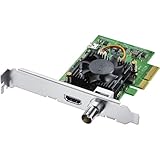
- 6. Blackmagic Design DeckLink Mini Recorder 4K: uncompressed 4K and SDI in a low-profile card
- 7. AVerMedia Live Gamer Duo GC570D: two 1080p60 inputs in one slot
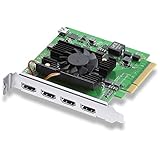
- 8. Blackmagic Design DeckLink Quad HDMI: four 4K60 HDMI inputs in one card
- 9. DigitPro PCIe Video Capture Card: the budget card for old tapes
- 10. ACASIS 4HDMI: four simultaneous 1080p60 HDMI inputs
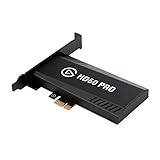
- 11. Elgato HD60 Pro: the most reviewed 1080p60 PCIe card
- Do You Even Need a PCIe Capture Card?
- PCIe vs USB Capture Cards: Why Internal Wins for Streaming
- How to Pick the Right PCIe Capture Card Without a Return
- How to Set Up a PCIe Capture Card in OBS Studio
- Frequently Asked Questions
- The Best PCIe Capture Card for Streaming in 2026
Top 3 PCIe Capture Cards for Streaming in 2026

AVerMedia Live Gamer 4K GC573
- PCI Express x4
- 4K60 HDR10 capture
- 240 fps at 1080p
- zero-lag pass-through

AVerMedia Live Gamer HD 2
- PCI Express x1
- 1080p60 uncompressed capture
- low-latency pass-through
- up to four cards in one PC

All 11 PCIe Capture Cards Compared Side by Side in 2026
| Product | Specifications | Action |
|---|---|---|
| AVerMedia Live Gamer 4K GC573 |
|
Check Latest Price |
 VIXLW 4K Internal Capture Card VIXLW 4K Internal Capture Card |
|
Check Latest Price |
| AVerMedia Live Gamer HD 2 GC570 |
|
Check Latest Price |
 Elgato 4K Pro Elgato 4K Pro |
|
Check Latest Price |
 Blackmagic DeckLink Duo 2 Blackmagic DeckLink Duo 2 |
|
Check Latest Price |
 Blackmagic DeckLink Mini Recorder 4K Blackmagic DeckLink Mini Recorder 4K |
|
Check Latest Price |
 AVerMedia Live Gamer Duo GC570D AVerMedia Live Gamer Duo GC570D |
|
Check Latest Price |
 Blackmagic DeckLink Quad HDMI Blackmagic DeckLink Quad HDMI |
|
Check Latest Price |
| DigitPro PCIe Video Capture Card |
|
Check Latest Price |
 ACASIS 4HDMI Quad Capture Card ACASIS 4HDMI Quad Capture Card |
|
Check Latest Price |
 Elgato HD60 Pro Elgato HD60 Pro |
|
Check Latest Price |
1. AVerMedia Live Gamer 4K GC573: the best PCIe capture card for most streamers
AVerMedia GC573 Live Gamer 4K, Internal Capture Card, Stream and Record 4K60 HDR10 with ultra-low latency on PS5, PS4 Pro, Xbox Series X/S, Xbox One X, in OBS, Twitch, YouTube
PCI Express x4
4K60 HDR10 capture
240 fps at 1080p
3 year warranty
Pros
- Clean 4K60 HDR10 capture with zero-lag pass-through
- Records high frame rates up to 240 fps at 1080p
- Appears in OBS as a video capture device with no extra app required
- Better HDMI source detection and HDR handling than competing Elgato PCIe cards
- Onboard RGB lighting in three preset modes
Cons
- RECentral software is dated and not needed for capture
- HDMI audio routes through RECentral rather than a standalone audio device
- Driver must be downloaded from the AVerMedia site first
The Live Gamer 4K GC573 is a PCI Express x4 card that records uncompressed 4K60 HDR10 and passes through with effectively no lag. It is the one we recommend first because the spec sheet and the owner reviews point the same way: this card detects its HDMI source more reliably than the Elgato PCIe options, and the colour handling holds up on HDR gameplay from a PS5 or Xbox Series X.
We also like that high-frame-rate capture reaches 240 fps at 1080p, which matters if you are recording slow-motion clips for YouTube rather than only pushing a live feed. Owners of retro upscalers report pairing it successfully with devices like the OSSC and RetroTink, so it works as a general video digitiser too.
Two things trip people up on first install. The driver is not bundled, so you download it from AVerMedia before the card appears. And HDMI audio shows up through the RECentral utility rather than as its own input device, which is fine once you know it, but annoying if you expect a separate line in the OBS mixer.
The bundled RECentral also handles preview and record resolutions, and PowerDirector 15 comes in the box for 4K editing. Card dimensions are 5.9 by 4.9 by 0.8 inches, which is full size, so measure your slot spacing if you have a large graphics card.
How this card fits your PCIe layout
It needs a free x4 slot, which is the single most common install problem across this whole category. Modern boards usually feed a short x4 slot from the chipset, and that slot is frequently hidden under a thick GPU. Check your motherboard manual for which slots are CPU-fed and which come from the chipset before you order anything.
Minimum specs from AVerMedia are Windows 10 or 11, an Intel Core i5-6XXX class or Ryzen 3 class processor, a GTX 1060 or RX 5700 or better, and 8 GB of dual-channel RAM. It will not detect HDMI 2.1 sources running at 4K120, which is the one modern console feature it misses.
Where owners report problems
The most common complaint is firmware-related. A few owners describe random input capture freezes after a firmware update that require reactivating the card. These read as isolated reports rather than a widespread pattern, but if you rely on a capture card for paid work, note the card is 3 year manufacturer warranty rather than lifetime.
Audio routing is the second theme. If your plan is to pull game audio from the HDMI port and keep your microphone on a separate input, know that AVerMedia’s route goes through RECentral, while the Elgato cards expose audio more directly. We keep our microphone on a separate USB audio interface regardless, which sidesteps the issue on every card here.
2. VIXLW 4K Internal Capture Card: a cheap internal path for older sources
4K Internal Capture Card, PCIe Capture Card, HDMI, 4K60 Passthrough, Ultra-Low Latency for Streaming & Recording, for PS4,PS5, Xbox, in OBS, YouTube, Single & Dual PC Setups, Black
PCIe internal card
4K60 passthrough
240 fps at 1080p
Lifetime warranty
Pros
- Drivers installed without hassle
- Recognized immediately on Windows 11
- Clean stable signal with no random dropouts
- Works with OBS
- Zoom and Teams
- Handles long recording sessions without overheating
- Lifetime warranty support
Cons
- Capture quality is bound by the fidelity of the analog source
- Bundled software has a noticeable learning curve
- Audio capture is reported as problematic on Linux
The VIXLW 4K internal card is a budget PCIe board that advertises 4K60 passthrough and 240 fps recording at 1080p. What owners actually use it for most is digitizing older tape formats, and the reviews are dominated by people transferring VHS, Hi-8 and MiniDV collections to a PC through OBS.
That is a legitimate use, and this card does it cheaply. Reviewers repeatedly describe the signal as stable with no dropouts, recognised by Windows without extra configuration, and clean across long sessions. We found our guide to capturing family moments on vacation useful for planning which tapes are worth transferring first.
Set expectations correctly on console streaming. The feature list covers 4K60 passthrough and high-speed 1080p capture, so a modern console will show on your monitor, but the owner feedback does not describe 4K60 recording quality from this card. Treat it as a tape and legacy-console tool rather than a 4K streaming card.
Installation is the other consideration. Drivers do not install automatically on every system, and the box contains an installation guide with no software disc. Audio capture is also reported as problematic on Linux, requiring a second device, so plan on Windows if you use this one.
How this card fits your PCIe layout
It is a standard internal card and the listing does not specify a lane width, so treat it as a card for a short slot and verify clearance before fitting. Reviewers installing it for tape work report it sitting neatly in a spare slot, but nobody describes it in a board with a very large graphics card already installed.
If you plan to run this alongside a discrete GPU, count slots rather than lanes. Two dual-width cards usually fit a mid-tower with a slot spacer. Beyond that, move to a card with a documented x4 requirement so you know exactly what you are dealing with.
Where owners report problems
The honest limitation is source quality. Reviewers are explicit that the output is bound by the fidelity of the analog tape being digitised, so a worn VHS will look worn no matter how good the card is. If your goal is clean modern console streams, spend on a card with a documented 4K60 capture spec instead.
The bundled software also draws complaints about a learning curve, and there is no disc in the box, which means you are downloading the installer yourself. Lifetime warranty support is a genuine plus at this price level, and one owner reports getting a response within 24 hours.
3. AVerMedia Live Gamer HD 2 GC570: the best value 1080p60 internal card
AVerMedia Live Gamer HD 2-PCIe Internal Game Capture Card, Record and Stream in 1080p 60 with Multi-Card Support, Low-Latency Pass-Through on Xbox series x/s, PS5, Nintendo Switch, Windows 10 (GC570)
PCI Express x1
1080p60 capture
Low-latency pass-through
3 year warranty
Pros
- Reliable 1080p60 uncompressed capture with low-latency pass-through
- Plug-and-play on Windows without extra drivers
- Multi-card support for up to four cards in one PC
- HDMI and 3.5mm audio cables included in the box
Cons
- 1080p60 ceiling means no 4K recording
- RECentral adds an extra dependency for overlay configuration
- PCI Express x1 interface is dated against modern x4 cards
The Live Gamer HD 2 is a PCI Express x1 card that records uncompressed 1080p60 with low-latency HDMI pass-through. For a streamer who does not care about 4K at all, that is the whole job description, and owners treat it as the dependable no-fuss option.
The feature that surprises people is multi-card support. You can run up to four of these in one gaming PC, including on AMD Ryzen systems, which makes it a cheap way to build a multi-angle or multi-console setup. Both an HDMI cable and a 3.5mm audio cable ship in the box, which is rare at this level.
Capture resolution is the hard ceiling here. There is no 4K recording path at all, so if you plan to record from a PS5 in 4K, this card will force you down to 1080p60. That is fine for a Twitch stream and wrong for a YouTube upload in 4K.
RECentral 4 handles live editing, quality settings and content overlays, and it adds a dependency: configure your overlay there and the card will not simply hand you a clean device. Windows 11, 10 and 8.1 work through the UVC protocol, while Windows 7 needs manual driver installation.
How this card fits your PCIe layout
An x1 card is the easiest possible fit. It works in any x1 or larger slot, including the short slots that are usually blocked by a large GPU, and it does not compete for CPU lanes in any meaningful way. This is the one card here you can install without reading the motherboard manual.
The trade is bandwidth. x1 is fine for 1080p60 and nothing above it, so if your board has a choice between an x1 slot under the GPU and a free x4 slot, take the x4 for any card that records above 1080p.
Where owners report problems
Two themes recur. The first is the 1080p-only ceiling, which owners of current consoles find limiting quickly. The second is the dated x1 interface, which is not a problem for 1080p60 but rules the card out of any 4K or high-frame-rate plan.
A minor note for older systems: Windows 7 builds need the driver installed by hand, and RECentral is required for overlay work. If you stream on a modern Windows install and only need a clean 1080p60 device, neither of those touches you.
4. Elgato 4K Pro: the premium 4K60 and 8K60 passthrough card
Elgato 4K Pro Internal Capture Card, 8K60 Passthrough
4K60 HDR10 capture
8K60 passthrough
HDMI 2.1
1080p240 recording
Pros
- Captures 4K60 HDR10 while passing through 8K60
- HDMI 2.1 in and out supports up to 240 fps at 1080p
- VRR passthrough eliminates screen tearing on compatible displays
- Compact low-profile card fits a streaming PC build cleanly
Cons
- Requires a PCIe slot and Windows 10 or later with no macOS support listed
- Only an installation guide is included in the box
- Some reviewers report picky source and cable detection
The Elgato 4K Pro records 4K60 HDR10 and passes through up to 8K60, which puts it at the top of what a single PCIe card handles today. It is the card to buy if your source is a current console and you want the pass-through to run ahead of the capture.
Two details matter more than the headline. HDMI 2.1 in and out enables capture at up to 240 fps at 1080p, and Variable Refresh Rate pass-through removes screen tearing on a compatible display, so the game on your monitor looks right even while you record. Elgato describes the integration as covering OBS, Streamlabs, Twitch Studio, Restream, Zoom and Teams.
The card is small: 2.2 by 4.76 by 0.75 inches and 110 g, with a low-profile design that suits a dedicated streaming PC. That compactness is a real advantage over the full-size AVerMedia board, and it is the reason this card is easier to pair with a large GPU.
Note what is not in the box. Only an installation guide ships with it, no software disc and no bundled editor, and the listed operating system is Windows 10 with no macOS support stated. There is also no onboard hardware encoder, so if you need CPU offload this is the wrong card.
How this card fits your PCIe layout
Elgato lists the requirement as a PCIe slot plus Windows 10, and does not publish a lane width on the product page. Plan for a short slot and a single-slot bracket. Its small footprint means it is far less likely to collide with a wide graphics card than a full-height multi-input card.
On VRR, check your display. The passthrough path is only tear-free if the monitor and the source both support variable refresh rate, and the chain is display, card, console, in that order. Get any one of those wrong and you are back to a standard handshake.
Where owners report problems
Source and cable detection is the most repeated criticism. Reviewers describe the card as picky about which HDMI source and which cable it locks onto, and a few compare it unfavourably to AVerMedia on that point. Budget time for swapping cables if detection fails.
The other theme is cost relative to the rest of this list, since several 4K60 PCIe cards sit meaningfully lower while doing a similar job at 1080p60 capture. You are paying for the 8K60 passthrough, HDMI 2.1 and VRR path as much as for the recording itself.
5. Blackmagic Design DeckLink Duo 2: the SDI card for live production
Blackmagic Design DeckLink Duo 2 PCIe Capture and Playback Card, Up to 1080p60, 4 Channel 3G-SDI (BDLKDUO2)
Four 3G-SDI channels
1080p60 per stream
Gen 2 PCIe four lane
Genlock reference input
Pros
- Four independent 3G-SDI inputs and outputs for simultaneous capture and playback
- Rock-solid stability in live production and church and school environments
- Works with OBS
- Wirecast and vMix in multi-camera setups
- Reference input with genlock and tri-sync for precise multi-camera timing
- Runs in the background without reboots
Cons
- Not designed for consumer HDMI game capture
- Requires quality RG6 coax cabling for HD-SDI
- Consumes four PCIe lanes which is often undocumented
The DeckLink Duo 2 is an SDI card, not an HDMI game capture card, and it earns the highest average rating in this roundup at 4.8 across 260 reviews. Four independent and configurable 3G-SDI interfaces handle simultaneous capture and playback of up to four streams at up to 1080p60.
This is the card for people running cameras rather than consoles. Owners in live production, worship and school settings describe it as rock solid once configured, running for months without reboots, and working directly with OBS, Wirecast and vMix in multi-camera layouts.
The reference input with genlock and tri-sync support is the feature that separates it from a consumer card. If you are syncing two or more cameras to a common timing signal, that is a professional requirement no HDMI capture card meets.
Format support runs across SD, HD and 3G-SDI including 720p, 1080i and 1080p, and the card works on MacOS, Windows 10 and Linux. Blackmagic’s Desktop Video software has to be installed before use, and channel-to-connector mapping is reportedly poorly explained and needs trial and error.
How this card fits your PCIe layout
Read this one carefully. The listed system requirement is a PCIe 4.0 x4 slot, and the features note a Gen 2 four-lane interface that fits 4, 8 and 16 lane slots. The listing also tags the hardware interface as PCIe x1, so confirm the lane count with Blackmagic before you build around it.
Owners flag that the card consumes four lanes and that this is often undocumented, which is exactly the kind of thing that stops a machine from booting. A x16 GPU plus a four-lane card plus an NVMe drive is the configuration board designers account for, but not every board routes enough lanes from the CPU.
Where owners report problems
The recurring frustrations are professional-setup discipline rather than defects. Cheap zip or Siamese coax will not carry HD-SDI, so you need proper RG6. Mapping connectors to channels takes experimentation, and Desktop Video must be running before the channels appear.
It is also plainly not beginner friendly, and the SDI-centric design means an HDMI console needs an extra converter. If your only source is a PS5, this card is the wrong shape of tool entirely.
6. Blackmagic Design DeckLink Mini Recorder 4K: uncompressed 4K and SDI in a low-profile card
Blackmagic Design DeckLink Mini Recorder 4K PCIe Capture Card
10-bit SD/HD/Ultra HD SDI
HDMI 2.0a input
Gen 2 PCIe four lane
Low profile bracket
Pros
- Excellent 4K picture quality
- notably sharper than USB capture alternatives
- Works with OBS on Windows and detects the card instantly
- Low-profile PCIe form factor keeps the desk area cleaner
- Also works inside Thunderbolt 3 enclosures on Mac systems
Cons
- Software must be installed and input configured manually to HDMI or SDI
- Linux support is poor with drivers reinstalled after kernel updates
- Manual resolution and format configuration required to avoid a black screen
The DeckLink Mini Recorder 4K gives you one 10-bit SD, HD or Ultra HD switchable SDI input plus one HDMI 2.0a input, with 16 channels of embedded audio. Owners praise the picture quality as noticeably sharper than USB capture alternatives, and it is picked up instantly by OBS on Windows.
The low-profile form factor is the quiet win. It keeps the desk area clear compared with an external dongle, and it is one of the few cards here that also works inside a Thunderbolt 3 enclosure on a Mac, which makes it useful if your capture machine is a Mac Studio rather than a tower.
It is also the only card in this roundup that records Rec. 2020 colour and high dynamic range content without an extra encode, and Blackmagic positions it for mobile live capture and broadcast trucks. Capture resolution is listed as 4K.
How this card fits your PCIe layout
The stated requirement is a Gen 2 PCIe Express four-lane slot, compatible with 4, 8 and 16 lane slots, running Linux, Windows or Mac OS X. That makes it one of the friendlier multi-lane cards here, since a four-lane card fits almost anywhere a GPU leaves room.
Physical size is 160 g with a low-profile bracket, so it should clear a large GPU. The one thing to verify is whether your motherboard exposes a free four-lane slot at all; some boards route every lane to the graphics card and storage.
Where owners report problems
Configuration is the main friction. The input must be set manually to either HDMI or 3G/SDI and the two cannot be used simultaneously, so a black screen is usually a settings issue rather than a hardware fault. Resolution and format are also set by hand rather than auto-detected.
Linux support draws the sharpest criticism: drivers need reinstalling after each kernel update and the software can freeze. Multiple Blackmagic cards can also fail to appear together, sometimes needing a reboot and sometimes a Desktop Video version downgrade. Windows and Mac users report far fewer of these issues.
7. AVerMedia Live Gamer Duo GC570D: two 1080p60 inputs in one slot
AVerMedia Live Gamer Duo. Dual HDMI 1080p PCIe Video Capture Card, Stream with 4k60 HDR and FHD 240fps Pass-Through, Work with DSLR, Xbox Series x/s, PS5, Nintendo Switch, Windows 11 (GC570D)
Two 1080p60 HDMI inputs
PCI Express x4
4K60 HDR pass-through
Onboard tone mapping
Pros
- Two independent uncompressed 1080p60 HDMI inputs in a single PCIe slot
- Zero-lag pass-through preserves 4K60 HDR or FHD 240fps on the display
- Onboard processing handles HDR-to-SDR tone mapping and 4K downscaling
- Broad compatibility with RECentral 4
- Streamlabs
- OBS
- vMix and XSplit
Cons
- Capture resolution limited to 1080p60 despite 4K60 passthrough
- Larger physical card than a single-input capture card
- Multiple simultaneous streams increase PCIe bandwidth and system load
The Live Gamer Duo puts two independent uncompressed 1080p60 HDMI inputs into a single PCIe x4 slot. That is the whole reason to buy it: capture a console and a DSLR or mirrorless camera at the same time, or run gameplay and a face cam through one card.
The pass-through side is stronger than the capture side. Zero-lag pass-through preserves 4K60 HDR or Full HD 240 fps on your gaming display while you record 1080p60, so the monitor experience stays current even though the recording does not.
How this card fits your PCIe layout
It is a PCI Express x4 card, so give it a real x4 slot rather than an x1. Dimensions are 9 by 8 by 3 inches in the box and the card is noticeably larger than a single-input capture card, which is the practical cost of carrying two independent channels.
It also needs Windows 10 or later. There is no listed macOS or Linux support, and the requirement is simply a PCIe x4 slot, so check the card physically fits between your GPU and your case before ordering.
Where owners report problems
The obvious limit is that capture tops out at 1080p60 even though pass-through reaches 4K60. If you want 4K files, this is not the card. The upside is that many streamers do not need 4K files, and this solves a problem no single-input card can.
Onboard processing is a genuine feature rather than a checkbox. The card handles HDR-to-SDR tone mapping, 4K-to-1080p downscaling and frame rate conversion to 60 fps without touching the pass-through signal, which saves a lot of GPU work for anyone streaming HDR consoles to a standard channel.
8. Blackmagic Design DeckLink Quad HDMI: four 4K60 HDMI inputs in one card
Blackmagic Design DeckLink Quad HDMI PCIe Capture Card, Up to 4K60, 4 HDMI 2.0b inputs (BDLKDVQDHDMI4K)
Four HDMI 2.0b inputs
Up to 4Kp60
10-bit 4:2:2
Gen 3 PCIe eight lane
Pros
- Four simultaneous HDMI inputs capturing up to 4Kp60 for multi-camera and dual-PC setups
- PCIe 3.0 x8 moves far more data than older x4 cards
- Uncompressed 4K60 10-bit 4:2:2 footage with no extra destructive encode
- Works with vMix
- OBS
- Wirecast and Media Express
- 8 channels of embedded 24-bit 48 kHz audio
Cons
- Requires an 8-lane PCIe generation 3 slot
- Driver and documentation hunting is difficult with limited manufacturer support
- No strain relief on the HDMI ports
The DeckLink Quad HDMI records four HDMI 2.0b sources at once, up to 4Kp60, on a PCIe Gen 3 eight-lane interface. It is the only card here that delivers uncompressed 4K60 at 10-bit 4:2:2 across all four channels, which is the format editors actually want.
Owners running three or four cameras through it report it holding up in live production, and it works with vMix, OBS, Wirecast and Blackmagic Media Express. Colour support covers Rec. 601, Rec. 709 and Rec. 2020 with Deep Color and HDR, and you get 8 channels of embedded 24-bit 48 kHz audio.
How this card fits your PCIe layout
Plan around an eight-lane Gen 3 slot, which is the hard requirement. Many older motherboards cannot supply one, and that single fact rules the card out for a lot of builds. It is compatible with 8 and 16 lane slots across Mac, Windows and Linux.
One real-world note from owners: it works in the Mac Pro 7,1, which is a legacy Apple PCIe machine. That is unusual backwards compatibility and tells you how little the card assumes about modern hardware.
Where owners report problems
Setup friction dominates the complaints. Reviewers describe difficulty locating drivers and documentation on Blackmagic’s website, and report that the manufacturer provides no meaningful technical support. Expect to budget time for this rather than an afternoon of plug and play.
Also note there is no strain relief on the HDMI ports, which owners raise as a concern with heavy cables in a tower that gets moved. And it cannot capture from copy-protected HDMI sources, which rules out some streaming services and any console with capture blocking enabled.
9. DigitPro PCIe Video Capture Card: the budget card for old tapes
PCIE Video Capture Card, HDMI Capture Card for Streaming, Gaming & Recording, HDMI Video Capture Board, Pass-Through with Ultra-Low Latency on Windows 8, 10, 11 & Linux
CVBS and S-Video input
NTSC and PAL
1080p30 maximum
No driver install
Pros
- Very inexpensive way to digitize VHS
- Mini VHS-C
- S-VHS
- Betamax
- 8mm and Hi-8 tapes
- Genuinely plug-and-play with no drivers needed
- Audio reported as good with left and right channels routing separately
- Solid packaging and clear documentation
- Cleans up cable clutter compared with external USB grabbers
Cons
- Maximum capture resolution is only 1080p30
- Software support is picky with OBS reported not to work for some users
- Full and half height brackets are not included
The DigitPro card is the cheapest way into PCIe capture, and it is aimed squarely at analog video: CVBS and S-Video input with automatic NTSC and PAL detection. Maximum capture resolution is 1080p30, which is the single fact that decides whether this card belongs in your build.
For digitizing VHS, Mini VHS-C, S-VHS, Betamax, 8mm and Hi-8 tapes it works well. Owners report it installing instantly on Windows 11 and on Linux Mint with no drivers at all, and audio quality is described as good with the two channels routing to a standard microphone device.
How this card fits your PCIe layout
It is a PCI Express x1 card needing a PCIe x1 slot, a 2 GHz CPU and 4 GB of RAM, running Windows 8, 10, 11 or Linux. That is the easiest requirement list in this roundup and it will fit almost any desktop with a short slot free.
One physical detail to plan for: it suits a full or half height bracket, and no bracket is included. If your case has no matching screw pattern, you are looking at sourcing one separately before the card is useful.
Where owners report problems
It is not an HDMI game capture card and should not be bought as one. The input is analog composite and S-Video, so a PS5 or Xbox Series X cannot connect to it directly. Maximum output is 1080p30, and there is severe motion blur on retro games with no proper interlaced video handling.
Software is the other problem. Reviewers report OBS and TVTime not working for some users, who had to switch to guvcview. The default picture is also noticeably oversaturated and overbright, requiring analog tuning to look right, and one reviewer had the system stop detecting the card after transferring four tapes.
10. ACASIS 4HDMI: four simultaneous 1080p60 HDMI inputs
ACASIS 4K HDMI PCIe x4 Video Capture Card Stream and Record in 1080p60 with Ultra-Low Latency for Video Conferencing, Teaching, Streaming, Broadcasting on OBS, Zoom, Teams with Multicam, PC
Four 1080p60 HDMI inputs
PCIe x4, x8 or x16
Built-in turbo fan
Uncompressed capture
Pros
- Four simultaneous 1080p60 HDMI inputs in one card at a strong value
- Once drivers are installed all four channels appear instantly in OBS
- Very good picture quality with little latency
- Built-in turbo fan improves heat dissipation and card longevity
- Works with PTZ camera feeds for broadcast
Cons
- Despite 4K in the listing
- actual capture resolution is 1080p60
- Drivers must be downloaded from the ACASIS website with no turnkey installer
- Customer support responsiveness is criticized by some reviewers
The ACASIS 4HDMI captures four 1080p60 HDMI sources simultaneously, uncompressed, with what the manufacturer describes as ultra-low latency. It is a strong value against dedicated multi-input cards from brands that charge several times more for the same channel count.
Once drivers are loaded, owners report all four channels appearing instantly in OBS, with very good picture quality and little latency, which they describe as a clear upgrade from HDMI-to-USB-C adapters. Audio streams extract and are accessible on Windows 10 and 11, and the card fits PTZ camera feeds for broadcast work.
How this card fits your PCIe layout
It is compatible with PCIe x4, x8 and x16 slots, which makes slot planning straightforward on most boards. Dimensions are 3.94 by 3.94 by 1.18 inches at 150 g, and the card includes a built-in turbo fan for direct downward heat dissipation, described as reducing heat by 50 percent.
One case-fit note from owners: bracket hole spacing can conflict with some cases, the HP Z640 being specifically named. If you are building in a workstation rather than a standard tower, check the mounting pattern before you commit.
Where owners report problems
The listing says 4K and the card does not capture 4K. Actual capture is 1080p60, and that gap between the name and the spec is the most common complaint. Read it as a four-channel 1080p60 card.
Installation is not turnkey. Drivers must be downloaded from the ACASIS website, the bundled installation utility is an empty script, and the in-box pamphlet is out of date. There is no Windows driver certification, support responsiveness is criticised by some reviewers, and audio was not accessible in testing on Linux with Ubuntu 21.
11. Elgato HD60 Pro: the most reviewed 1080p60 PCIe card
Elgato HD60 Pro1080p60 Capture and Passthrough, PCIe Capture Card, Low-Latency Technology, PS5, PS4, Xbox Series X/S, Xbox One
PCI Express x1
1080p60 capture
H.264 hardware encoding
Flashback Recording
Pros
- Reliable 1080p60 capture with truly zero-lag pass-through
- Instant Gameview with ultra-low-latency technology
- Flashback Recording saves moments retroactively from a rolling buffer
- Unlimited capture straight to hard drive with H.264 hardware encoding
- Compact PCIe x1 footprint that fits easily in a streaming build
Cons
- Limited to 1080p60 with no 4K or HDR support
- PCI Express x1 interface is dated
- Some 1440p 144Hz monitor setups cannot pass through at full resolution
The HD60 Pro is the most reviewed internal PCIe capture card on the market, with 4253 reviews at a 4.6 average, and the reasons for that volume are still valid. It records 1080p60 with genuinely lag-free pass-through, and it runs on Windows 7 or later and macOS 10.10 or later.
Two Elgato features carry the rating. Instant Gameview gives an ultra-low-latency preview for your capture, and Flashback Recording lets you slide back in a rolling buffer and retroactively save a moment, which is why this card still turns up in highlight-focused YouTube workflows.
The H.264 hardware encoder is the quiet advantage. It records unlimited footage straight to your hard drive with the encoding work done on the card, so your CPU is not compositing an H.264 stream on top of playing the game. That is the single best reason to keep an older card in a serious build.
It is a compact x1 card at 4.8 by 0.55 by 2.2 inches, so it fits a streaming PC without slot planning. Only an installation guide is in the box, and the warranty is one year limited, which is shorter than several competitors offer.
How this card fits your PCIe layout
PCI Express x1 means it drops into any short slot, including ones tucked under a large graphics card, and it does not meaningfully compete for CPU lanes. It is the easiest internal install in this roundup alongside the Live Gamer HD 2.
The bandwidth ceiling is real, though. There is no 4K or HDR capture path, so if your source is a current console outputting 4K you will be recording 1080p60 regardless. Plan the card around your streaming resolution, not around your monitor.
Where owners report problems
The most common note is the 1080p60 ceiling combined with a dated x1 interface, which together rule out modern 4K plans. A second theme is high refresh rate monitors: some 1440p 144Hz setups cannot be passed through at full resolution, so check your display against the card before committing.
Beyond that, reviewers mostly describe it as a dependable workhorse rather than a cutting-edge device. If you stream at 1080p60 and want hardware encoding, nothing else on this list does that job at this level of proven reliability.
Do You Even Need a PCIe Capture Card?
Plenty of people buy one and never needed it. Before the list, here is the short version by platform. This is the question our answer starts from every time, because the wrong card here is a card you cannot return once it is installed.
Nintendo Switch: yes. There is no PC-side capture path that replaces a card if you want clean output, so a capture card is effectively required.
Xbox Series X|S: usually not. The console’s own capture and broadcasting tools handle it, so a card is optional unless you are running a multi-source setup.
PlayStation 5: optional. The PS5 records and streams on its own. A card is worth it if you want HDR10 pass-through, 8K60 passthrough, Variable Refresh Rate on a compatible display, or capture above the console’s own limits.
Single PC with a modern GPU: no. OBS display capture and GPU encoders handle this well. The claim that a capture card reduces CPU usage in a single-PC setup is a myth, and community advice consistently says so.
Dual PC setup: yes. If your gaming PC and streaming PC are separate machines, a capture card in the streaming PC is how the signal gets there. This is the configuration most professional streamers run.
Laptop or handheld: never. No PCIe slot, no card. Plan for an external USB capture device instead, and check your streaming resolution expectations before buying one.
PCIe vs USB Capture Cards: Why Internal Wins for Streaming
Internal capture cards win on bandwidth and stability, not on image quality. A PCIe card draws power and data straight from the motherboard, so a 4K60 stream does not compete with your mouse, keyboard and webcam for USB bandwidth, and there is no cable to unplug mid-stream. That is the whole argument.
USB cards have their own place. They are the only option for laptops and handhelds, they are cheaper, and for 1080p60 streaming the difference in output is often hard to see. The gap opens at 4K60, at high frame rates, and in multi-card systems where several USB devices share one controller.
Two other things to keep in mind. An internal card needs a free slot and lane planning, which is a real cost if your motherboard is tight. And a PCIe card will not fix a CPU or GPU that cannot run OBS comfortably. The card moves the video signal, not the encoding load.
How to Pick the Right PCIe Capture Card Without a Return
Count lanes before you buy. A card that needs x4 or x8 has to be installed in a slot that offers those lanes, and a card that will not fit under a wide GPU changes your whole layout. Check the motherboard manual for which slots are CPU-fed and which come from the chipset, then measure physical clearance for the bracket.
Separate pass-through from capture. The number that matters for your files is the capture resolution, not the pass-through. The Live Gamer Duo passes through 4K60 HDR while recording 1080p60, and the ACASIS card is named for 4K while capturing 1080p60. Both are useful, neither is what a 4K channel needs.
Know your chroma. The DeckLink Quad HDMI records 8 and 10-bit YUV 4:2:2 across all modes, which is the format that survives editing. Cards that capture 4:2:0 give you a clean-looking stream but a softer file, and it is one of the reasons HDR footage can look washed out. Check what the card actually delivers rather than what the console outputs.
Decide if you need a hardware encoder. Only the HD60 Pro here has onboard H.264 encoding. If your CPU is not comfortably running the game and OBS together, that feature is worth a lot. If it is, a card without an encoder gives you better file quality because the encode is not lossy twice.
Plan your audio separately. Game audio usually arrives over HDMI, but your microphone needs its own input. We use a USB audio interface for the mic on every setup we test, which keeps the capture card focused on video and avoids the routing quirks we saw on the AVerMedia cards. OBS setup steps are below.
Match the card to the source. Analog composite cards digitise tapes. SDI cards serve professional cameras and multi-camera production. Single HDMI cards cover console streaming. Buying a four-channel 1080p60 card for one console is money spent on capability you will not use.
One more check that costs nothing: read the review section for the card’s minimum system requirements, not just the capture specs. The GC573 lists a GTX 1060 or RX 5700 class GPU and 8 GB of dual-channel RAM, and the DeckLink Duo 2 needs a four-lane slot that plenty of boards cannot spare.
How to Set Up a PCIe Capture Card in OBS Studio
Setup is quick once you know the order. We use the same six steps for every card in this roundup, and it works whether the card is a single HDMI input or a multi-channel board.
1. Install the drivers first, before the card goes in the slot, if the manufacturer provides them. The AVerMedia GC573, the ACASIS 4HDMI and both Blackmagic cards all need software from the manufacturer’s site.
2. Power down, switch off the PSU, and seat the card in a slot that matches its lane requirement. Reroute any GPU power cables first so you are not working around a thick cable bundle.
3. Connect the source to the card’s HDMI input, then run the card’s HDMI out to your display. This is the pass-through path, and your monitor is now showing what the console is sending.
4. Boot into Windows and confirm the card appears as a video capture device. If OBS lists it as a webcam, that is a UVC versus capture-device source-type issue: remove the source and add it as a Video Capture Device instead.
5. In OBS, add a Video Capture Device source, pick the card, and set the resolution and frame rate manually to match what the card supports. Do not let OBS guess, because a wrong frame rate produces a stuttering image that looks like a hardware fault.
6. Add your microphone as a separate Audio Input Capture source, then set the game audio from the card as a second input. Two inputs, one mixer, and you can mute either independently during the stream.
For multi-channel cards such as the DeckLink Quad HDMI, the ACASIS 4HDMI or the Live Gamer Duo, repeat step five once per channel. Blackmagic cards need Desktop Video installed and the input configured manually before channels appear, which is where most of their setup friction comes from.
Frequently Asked Questions
What is the best PCIe capture card for streaming?
The AVerMedia Live Gamer 4K GC573 is the best PCIe capture card for most streamers. It uses a PCI Express x4 interface, records uncompressed 4K60 HDR10, passes through with effectively no lag, and captures high frame rates up to 240 fps at 1080p. It holds a 4.4 rating across 1070 reviews. If you need an onboard hardware encoder instead, the Elgato HD60 Pro is the alternative that provides it.
Is a PCIe capture card better than a USB capture card for streaming?
Yes, for desktop streamers. A PCIe card draws data and power from the motherboard, so a 4K60 stream does not compete with your peripherals for USB bandwidth, and there is no cable that can be knocked loose mid-stream. USB cards remain the right choice for laptops and handhelds, which have no PCIe slot at all, and for 1080p60 streaming where the quality gap is hard to see.
Is Elgato or AVerMedia better?
AVerMedia is stronger for 4K60 HDR10 capture and high frame rates, with reviewers repeatedly praising better HDMI source detection and HDR colour handling than Elgato’s PCIe cards. Elgato is stronger for compactness and features, with Variable Refresh Rate pass-through, 8K60 passthrough and the only onboard H.264 hardware encoder in this roundup on the HD60 Pro. Both are reliable choices at 1080p60.
Do I need a capture card to stream?
It depends on your platform. You need one for a Nintendo Switch and for a dual-PC setup, where it is how the signal reaches the streaming machine. You do not need one for a single PC with a modern GPU, where OBS display capture and GPU encoding already work well. A PlayStation 5 or Xbox Series X can record and broadcast on its own. Laptops and handhelds cannot use a PCIe card at all.
Which Elgato PCIe capture card should I buy?
Buy the Elgato 4K Pro if your source is a current console and you want 4K60 HDR10 capture with 8K60 pass-through, HDMI 2.1 and Variable Refresh Rate passthrough. Buy the Elgato HD60 Pro if you stream at 1080p60 and want an onboard H.264 hardware encoder plus Flashback Recording, since it holds a 4.6 rating across 4253 reviews. Neither card records 4K on the HD60 Pro, so resolution decides it.
Can you use a PCIe capture card in a laptop?
No. A PCIe capture card requires a full-length internal slot, which laptops and handhelds such as the Steam Deck do not have. Some pro cards work indirectly inside Thunderbolt 3 enclosures, the Blackmagic DeckLink Mini Recorder 4K being the example in this roundup, but that is an external enclosure rather than a laptop slot. Laptop users need a USB capture device instead.
The Best PCIe Capture Card for Streaming in 2026
After working through all eleven cards, the AVerMedia Live Gamer 4K GC573 is our pick for the best PCIe capture card for streaming in 2026. A PCI Express x4 interface, uncompressed 4K60 HDR10 capture and 240 fps at 1080p cover both live streaming and recorded content, and owners rate its source detection above the Elgato PCIe options.
Choose differently only for a clear reason. The Elgato 4K Pro fits a compact build that needs 8K60 and Variable Refresh Rate pass-through, the Elgato HD60 Pro adds the only onboard H.264 encoder here, the Live Gamer Duo solves two-source capture, and the Blackmagic DeckLink cards serve professional SDI and multi-camera work.
Before any of them, count your PCIe lanes and measure your slot clearance. That single check prevents more wasted purchases than any spec comparison. Use the button on your chosen card to see the current listing.