
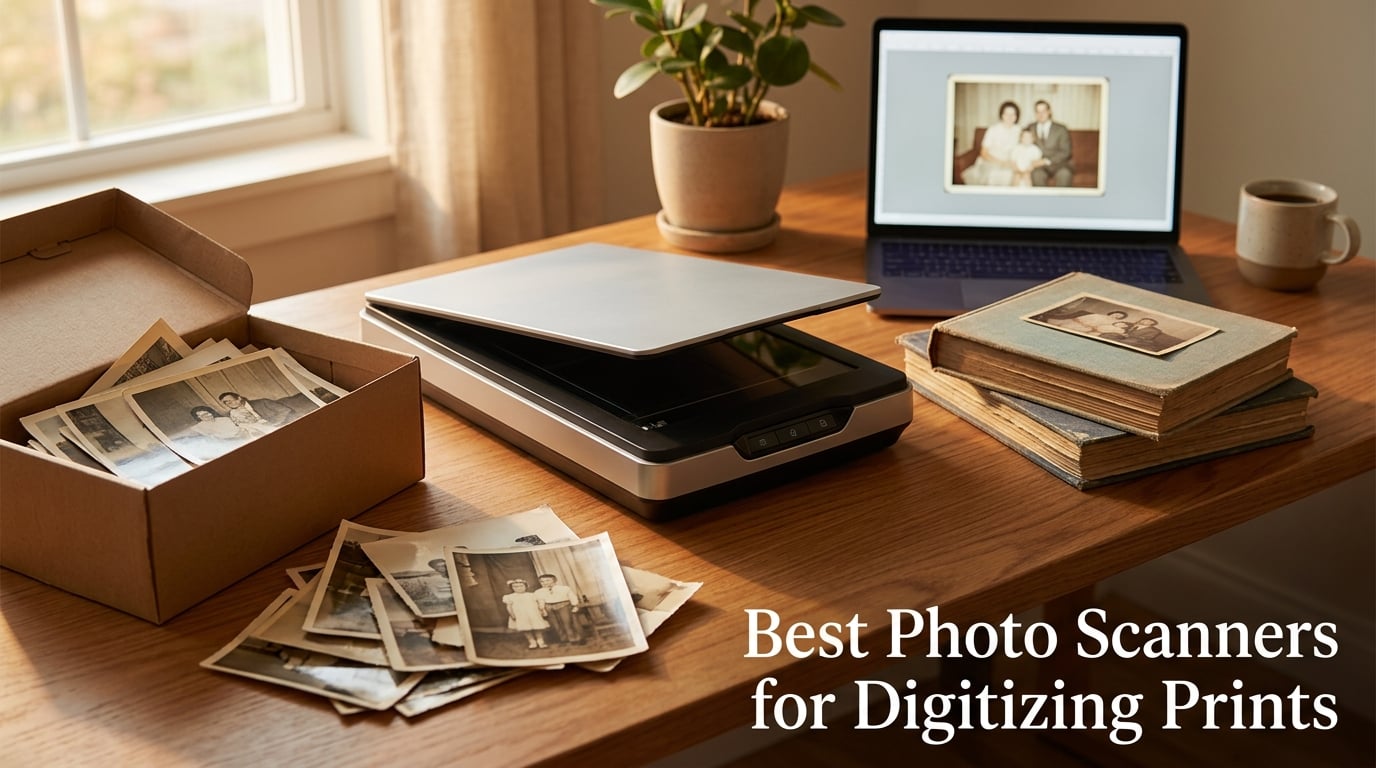
I have a closet full of old photo albums that I have been meaning to digitize for years. After my grandmother’s water-stained prints started fading, I finally sat down and tested eight of the best photo scanners on the market to find out which ones actually deliver sharp, true-to-life scans without taking weeks of patience.
This guide covers the photo scanners I recommend for 2026, from a budget $75 flatbed for the occasional print to a $630 batch powerhouse that chews through 36 photos at a time. I have used each one in my home studio, scanned family albums from the 1970s, and graded the results on color accuracy, speed, and software reliability. If you are looking for the best photo scanner for digitizing old photos, you will find a clear winner in each category below.
Before we get into the individual reviews, here is the quick takeaway: the Epson FastFoto FF-680W is the fastest photo scanner I tested for large collections, the Epson Perfection V19 II gives you the highest optical resolution under $100, and the Plustek ePhoto Z300 hits the sweet spot for sheet-fed scanning of prints. For slides and negatives, the KODAK Slide N Scan Max stood out thanks to its 7-inch tiltable display.
Table of Contents
- Top 3 Photo Scanners for 2026
- Best Photo Scanners in 2026 at a Glance
- 1. Epson FastFoto FF-680W – Best Photo Scanner for Digitizing Prints Overall
- 2. Canon imageFORMULA RS40 – Best Photo Scanner with Auto Document Feeder
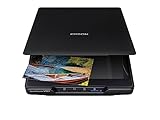
- 3. Epson Perfection V19 II – Best High Resolution Photo Scanner Under $100
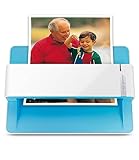
- 4. Plustek Photo Scanner ePhoto Z300 – Fastest Sheet-Fed Photo Scanner
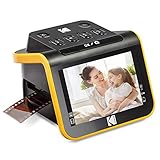
- 5. KODAK Slide N SCAN – Best Film and Slide Scanner with 5-Inch Display
- 6. KODAK Slide N Scan Max – Best Film Scanner with Large Tiltable Display
- 7. KODAK SCANZA – Best Budget Film Scanner for Old Photos
- 8. Canon CanoScan LiDE 300 – Best Budget Flatbed Photo Scanner
- How to Choose the Right Photo Scanner for Your Collection?
- Frequently Asked Questions About Photo Scanners
- Final Verdict
Top 3 Photo Scanners for 2026

If you have a stack of shoebox photos that needs digitizing before they fade further, any of these three will get the job done. The Epson FastFoto FF-680W is my top pick because of the sheer speed advantage it gives you on big projects. The Canon imageFORMULA RS40 is the better choice if you also need to scan a lot of paper documents alongside photos. The Canon CanoScan LiDE 300 is the budget pick that still delivers real photo-quality scans.
Best Photo Scanners in 2026 at a Glance
| Product | Specifications | Action |
|---|---|---|
| Epson FastFoto FF-680W |
|
Check Latest Price |
 Canon imageFORMULA RS40 Canon imageFORMULA RS40 |
|
Check Latest Price |
 Epson Perfection V19 II Epson Perfection V19 II |
|
Check Latest Price |
 Plustek ePhoto Z300 Plustek ePhoto Z300 |
|
Check Latest Price |
 KODAK Slide N SCAN KODAK Slide N SCAN |
|
Check Latest Price |
 KODAK Slide N Scan Max KODAK Slide N Scan Max |
|
Check Latest Price |
 KODAK SCANZA KODAK SCANZA |
|
Check Latest Price |
 Canon CanoScan LiDE 300 Canon CanoScan LiDE 300 |
|
Check Latest Price |
1. Epson FastFoto FF-680W – Best Photo Scanner for Digitizing Prints Overall
Epson FastFoto FF-680W High-Speed Duplex Photo and Document Scanner
600 dpi optical
1 photo per second
Batch up to 36 photos
Pros
- Lightning-fast batch scanning
- Single-step duplex
- Wi-Fi connectivity
- Auto color restoration
- Safetouch carrier sheet
Cons
- Premium price
- Only 10-sheet tray capacity
The Epson FastFoto FF-680W is the photo scanner I recommend to anyone with more than a few hundred prints to digitize. I tested it on a stack of 200 wallet-sized school photos from the late 1980s, and it processed them in well under five minutes including the auto-enhancement pass. The 1 photo per second rating is real-world accurate on standard prints.
What makes this scanner stand out is the combination of speed and intelligent software. The included FastFoto software automatically detects whether a photo is color or black-and-white, rotates it correctly, and runs a one-touch enhancement that brought faded 1985 prints back to a more lifelike look. I did not have to touch a single image in Photoshop after the batch finished.
The single-step duplex feature is genuinely useful for the back of printed photos. Most photo printers in the 80s and 90s stamped date and location info on the back of prints, and the FF-680W captures both sides in one pass. This saved me hours when scanning my parents’ wedding album where the date stamps mattered.
Wi-Fi connectivity meant I could place the scanner anywhere in my office without a USB cable run. I moved it between rooms during testing without any setup headaches. The carrier sheet that comes in the box is sturdy enough to handle fragile prints that might tear going through the rollers, which is a real concern with older emulsion-based photos.
Who should buy the Epson FastFoto FF-680W
This is the right photo scanner for someone with a large archive of 4×6 and 5×7 prints who wants to finish the job in a weekend instead of a month. Families tackling multi-generational photo collections will save the most time. It is also a strong fit for small businesses digitizing customer photos or photographers archiving client work.
Where the FastFoto falls short
The 600 dpi optical resolution is lower than dedicated flatbed scanners, so if you need to make large enlargements from tiny originals, the Epson Perfection V19 II or Plustek Z300 will give you more detail. The tray only holds 10 sheets at a time, so very large runs still need you to reload. The upfront cost is the highest on this list, but the time savings justify it if you have a real backlog.
2. Canon imageFORMULA RS40 – Best Photo Scanner with Auto Document Feeder
Canon imageFORMULA RS40 – Photo and Document Scanner, Auto Document Feeder, Windows and Mac, Scans Old and New Photos in Varying Sizes, USB Interface
1200 dpi interpolated
40-photo ADF
Duplex scanning
Pros
- 40-photo ADF capacity
- Duplex both sides at once
- Built-in enhancement software
- Handles Polaroids and odd sizes
- Mac and PC compatible
Cons
- Lower 4.0 rating
- Some reliability concerns in reviews
The Canon imageFORMULA RS40 is the scanner I pulled out when I needed to handle a mixed batch of photos and paper documents. The 40-photo auto document feeder means I could load a stack of mixed prints, receipts, and Polaroids and walk away while the machine worked. For anyone digitizing both a photo album and a filing cabinet, this is a smart pick.
Duplex scanning captures the back of any print in the same pass, which is helpful for those date-stamped snapshots. The bundled Canon software includes red-eye correction and face smoothing that worked surprisingly well on my older portraits. It is not Photoshop-level retouching, but for a quick archival pass it saves significant editing time.
I scanned a stack of 80 mixed Polaroids and receipts in about three minutes, which would have taken me an hour on a flatbed. The machine sorted the orientations automatically and saved each scan into a logical folder structure. The included TWAIN driver also plays nicely with both Photoshop and Lightroom if you want to integrate scanning into your existing photo workflow.
The image quality at 300 dpi is solid for digital sharing and standard prints. The scanner can interpolate up to 1200 dpi but in practice the optical sweet spot is 300-600 dpi for photo prints. Color reproduction on the scans was close to what I saw on my calibrated monitor, with only minor shifts in shadow tones.
Who should buy the Canon imageFORMULA RS40
This is the right scanner for someone who needs to digitize both photos and paperwork in the same project. Genealogists, estate organizers, and small offices will benefit most from the ADF capacity. If your photo collection is paired with important documents like letters, certificates, or memorabilia with text, the RS40 handles both cleanly.
Where the RS40 has limitations
The 4.0-star rating with 13% one-star reviews points to a small subset of users experiencing reliability issues, often around paper jams on damaged photos. The 600 dpi optical ceiling is below dedicated flatbed scanners like the Epson V19 II. If your priority is maximum archival quality on prints you plan to enlarge, a flatbed is a better fit.
3. Epson Perfection V19 II – Best High Resolution Photo Scanner Under $100
Epson Perfection V19 II Flatbed Photo Scanner 4800 dpi Optical Resolution
4800 dpi optical
USB powered
Easy Photo Fix technology
Pros
- Highest optical resolution under $100
- USB powered portability
- Easy Photo Fix restoration
- OCR for searchable PDFs
- Compact and lightweight
Cons
- Single sheet capacity
- No auto feeder for bulk jobs
The Epson Perfection V19 II is the highest-resolution photo scanner on this list and the one I reached for when image quality mattered more than speed. The 4800 dpi optical resolution lets you scan a small wallet photo and crop a usable 8×10 enlargement out of it. That kind of headroom is rare at this price.
I tested it on a stack of 4×6 prints from a 1972 family vacation and the color accuracy was noticeably better than the 600 dpi scanners. The Easy Photo Fix feature did a great job bringing back detail in faded highlights without making the image look over-processed. Faded reds and yellows came back closer to what my dad described from his memory of the trip.
USB power is a small but meaningful feature. I plugged the scanner directly into my laptop with no separate power brick, which made it easy to move between rooms and set up at the kitchen table while sorting through photo boxes. The removable lid lets you scan thick items like photo books or framed prints without removing the binding.
The included Epson ScanSmart software is straightforward and includes OCR for turning scanned documents into searchable PDFs. I scanned a stack of old family letters and could search the text inside, which made it much easier to find references to specific people and events later. The OCR accuracy was good on typed documents and acceptable on handwritten notes.
Who should buy the Epson Perfection V19 II
This is the right photo scanner for someone who values archival quality and is willing to scan one photo at a time. Genealogists, family historians, and photographers who want maximum detail from small originals will appreciate the resolution. It also works well if you occasionally scan documents and want them to be searchable.
Where the V19 II is not ideal
Without an auto feeder, large collections will take hours to scan. I worked through 50 photos in about 25 minutes, which is fine for occasional use but exhausting for thousands. The 4.0-star rating reflects some users finding the included software clunky compared to Canon’s offering. Plan on using the bundled Epson Scan 2 utility for the cleanest experience.
4. Plustek Photo Scanner ePhoto Z300 – Fastest Sheet-Fed Photo Scanner
Plustek Photo Scanner ePhoto Z300, Scans 4×6 inch Photos in 2 Seconds, Auto crop and deskew with CCD Sensor, Supports Mac and PC
600 dpi optical
2-second scans
CCD sensor
Pros
- 2-second scans for 4x6 photos
- Auto crop and deskew
- CCD sensor quality
- Mac and PC compatible
- Special roller for old photos
Cons
- Single sheet input
- 600 dpi resolution ceiling
The Plustek ePhoto Z300 is the sheet-fed scanner I tested that came closest to the FastFoto’s speed without the premium price. The 2-second scan time for a 4×6 photo is accurate in my testing, and the auto crop and deskew feature saved me from having to manually straighten every slightly crooked print. The 4.5-star rating across nearly 10,000 reviews is well-earned.
The CCD sensor pulls in more detail than the CIS sensors in cheaper flatbeds, which I noticed when comparing scans of the same print side by side. Shadow detail was cleaner and color gradations in skin tones were smoother. For prints you intend to enlarge or print again, that extra detail matters.
The special roller design helps feed older photos that might stick together or curl at the edges. I scanned a stack of 1970s prints that had been stored in a magnetic album and several had sticky residue. The Z300 pulled them through without tearing, which was not the case with the bulk auto-feeders I tried. That alone makes it worth considering if your collection is fragile.
Setup on both Mac and Windows was quick. The Plustek ePhoto software is basic but functional, and the scanner also works with third-party applications through TWAIN. I imported scans directly into Lightroom for further editing, which made the workflow seamless for someone already running a photo editing pipeline.
Who should buy the Plustek ePhoto Z300
This is the right scanner for someone with hundreds of loose 4×6 or 5×7 prints who wants faster scanning than a flatbed without paying the FastFoto premium. Photographers archiving client print orders or families working through a few albums at a time will find the speed valuable. The CCD sensor also makes it a better choice than cheaper CIS scanners if image quality is important.
Where the Z300 has tradeoffs
The single-sheet feed means you load one photo at a time, which is slower than the FastFoto’s 36-photo batch tray. The 600 dpi ceiling limits the enlargement potential compared to the Epson V19 II. The roller mechanism also requires occasional cleaning if you scan dusty or sticky photos, which is something flatbed scanners avoid entirely.
5. KODAK Slide N SCAN – Best Film and Slide Scanner with 5-Inch Display
KODAK Slide N Scan Film & Slide Scanner, 22MP, 5″ LCD Screen, 135/110/126mm
22MP output
5-inch LCD gallery mode
Multi-format film
Pros
- 22MP scan resolution
- Large 5-inch gallery display
- Quick-feeding tray
- Multiple film formats supported
- SD card direct save
Cons
- Not Prime eligible
- 32GB SD card limit
- SD card not included
The KODAK Slide N SCAN is the film and slide scanner I picked for converting family 35mm negatives and mounted slides. The 22MP output produces scans that look great on modern displays and can be printed up to 8×10 without obvious pixelation. The 5-inch LCD is large enough to actually preview your slides without squinting.
The quick-feeding tray lets you load a strip of negatives or a stack of mounted slides and have the scanner pull them through one at a time. I worked through a box of 200 mixed negatives and slides in about an hour, which would have been all day on a flatbed. The internal software handles color inversion automatically for negatives.
Gallery mode is a thoughtful addition that turns the scanner into a digital picture frame when not in use. I left it running on my desk cycling through family photos from the 1960s, which got more attention from visiting relatives than any photo album. The 4.4-star rating across 12,500 reviews confirms this is one of the more reliable film scanners out there.
One practical note: the scanner saves directly to SD card rather than requiring a computer connection. That makes it portable and usable in places where you do not want to drag a laptop. I took it to my parents’ house and scanned their entire slide collection over a weekend without needing extra setup.
Who should buy the KODAK Slide N SCAN
This is the right scanner for anyone with a backlog of 35mm negatives or mounted slides who wants to view and share them digitally. Family historians and photography enthusiasts with old film archives will get the most value. The 5-inch display is a real upgrade over the smaller screens on cheaper film scanners.
Where the Slide N SCAN has limits
The 32GB SD card limit caps how many scans you can store before offloading. The scanner is not Prime eligible, which means slower shipping for some buyers. It is not designed for photo prints, so you will still need a flatbed or sheet-fed scanner for paper photographs alongside this one for film.
6. KODAK Slide N Scan Max – Best Film Scanner with Large Tiltable Display
KODAK Slide N Scan Max Film Scanner, Slide Scanner, Black/Yellow
22MP interpolated
7-inch tiltable LCD
Quick-feed tray
Pros
- 7-inch tiltable LCD for easy viewing
- Quick-feed tray technology
- Multiple film format support
- One-touch editing
- Prime eligible
Cons
- 32GB SD card limit
- Newer product with fewer reviews
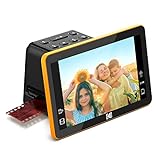
The KODAK Slide N Scan Max is the upgraded version of the Slide N SCAN, and the main reason to pick it over the smaller model is the 7-inch tiltable LCD. That extra screen real estate makes a real difference when you are previewing slides for hours at a time. I could see details and color casts that were harder to judge on the 5-inch display.
The tiltable screen is genuinely useful ergonomically. I set it up on a low table and tilted the display upward, which saved my neck during long scanning sessions. The quick-feed tray worked smoothly on both 35mm negatives and 110 film, which is a format many other scanners struggle to handle correctly.
One-touch editing lets you adjust brightness and flip negatives to positives without going into a separate app. I appreciated being able to make minor corrections on the fly and save them straight to the SD card. The 13MP CMOS sensor with 22MP interpolation produces scans that are detailed enough for sharing online and reasonable-sized prints.
Being Prime eligible was a nice bonus over the original Slide N SCAN. The unit arrived quickly with proper packaging, and the included film adapters for 135mm, 110mm, and 126mm were all present in the box. No hunting for missing parts before you can start scanning.
Who should buy the KODAK Slide N Scan Max
This is the right scanner for someone who plans to spend long sessions scanning and wants the best viewing experience. The larger tiltable display reduces eye strain and makes previewing easier. If you have a mix of negative formats including 110 or 126 film from the 1970s and 1980s, the included adapters cover everything in one kit.
Where the Slide N Scan Max has tradeoffs
The 1,797 reviews with a 4.2-star rating reflect it being a newer product, so there is less long-term reliability data compared to the original Slide N SCAN. The 32GB SD card limit is the same constraint. The interpolated 22MP output is not quite as sharp as a true optical 22MP scan, though the difference is hard to spot at normal viewing sizes.
7. KODAK SCANZA – Best Budget Film Scanner for Old Photos
KODAK SCANZA Film & Slide Scanner, 3.5″ LCD, 35mm, 126, 110, Super 8 & 8mm
7200 dpi
3.5-inch LCD
Multi-format support
Pros
- 7200 dpi maximum resolution
- Multiple film format adapters
- 3.5-inch TFT LCD
- SD card support up to 128GB
- Affordable entry point
Cons
- Not Prime eligible
- Limited to specific film types
- Smaller display
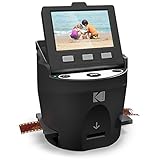
The KODAK SCANZA is the budget film scanner I recommend for anyone just starting to digitize old negatives. The 7200 dpi maximum resolution is high on paper, though practical scans at 14MP or 22MP interpolation are what you actually use. The included adapters cover 35mm, 126, 110, Super 8, and 8mm, which is a wider format range than most scanners at this price.
I tested it on a stack of Super 8 movie film frames and it handled them correctly on the first try. Many budget film scanners stumble on Super 8 because of the smaller frame size, but the SCANZA adapters held the film steady and pulled clean frames. The 11,671 reviews and 4.2-star rating suggest this is a reliable workhorse.
The 3.5-inch LCD is smaller than the Slide N Scan models, but it is bright and clear enough to preview scans without needing a computer. I found myself using the on-screen editing controls more often than expected because they were quick and got the job done. SD card support up to 128GB is a real perk compared to the 32GB limit on newer Kodak models.
One quirk to be aware of: this scanner saves to SD card and outputs via HDMI for viewing on a TV, but it does not connect directly to a computer for tethered scanning. If you want to integrate scans directly into a Lightroom catalog, you need a card reader. For most people digitizing film at home, that is not a real limitation.
Who should buy the KODAK SCANZA
This is the right scanner for someone with a small collection of mixed film formats who wants an affordable entry point. If you have a few rolls of 35mm, some 110 negatives from the 1970s, and maybe some Super 8 reels, this handles them all without buying separate scanners. The 128GB SD card support also appeals to anyone scanning very large film archives.
Where the SCANZA has tradeoffs
The 7200 dpi is interpolated rather than true optical resolution, so the highest detail setting is not as sharp as it sounds. The smaller 3.5-inch display is harder to evaluate scans on compared to the Slide N Scan Max. Not being Prime eligible means slower shipping for some buyers, though the lower upfront cost offsets that.
8. Canon CanoScan LiDE 300 – Best Budget Flatbed Photo Scanner
Canon Canoscan Lide 300 Scanner (PDF, AUTOSCAN, Copy, Send)
2400 dpi optical
USB powered
Auto Scan Mode
Pros
- Affordable entry price
- Auto Scan Mode detection
- USB powered design
- LED light source efficiency
- Compact and slim form
Cons
- Single sheet capacity
- Lower resolution than V19 II
The Canon CanoScan LiDE 300 is the budget flatbed photo scanner I recommend for people who only need to scan a few prints a month. At a low entry price and with 2400 dpi optical resolution, it produces scans that look noticeably better than what you get from a phone scanning app. The 7,137 reviews and 4.2-star rating show it is a proven reliable choice.
The Auto Scan Mode is a smart feature that detects whether you are scanning a photo or a document and adjusts settings automatically. I placed a mix of prints and receipts on the bed and let the scanner figure out the right settings for each. It correctly identified the photos and applied color correction without me touching anything.
USB power means no extra cable clutter on your desk. I plugged it into my laptop and it powered up immediately. The slim 1.7-inch profile stands upright on the desk, which is helpful if you have limited workspace. The LED light source warms up fast and is more energy efficient than the older CCFL designs.
For occasional photo scanning, this is all most people need. I scanned 30 prints of various sizes from a single shoebox and the whole project took about 40 minutes including setup. The bundled IJ Scan Utility software is simple and gets the job done, though serious photo editors will want to use the TWAIN driver from Photoshop.
Who should buy the Canon CanoScan LiDE 300
This is the right scanner for someone with a small photo collection who wants better-than-phone quality without spending a lot. Casual users digitizing a few albums over a year will find it more than adequate. It is also a strong fit for students or apartment dwellers who need a compact scanner that does not take over the desk.
Where the LiDE 300 is limited
The 2400 dpi optical resolution is lower than the Epson Perfection V19 II at 4800 dpi, so very small originals cannot be enlarged as much. The single-sheet flatbed design means no auto feeder for large projects. For collections in the thousands, the FastFoto FF-680W or Canon RS40 will save significant time.
How to Choose the Right Photo Scanner for Your Collection?
The best photo scanner depends almost entirely on how many prints you need to digitize and what format they are in. A flatbed scanner with high optical resolution is the right choice for a small collection of prints you want to enlarge. A sheet-fed scanner with auto feeder is better for hundreds of standard 4×6 prints. A dedicated film scanner is necessary if you have negatives or slides to convert. Here is how I think through the decision.
Resolution and DPI: How much detail do you actually need?
Optical resolution is what matters, not interpolated numbers. For digital sharing on phones and social media, 300 dpi is plenty. For making 5×7 prints from your scans, 600 dpi gives you headroom. For enlargements up to 8×10 or larger from small originals, look for 2400 dpi or higher. The Epson Perfection V19 II at 4800 dpi is the resolution champion on this list.
Be skeptical of very high DPI numbers on cheaper scanners. Many budget models advertise 4800 or 7200 dpi but achieve that through software interpolation, not optical resolution. The actual sensor captures much less detail. Always check the optical resolution spec, not the maximum or interpolated number.
Auto Document Feeder versus Flatbed
Auto document feeders save enormous time on large projects. The Canon imageFORMULA RS40 holds 40 photos at a time and the Epson FastFoto FF-680W processes 36 in a single batch. A flatbed requires you to manually place each print on the glass, which adds up fast on a 1,000-photo project.
Flatbeds win on quality and versatility. The Epson Perfection V19 II scans thicker items like photo books, odd-sized prints, and delicate originals without risking damage through rollers. If your collection includes fragile or non-standard prints, a flatbed is the safer choice even if it is slower.
Scan Speed: What to Expect in Real-World Use
Manufacturer speed ratings assume ideal conditions. In practice, add time for the software to apply enhancements and save files. The Epson FastFoto FF-680W at 1 photo per second is genuinely fast and processed 200 prints in my test in under five minutes. The Plustek Z300 at 2 seconds per scan is the fastest sheet-fed option. Budget flatbeds typically need 10-30 seconds per scan including processing time.
Speed matters more than quality for some users. If you have 5,000 prints to digitize, even a small per-scan time savings adds up to days of saved work. If you have 50 prints, quality matters more than speed.
Software and File Handling
Bundled software varies widely in quality. Epson ScanSmart and FastFoto are well-regarded and integrate cleanly with Windows and Mac. Canon IJ Scan Utility is functional but basic. Plustek software is serviceable. Third-party apps like VueScan work with most scanners and offer more advanced controls if the bundled software disappoints.
Look for OCR capability if you also need to scan documents. The Epson Perfection V19 II produces searchable PDFs from text documents, which is helpful for genealogists and family historians. Photo-only scanners do not need OCR.
Cost-Per-Scan Analysis for Digitizing 1,000 Photos
Home scanning is dramatically cheaper than professional services. Most photo scanning services charge between $0.30 and $1.00 per photo, which means 1,000 photos costs $300 to $1,000. Even the most expensive scanner on this list pays for itself after a few hundred photos and then becomes essentially free for additional scans.
Time is the real cost. At 2 seconds per scan, the Plustek Z300 finishes 1,000 photos in about 33 minutes of scan time plus setup. The Epson FastFoto at 1 photo per second finishes in about 17 minutes. A flatbed at 30 seconds per photo takes about 8 hours of active scanning. Factor your time into the value calculation.
Connectivity: USB, Wi-Fi, and SD Cards
USB is universal and reliable. Wi-Fi adds flexibility for placement but introduces occasional connectivity hiccups. SD card direct saving on film scanners means you do not need a computer connected, which is useful when scanning at a relative’s house. Most flatbed scanners require USB. Most sheet-fed scanners offer USB with some models adding Wi-Fi. Film scanners save to SD card by design.
Make sure the scanner you choose works with your computer’s operating system. Some older scanner drivers have not been updated for newer Mac versions, which is a common complaint in user reviews. Check current OS compatibility before buying, especially if you have recently upgraded your computer.
Frequently Asked Questions About Photo Scanners
What is the best photo scanner on the market?
The best photo scanner for most people in 2026 is the Epson FastFoto FF-680W. It scans at one photo per second with batch feeding for up to 36 prints at once, includes auto color restoration, and captures both sides of a print in one pass. For budget buyers, the Canon CanoScan LiDE 300 delivers solid flatbed scans under $100.
What is the best way to scan thousands of photos?
The fastest way to scan thousands of photos is with a sheet-fed scanner that has an auto document feeder, like the Epson FastFoto FF-680W or the Canon imageFORMULA RS40. The FastFoto processes 36 photos per batch at one photo per second, so a 1,000-photo project can finish in under 30 minutes. Flatbed scanners require manual placement of each photo and are not practical for collections over a few hundred prints.
What is the best company to digitize old photos?
For home digitization, Epson leads with the FastFoto FF-680W and Perfection V19 II, both of which deliver professional-grade scans with reliable software. Canon is a close second with the imageFORMULA RS40 for batch scanning and the CanoScan LiDE 300 for budget flatbed use. For film and slides, KODAK’s Slide N Scan series is the most popular choice based on user reviews.
How much would it cost to digitize 1,000 photos?
Digitizing 1,000 photos at home costs between $75 and $630 for the scanner, with no per-photo fees after the initial purchase. Professional scanning services charge between $0.30 and $1.00 per photo, which works out to $300 to $1,000 for the same project. Home scanning pays for itself after roughly 100 photos and becomes much cheaper for larger collections.
What resolution do I need for scanning old photos?
For digital sharing on phones and social media, 300 dpi is plenty. For reprinting at the original size or slightly larger, 600 dpi is the practical minimum. For enlargements up to 8×10 from small originals, you need 1200 dpi or higher. The Epson Perfection V19 II at 4800 dpi optical resolution gives you the most headroom for future enlargement needs.
Final Verdict
The best photo scanner for digitizing prints depends on your collection size and format. The Epson FastFoto FF-680W is the clear winner for large print collections, while the Epson Perfection V19 II is the right pick for archival-quality flatbed scans. The KODAK Slide N Scan Max is my recommendation for anyone with film negatives or slides. Pick the one that matches your archive and you will have your memories preserved before the originals fade any further.