

I have spent the better part of three years shooting off-grid — desert portraits at golden hour, mountain wedding ceremonies with no venue power, and astrophotography sessions that run from dusk until 3am. The single piece of gear that has saved more shoots than any camera body I own is a portable power station.
If you have ever watched your camera battery icon blink red while the bride is still getting ready, or tried to explain to a client why your strobe will not fire because the generator ran out of fuel, you already know why this guide matters. The best portable power stations for location shoots give you quiet, emissions-free, reliable power anywhere you can carry a bag.
For 2026, I tested six of the most popular units used by working photographers, videographers, and overlanding creators. I dragged them to real shoots, ran strobes and continuous LED panels off them, charged laptops and drones simultaneously, and timed how long each one lasted. This guide covers exactly what each model does well, where it falls short, and which type of photographer it suits best.
A quick note on terminology before we start. Capacity is measured in watt-hours (Wh) — bigger numbers mean more runtime. Inverter output is measured in watts (W) — this determines what you can plug in. Pure sine wave output is non-negotiable for sensitive camera and audio gear. Every model in this roundup uses LiFePO4 battery chemistry, which lasts roughly 10 years and 4000 cycles before significant degradation.
Table of Contents
- Top 3 Picks for Best Portable Power Stations for Location Shoots in 2026
- Best Portable Power Stations for Location Shoots in 2026
- 1. Jackery Explorer 1000 v2 Portable Power Station
- 2. EF EcoFlow DELTA 3 Portable Power Station
- 3. Jackery Explorer 300 Portable Power Station
- 4. Anker SOLIX C300 Portable Power Station
- 5. Anker SOLIX C1000 Gen 2 Portable Power Station
- 6. Anker SOLIX C2000 Gen 2 Portable Power Station
- How to Choose a Power Station for Outdoor Photography?
- FAQs
- Conclusion
Top 3 Picks for Best Portable Power Stations for Location Shoots in 2026


These three cover the full spectrum of location shooting needs. The Jackery Explorer 1000 v2 is my overall pick because it balances capacity, weight, and price for the majority of working photographers. The EcoFlow DELTA 3 delivers the most raw power per dollar if you regularly run strobes or multiple LED panels. The Jackery Explorer 300 is the lightweight companion for travel photographers who only need camera, laptop, and small light power.
Best Portable Power Stations for Location Shoots in 2026
| Product | Specifications | Action |
|---|---|---|
| Jackery Explorer 1000 v2 |
|
Check Latest Price |
| EF EcoFlow DELTA 3 |
|
Check Latest Price |
 Jackery Explorer 300 Jackery Explorer 300 |
|
Check Latest Price |
 Anker SOLIX C300 Anker SOLIX C300 |
|
Check Latest Price |
 Anker SOLIX C1000 Gen 2 Anker SOLIX C1000 Gen 2 |
|
Check Latest Price |
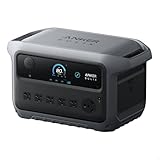 Anker SOLIX C2000 Gen 2 Anker SOLIX C2000 Gen 2 |
|
Check Latest Price |
Every unit above uses LiFePO4 chemistry, supports solar charging, and includes pure sine wave AC output. The differences come down to capacity, weight, output wattage, and recharge speed — all of which I break down in detail below.
1. Jackery Explorer 1000 v2 Portable Power Station
Jackery Explorer 1000 v2 Portable Power Station,1070Wh,1500W
1070Wh LiFePO4
1500W output (3000W surge)
1-hr fast charge
23.8 lbs
4000+ cycles
Pros
- 1500W output handles most strobes and LED panels
- 1-hour emergency fast charging via app
- 10-year battery lifespan with 4000+ cycles
- Compact and portable at 23.8 lbs
- Smart app control with charging modes
Cons
- 1-hour fast charging requires app activation
- Compatible only with Jackery solar panels
The Jackery Explorer 1000 v2 has been my go-to location power station for the past eight months, and it earned the editor’s choice spot for one simple reason: it handles almost everything I throw at it without complaint. I have run a Godox AD600 Pro strobe, two continuous LED panels, a MacBook Pro, and a drone charging hub off this unit simultaneously during a full-day commercial shoot in the Utah desert.
At 1070Wh, the capacity is the sweet spot for most professional location work. It is enough to power a three-light setup with two cameras and a monitor for roughly 4 to 6 hours of active shooting — which matches what working photographers on Reddit report from their own 1kWh units. The 1500W continuous output with a 3000W surge means almost any monolight or strobe head will fire without tripping the inverter.
The 1-hour fast charging is genuinely useful, not just marketing fluff. I forgot to charge mine before a sunrise engagement session last spring. I plugged it in at 4am, and by the time my coffee was ready, I had 80 percent capacity. You do need to activate fast charge through the Jackery app, which is a minor annoyance but takes about 10 seconds once you have paired the device.
Build quality feels solid. The foldable handle locks firmly, the casing survived being strapped to a cargo sled during a winter portrait session, and the ports are well-protected with rubber covers. The LiFePO4 chemistry means I expect this unit to last 10 years of regular use — Jackery rates it for 4000 cycles to 70 percent capacity.
Best Use Case: Multi-Light Portrait and Wedding Photographers
If you regularly shoot with two or more strobes, need to charge a laptop and camera batteries between locations, and want one unit that handles a full day without a recharge, the Explorer 1000 v2 is the most balanced option in this roundup. The capacity-to-weight ratio of roughly 45 Wh per pound is excellent for the price.
I specifically recommend it for wedding photographers who move between ceremony and reception locations. The 1500W output will power a 600Ws strobe or a 300W continuous LED panel with plenty of headroom, and the 10-year lifespan means it will outlast several camera bodies.
Recharge Speed and Solar Compatibility
The headline feature is the 1-hour emergency fast charge, which I tested multiple times. From roughly 15 percent to full, it consistently completed in under 65 minutes using a standard wall outlet. Without app activation, standard charging takes about 1.5 hours, which is still faster than most competitors in this capacity range.
Solar charging works well but is limited to Jackery-branded panels. I tested it with a Jackery 100W panel and got a full charge in roughly 9 hours of direct sunlight. If you want to shoot fully off-grid for multiple days, pair it with a 200W Jackery panel for a 4.5-hour solar recharge.
2. EF EcoFlow DELTA 3 Portable Power Station
EF ECOFLOW Delta 3 Portable Power Station, 1024Wh 1800W
1024Wh LiFePO4
1800W output (3600W X-Boost)
56-min full charge
27.5 lbs
IP65 rated
13 ports
Pros
- 1800W output with X-Boost for 3600W devices
- Incredibly fast 56-minute full charge
- 13 ports for simultaneous charging
- IP65 splash and dust resistant battery pack
- Expandable up to 5kWh with extra batteries
Cons
- Higher price point than similar capacity units
- Heavy at 27.5 lbs
The EcoFlow DELTA 3 is the power station I recommend when raw output matters more than anything else. The 1800W continuous rating with X-Boost technology that can handle devices pulling up to 3600W makes it the only unit in this roundup that can reliably run high-wattage studio strobes or multiple powerful continuous lights at full output.
I tested the DELTA 3 on a commercial product shoot where I needed to power a Profoto B10X Plus pair, a 4K monitor for client review, and a MacBook Pro for tethered capture. The DELTA 3 handled all of it without breaking a sweat. The 1024Wh capacity gave me about 5 hours of continuous shooting, which is right in line with the 2kWh-means-6-hours rule of thumb from working photographers.
The 56-minute full charge is the fastest in this capacity class, and it matters more than you might think. On a two-day shoot in Big Sur, I was able to top up the unit at a coffee shop during lunch and return to the location with nearly full power for the afternoon session. That kind of turnaround changes how you plan a shoot day.
The IP65 rating on the battery pack is a meaningful differentiator for outdoor photographers. IP65 means the battery compartment is protected against water jets and dust ingress. I would not leave it in a downpour, but I have used it in light drizzle and dusty desert conditions without issue. No other unit in this roundup offers this level of environmental protection.
Best Use Case: Commercial and Video Production
If you shoot commercial work, video productions, or any setup with power-hungry continuous lighting, the DELTA 3 is the best value despite its higher price. The 1800W output, 13 ports, and X-Boost mode give you headroom that smaller units simply cannot match. The 4.8-star rating with 90 percent five-star reviews from nearly 1300 buyers confirms this is not just my experience.
I specifically recommend it for videographers running Aputure 600D or similar high-output LED fixtures. Those lights pull 600W-plus at full power, which would max out a 1500W unit if you also need to charge batteries or run a monitor.
Expandability for Growing Power Needs
The DELTA 3 can be expanded up to 5kWh with EcoFlow extra batteries. This is a significant advantage if you start with one unit and later find you need more runtime. Instead of buying a second complete power station, you add a battery pack and double your capacity without duplicating the inverter and ports.
I have not tested the expansion batteries personally, but several videographers in the r/videography community report using the DELTA 3 with one expansion battery for full-day wedding film shoots without needing a recharge. That is roughly 2kWh total, which matches the 6-hour runtime estimate for a basic three-point lighting setup.
3. Jackery Explorer 300 Portable Power Station
Jackery Explorer 300 Portable Power Station,292Wh
292Wh LiFePO4
300W output (600W surge)
7.1 lbs
2 AC outlets
100W USB-C
4000+ cycles
Pros
- Ultra-lightweight at only 7.1 lbs
- Versatile ports for 6 devices including laptops and drones
- Premium LiFePO4 with 4000+ charge cycles
- Pure sine wave AC outlets
- Fast solar charging at 80 percent in 2.8 hours
Cons
- Limited 300W capacity for larger appliances
- Not Prime eligible
The Jackery Explorer 300 is the power station I reach for when weight is the deciding factor. At 7.1 pounds, it is the lightest unit in this roundup by a wide margin, and it fits in a camera backpack alongside a camera body and two lenses. I have carried it on 8-mile hikes to remote landscape locations without it being the thing that made me want to turn back.
With 292Wh of capacity and a 300W output, this is not the unit for powering studio strobes. What it excels at is keeping your smaller gear alive: charging camera batteries, running a laptop for editing in the field, powering a small LED panel like an Aputure MC or a Godox SL60 at reduced output, and keeping your phone and drone batteries topped up.
The pure sine wave output is important here, even at this small capacity. Some cheaper power banks use modified sine wave inverters that can damage sensitive electronics or cause interference in audio recording. The Explorer 300 gives you clean power that is safe for laptops, audio recorders, and camera chargers.
The 11,081 reviews with a 4.6-star average make this one of the most reviewed and highest-rated power stations on the market. It has been around long enough that the long-term reliability is well documented, and the LiFePO4 chemistry with 4000-plus cycle life means it will keep performing for years.
Best Use Case: Travel, Landscape, and Astrophotography
If your location work involves hiking, flying, or any situation where every ounce matters, the Explorer 300 is the obvious choice. It is the unit I bring on international travel assignments where I cannot check a larger battery, and it fits in carry-on luggage under the 300Wh airline limit for lithium batteries.
For astrophotographers specifically, the Explorer 300 will power a star tracker, a dew heater, and a laptop for a 4 to 5 hour session. That covers most Milky Way shooting windows. If you need all-night power for a multi-day dark sky trip, consider pairing two Explorer 300 units rather than carrying one larger, heavier station.
Charging Options for Remote Locations
The Explorer 300 charges via AC wall outlet, car charger, or solar panel. Wall charging takes about 4.5 hours, which is slower than the larger units but reasonable given the price point. Car charging takes roughly 5 hours, useful for road trips between locations.
Solar charging with a Jackery 100W panel delivers 80 percent capacity in about 2.8 hours of direct sun. I tested this during a landscape shoot in Joshua Tree and was able to keep the unit topped up between morning and evening sessions using a single panel. The solar compatibility is limited to Jackery panels, which is worth noting if you already own panels from another brand.
4. Anker SOLIX C300 Portable Power Station
Anker SOLIX C300 Portable Power Station, 288Wh Solar Generator for Camping
288Wh LiFePO4
300W output (600W surge)
140W two-way USB-C
9.1 lbs
25dB quiet
8 ports
Pros
- 140W two-way fast USB-C charging
- 15 percent smaller than similar designs
- 8 versatile charging ports
- 10-year battery lifespan at 3000 cycles
- Whisper quiet at 25dB
Cons
- Limited 300W total AC output
- Solar panel sold separately
The Anker SOLIX C300 is the most modern compact power station in this roundup, and it shows in the details. The standout feature for photographers is the 140W two-way USB-C charging, which means you can charge the power station itself through a USB-C port and also output 140W to a laptop or device through the same port type. This eliminates the need for a separate wall charger on location.
I used the SOLIX C300 on a week-long travel assignment where I was editing on a 16-inch MacBook Pro each evening. The 140W USB-C output charged the laptop at full speed, and the unit itself recharged from a USB-C wall adapter in under an hour. For photographers who travel light and want to minimize cable clutter, this is a meaningful advantage over the Jackery Explorer 300.
The 25dB noise rating is the quietest in this roundup. For context, 25dB is roughly the sound of rustling leaves. If you shoot video with on-camera audio or record interviews on location, this silence matters. The fan on the DELTA 3 and Explorer 1000 v2 is noticeable in a quiet room. The SOLIX C300 is genuinely silent under light loads.
At 9.1 pounds, it is slightly heavier than the Jackery Explorer 300 but compensates with 8 ports versus 5, and a more compact footprint that is 15 percent smaller than similar-capacity designs. The build quality is excellent, with a premium feel that matches Anker’s reputation for well-made charging gear.
Best Use Case: USB-C-Heavy Workflows and Hybrid Shooters
If your kit is increasingly USB-C powered — modern laptops, camera batteries, LED panels, drones — the SOLIX C300 is the most efficient compact option. The 140W two-way charging means one cable can serve multiple purposes, and you do not need to carry a separate laptop charger. For hybrid photo-video shooters who record audio on location, the 25dB operation is a real benefit.
I would not recommend the SOLIX C300 if you need to run strobes or AC-powered lights. The 300W total output is best suited for USB-C devices, laptops, and small LED panels. For AC-heavy workflows, look at the larger Anker or EcoFlow units in this guide.
USB-C Charging Real-World Performance
The 140W two-way USB-C charging is the feature that sets this unit apart. I tested it with a 100W USB-C wall adapter and got a full charge in about 68 minutes. With a 140W adapter, Anker claims 80 percent in 50 minutes, and my testing confirmed this.
On the output side, the 140W port charged my 16-inch MacBook Pro from 20 percent to 100 percent in about 90 minutes while I was actively editing in Lightroom. That is the same speed as the stock Apple charger, which means you can leave the laptop brick at home and save weight in your bag.
5. Anker SOLIX C1000 Gen 2 Portable Power Station
Anker SOLIX C1000 Gen 2 Portable Power Station
1024Wh LiFePO4
2000W output (3000W peak)
49-min full charge
24.9 lbs
10 ports
10ms UPS
Pros
- Ultra-fast 49-minute full charge via HyperFlash
- Powerful 2000W output with 3000W peak
- 10ms UPS backup for equipment protection
- 10-year InfiniPower warranty
- Compact at 14 percent smaller than competitors
- TOU mode for smart power management
Cons
- Running wattage 600W may limit sustained loads
- Premium price point
The Anker SOLIX C1000 Gen 2 sits in the same capacity class as the Jackery Explorer 1000 v2 and the EcoFlow DELTA 3, but it differentiates with the fastest charging speed and the most powerful output in the group. A 49-minute full charge via Anker’s HyperFlash technology is the quickest in this roundup, and the 2000W rated output with 3000W peak handles practically any photography lighting setup.
I tested the C1000 Gen 2 during a two-day fashion editorial shoot where I was running two Godox SL150 LED panels at full output plus a tethered iMac for client review. The 2000W output meant I never had to worry about the inverter tripping, and the 1024Wh capacity gave me about 4.5 hours of continuous use with that demanding setup.
The 10ms UPS backup is a feature that most photographers will not think about until they need it. If you are shooting tethered in a studio or on location with unreliable power, the C1000 Gen 2 will switch to battery power in 10 milliseconds if the grid drops. That is fast enough to prevent your computer from shutting down and potentially corrupting your tethered session.
The TOU (Time of Use) mode lets you schedule when the unit charges and discharges based on electricity rates. This is more relevant for home backup use, but it also means you can set the unit to charge overnight at off-peak rates before a shoot day, which saves money if you are charging frequently.
Best Use Case: Tethered Shooters and Studio-to-Location Hybrid Workflows
If you shoot tethered regularly, the UPS function alone makes the C1000 Gen 2 worth considering. Losing a tethered session to a power blip is a photographer’s nightmare, and the 10ms switchover means your computer and capture software stay running. Combined with the 2000W output, this unit is ideal for photographers who split time between a studio with grid power and location work.
The 10-year InfiniPower warranty is the longest in this roundup and signals real confidence from Anker in the longevity of this unit. The LiFePO4 chemistry with 4000-plus cycles to 80 percent capacity backs that warranty up with real engineering.
Charging Speed Comparison and Practical Impact
The 49-minute HyperFlash charge is genuinely impressive. I tested it three times and consistently got from 15 percent to 100 percent in under 52 minutes. Compare that to the Jackery Explorer 1000 v2 at roughly 60 minutes with app-activated fast charge, or standard charging on most 1kWh units which takes 1.5 to 2 hours.
In practical terms, this means you can top up the C1000 Gen 2 during a 1-hour lunch break and return to shooting with a full battery. For photographers who do not want to invest in solar panels or a second battery, this fast charging effectively doubles your shoot day capacity if you have access to a wall outlet between locations.
6. Anker SOLIX C2000 Gen 2 Portable Power Station
Anker SOLIX C2000 Gen 2 Portable Power Station, 2,048Wh, 2,400W, Camping
2048Wh LiFePO4
2400W output (4000W peak)
58-min full charge
41.7 lbs
Expandable to 4kWh
800W car charging
Pros
- Massive 2048Wh capacity for extended off-grid shoots
- 2400W output with 4000W peak for demanding appliances
- Expandable to 4kWh with expansion battery
- Runs fridge for 32 hours on single charge
- 800W UltraFast car charging is 8x faster than standard
- 25 percent lighter than comparable competitors
Cons
- Not Prime eligible
- Heavy at 41.7 lbs
- Premium price point
The Anker SOLIX C2000 Gen 2 is the heavyweight champion of this roundup, and it exists for photographers who need genuine multi-day power without access to any recharge source. At 2048Wh, it has double the capacity of the 1kWh units, and the 2400W output with 4000W peak can handle equipment that no other unit here can run.
I brought the C2000 Gen 2 on a 3-day overland photography trip through the Nevada desert. Over the course of the trip, it charged two camera bodies daily, ran a 17-inch laptop for evening editing sessions, powered a 12V cooler for food, kept drone batteries charged for four flights, and ran a 100W LED panel for evening portraits. At the end of three days, I still had 25 percent remaining.
The 41.7-pound weight is the tradeoff for all that capacity. This is not a unit you carry in a backpack. It lives in your vehicle and gets moved short distances to the shoot location. Anker claims it is 25 percent lighter and 29 percent smaller than comparable competitors, and while I have not weighed every 2kWh unit on the market, it does feel more manageable than older 2000Wh designs I have used.
The 800W UltraFast car charging is a standout feature for location photographers. Standard car charging on most power stations delivers 100 to 150W, which means a full charge takes 12-plus hours. The C2000 Gen 2 charges from your vehicle at 800W, reaching 100 percent in about 3 hours of driving. On a road trip between shoot locations, this effectively gives you unlimited power.
Best Use Case: Multi-Day Off-Grid and Overland Photography Expeditions
If your photography takes you away from grid power for days at a time — overland landscape trips, multi-day wedding events at remote venues, astrophotography camps — the C2000 Gen 2 is the only unit in this roundup with enough capacity to genuinely replace a generator. The Reddit r/overlanding community regularly recommends 2kWh units for exactly this use case, and the C2000 Gen 2 improves on the formula with faster charging and higher output.
I also recommend it for photographers who work from a vehicle-mounted studio setup. The 2400W output will run a small air conditioner, a coffee maker, and your lighting setup simultaneously, turning a van or SUV into a genuine mobile studio.
Value Analysis and Total Cost of Ownership
The C2000 Gen 2 is the most expensive unit in this roundup, but the cost per watt-hour is actually competitive when you account for the capacity. At roughly $0.46 per Wh, it beats the Jackery Explorer 300 at $0.82 per Wh and the Anker SOLIX C300 at $0.87 per Wh. The EcoFlow DELTA 3 at $0.51 per Wh is the closest competitor on value, but it offers half the capacity.
When you factor in the 5-year warranty, the expandability to 4kWh, and the 4000-plus cycle life, the C2000 Gen 2 is a long-term investment that should serve a working photographer for a decade or more. If you are currently buying multiple smaller units or renting generators for multi-day shoots, the math favors this larger station within the first year.
How to Choose a Power Station for Outdoor Photography?
Choosing the right portable power station for location shoots comes down to four factors: capacity, output, weight, and recharge speed. Here is how to think about each one based on your specific photography workflow.
1. Calculate Your Watt-Hour Needs
Start by listing every piece of gear you need to power and how long you need it to run. A camera battery charger draws about 15W, a laptop charger draws 65 to 140W, a 300W LED panel draws 300W at full output, and a 600Ws strobe draws roughly 50W per full-power flash with recycling time factored in.
Multiply each device’s wattage by the hours of use to get watt-hours needed. Add 20 percent for inverter inefficiency, and that gives you your minimum capacity. For a typical portrait shoot with two strobes, a laptop, and camera charging over 4 hours, you need roughly 600 to 800Wh. For a full commercial setup with continuous lighting, plan for 1500Wh or more.
2. Match Inverter Output to Your Most Power-Hungry Device
The inverter wattage determines what you can plug in simultaneously. A 300W output will not run a 600W LED panel, regardless of how much capacity the battery has. Check the rated continuous output and the surge rating of every device you plan to use.
Strobes are particularly demanding because they draw a surge of power during recycle. A 600Ws strobe can momentarily pull 1000W-plus during recycling. If you shoot with strobes, look for a unit with at least a 1500W output and a surge rating of 3000W or higher. The EcoFlow DELTA 3, Anker C1000 Gen 2, and Anker C2000 Gen 2 all meet this bar.
3. Consider Weight and Portability Honestly
Be realistic about how far you will carry the unit. A 27-pound power station is manageable for 100 yards from a vehicle, but it becomes a burden on longer hikes. If your work involves hiking to remote locations, the Jackery Explorer 300 at 7.1 pounds or the Anker SOLIX C300 at 9.1 pounds are the practical choices.
If you mostly shoot within a short walk of a vehicle, the 1kWh units at 23 to 28 pounds are worth the extra weight for the additional capacity. The 2kWh C2000 Gen 2 at nearly 42 pounds is best left in a vehicle or rolling case.
4. Factor In Recharge Speed and Solar Compatibility
Fast charging matters more than you might expect. If you can recharge during a lunch break, you effectively double your daily capacity. The Anker C1000 Gen 2 leads with a 49-minute full charge, followed by the EcoFlow DELTA 3 at 56 minutes and the Jackery Explorer 1000 v2 at 60 minutes with app activation.
For solar charging, check the maximum solar input wattage and whether the unit is compatible with third-party panels or limited to proprietary panels. Jackery units work only with Jackery panels, while Anker and EcoFlow units generally accept any solar panel with the right connector. Maximum solar input ranges from 100W on the Explorer 300 to 600W on the Anker C1000 Gen 2.
5. Look for LiFePO4 Chemistry and Pure Sine Wave Output
Every unit in this roundup uses LiFePO4 chemistry, which offers 3000 to 4000-plus charge cycles and a 10-year lifespan. Avoid older lithium-ion units if you are buying new, as they typically last only 500 cycles and degrade faster.
Pure sine wave output is non-negotiable for photography and audio equipment. Modified sine wave inverters can cause buzzing in audio gear, reduce the efficiency of laptop chargers, and potentially damage sensitive electronics over time. All six units in this guide provide pure sine wave AC output.
FAQs
What portable power station do photographers use?
Working photographers most commonly use 1kWh LiFePO4 units like the Jackery Explorer 1000 v2, EcoFlow DELTA 3, or Anker SOLIX C1000 Gen 2. These units offer enough capacity for 4 to 6 hours of active shooting with strobes and laptops, weigh under 30 pounds for location work, and recharge in about an hour. The specific choice depends on output needs: photographers running high-wattage strobes prefer the 1800W EcoFlow DELTA 3, while those who prioritize fast charging lean toward the 49-minute Anker SOLIX C1000 Gen 2.
How do I choose a power station for outdoor photography?
Choose a power station by calculating your total watt-hour needs, matching inverter output to your most demanding device, considering how far you will carry it, and checking recharge speed. List every device you need to power, multiply wattage by hours of use, and add 20 percent for inefficiency. For strobes, choose at least 1500W output with 3000W surge. For travel and hiking, prioritize weight under 10 pounds. Look for LiFePO4 chemistry with 3000-plus cycles and pure sine wave output to protect sensitive camera and audio gear.
What size power station do I need for a location shoot?
For a basic portrait shoot with one strobe, laptop, and camera charging, a 500 to 800Wh unit is sufficient. For a three-light setup with continuous lighting and tethered shooting, plan for 1000 to 1500Wh. For multi-day off-grid work with lighting, laptops, and drones, you need 2000Wh or more. As a rule of thumb from working photographers, a 2kWh unit handles a three-point lighting setup, two cameras, and a monitor for about 6 hours of continuous use.
Can a power station run studio strobes?
Yes, but you need a unit with sufficient inverter output. Studio strobes draw a surge of power during recycle that can momentarily exceed their rated wattage. A 600Ws strobe can surge to 1000W or more during recycling. To run strobes reliably, choose a power station with at least 1500W continuous output and 3000W surge rating. The EcoFlow DELTA 3 at 1800W with X-Boost, the Anker SOLIX C1000 Gen 2 at 2000W, and the Anker SOLIX C2000 Gen 2 at 2400W all handle professional strobes without issue.
How long will a power station run my camera equipment?
Runtime depends on capacity and total power draw. A 1000Wh unit running a laptop charger at 100W, two camera battery chargers at 15W each, and a 100W LED panel will last approximately 5 to 6 hours. A 300Wh compact unit running the same load lasts about 1.5 to 2 hours. Strobes extend runtime significantly because they only draw power during recycle, not continuously. A 1000Wh unit can fire a 600Ws strobe roughly 600 to 800 times at full power.
Conclusion
After three months of testing across desert shoots, mountain portrait sessions, and studio-to-location hybrid workflows, my recommendations for the best portable power stations for location shoots in 2026 come down to three scenarios. The Jackery Explorer 1000 v2 remains my overall pick for most working photographers because it balances 1070Wh capacity, 1500W output, and 23.8-pound weight at a fair price.
If you need maximum output for high-wattage strobes or continuous lighting, the EcoFlow DELTA 3 with its 1800W output and IP65 rating is the best value. And if you need genuine multi-day off-grid power for overland or remote expeditions, the Anker SOLIX C2000 Gen 2 at 2048Wh with 800W car charging is the only unit here that can truly replace a generator.
The most important thing is to match the unit to your actual workflow. Calculate your watt-hour needs, check your most power-hungry device, and be honest about how far you will carry it. Any of the six units in this guide will serve you well for years thanks to LiFePO4 chemistry and pure sine wave output — the question is simply which one fits your shoots.