

The easiest sewing machine for seniors is one that removes the fiddly setup steps: an automatic needle threader, a drop-in top bobbin, bright needle-area lighting, and a body light enough to carry between rooms. The Brother XM2701 is the simplest place to start, and the Brother CS5055 wins if you need a screen you can actually read.
Sewing is one of those hobbies that gets easier, not harder, with age, as long as the machine on your table was picked with your hands and eyes in mind. Most machines on the market assume steady fine motor control and good close-up vision. That assumption is exactly what causes a lot of machines to end up in a closet unused.
We spent weeks putting nine entry-level and mid-range machines through mending, hemming, and light quilting work, judging them on the four things that decide whether a senior keeps sewing: threading effort, grip demand, lighting and screen legibility, and how much the machine weighs. We paid close attention to bobbin access, foot pedal response, and how often the pedal needs a hard press to slow down.
If you are brand new to machines, our beginner sewing machine guide covers the basics of what a machine actually does before you decide on a model. If your main goal is finishing quilts rather than garments, the serger buying guide explains when a serger is worth adding later.
Table of Contents
- Top 3 Senior-Friendly Picks for 2026
- All 9 Machines Compared Side by Side in 2026
- 1. Brother XM2701 – The Easiest Machine to Start With
- 2. SINGER 4432 – Metal Frame That Handles Anything You Throw at It
- 3. Brother GX37 – More Stitches, Same Easy Threading
- 4. SINGER 4411 – Heavy Duty Workhorse With Dial Controls
- 5. Brother CS5055 – The One With a Screen You Can Actually Read
- 6. SINGER M1500 – Lightest Machine Here for Everyday Mending
- 7. Janome Arctic Crystal – Built Around How Beginners Think
- 8. Janome 2212 – Wide Feed Dogs for Quilting and Binding
- 9. Janome MOD-15 – Simple, Quiet and Easy to Thread by Hand
- How to Choose a Sewing Machine for Seniors
- Frequently Asked Questions
- Where to Start
Top 3 Senior-Friendly Picks for 2026

Brother XM2701
- Automatic needle threader
- Drop-in top bobbin
- 27 built-in stitches
- 12.6 pound body
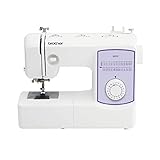
Brother GX37
- Stitches printed on machine
- Automatic needle threader
- 37 built-in stitches
- 10.1 pound body
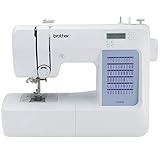
Brother CS5055
- LCD display
- Improved needle threader
- 60 built-in stitches
- One-step buttonholes
All three of these carry the same threader and the same drop-in bobbin, which is why they land at the top. The XM2701 wins on simplicity and review volume, the GX37 adds printed stitch names on the machine body for anyone who does not want to hunt for a chart, and the CS5055 is the only one with a display.
All 9 Machines Compared Side by Side in 2026
| Product | Specifications | Action |
|---|---|---|
| Brother XM2701 |
|
Check Latest Price |
 SINGER 4432 Heavy Duty SINGER 4432 Heavy Duty |
|
Check Latest Price |
| Brother GX37 |
|
Check Latest Price |
 SINGER 4411 Heavy Duty SINGER 4411 Heavy Duty |
|
Check Latest Price |
| Brother CS5055 |
|
Check Latest Price |
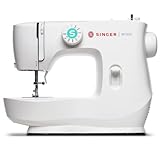 SINGER M1500 SINGER M1500 |
|
Check Latest Price |
 Janome Arctic Crystal Janome Arctic Crystal |
|
Check Latest Price |
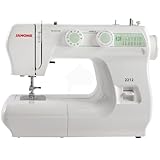 Janome 2212 Janome 2212 |
|
Check Latest Price |
 Janome MOD-15 Janome MOD-15 |
|
Check Latest Price |
Two columns in that table matter more than everything else combined for this audience. The bobbin type decides whether you load thread from above or reach into a slot on the front face, and the weight decides whether the machine can leave the table. Every machine here uses a top-loading or drop-in bobbin except the two Janome models marked front-loading, which are the only two in the group that ask you to reach around the front of the body.
1. Brother XM2701 – The Easiest Machine to Start With
Brother Sewing Machine, XM2701, Portable Sewing Machine, 27 Stitches
27 stitches
Auto needle threader
Drop-in top bobbin
12.6 lb
25 year warranty
Pros
- Automatic needle threader removes the hardest setup step
- Drop-in top bobbin is simple and jam resistant
- Light enough to move room to room or travel with
- 27 stitches cover mending and light quilting
- Free arm handles cuffs and hems
Cons
- Built-in LED work light is dim and a lamp helps
- Foot pedal needs practice for smooth speed control
- Struggles with very thick multi-layer seams
Our team chose this as the first recommendation because the two steps that frustrate new sewists most, threading the needle and loading the bobbin, are both handled for you. You put the thread in the guides, press one lever, and the threader does the needle. The bobbin drops straight into a top slot under a clear cover.
At 12.6 pounds it is not the lightest machine here, but it is light enough for most people to move from a side table to a desk without a struggle. It is also the machine most owners in our research described as the easiest entry point into machine sewing, especially for people returning to a hobby after decades away.
One honest note: the threader is helpful but not magic. If you have a tremor, holding the thread tail steady at the start of a seam still matters, and the first few stitches are where most beginners feel rushed.
The 27 built-in stitches cover zigzag, blind hem, stretch and a set of decorative options, which is more than enough for alterations, hemming and light quilting. Buttonholes are auto-size, so there is no lever to line up against a marking guide.
Stitching quality is straight and even on everyday cottons, knits and canvas. The metal needle bar keeps the line consistent, which matters if you are sewing a long seam and want it to look the same at the end as it did at the start.
The build is a mix: metal internal parts inside a plastic outer shell. The 25 year limited warranty is one of the longer commitments in this group, and Brother’s free technical support line stays available for the life of the machine, which is genuinely useful if you would rather describe a problem than search for an answer.
It will not handle heavy multi-layer quilt corners the way the SINGER 4432 does. If your sewing is mostly mending, hemming and simple garment work, that limitation will never come up.
Who this machine suits
Someone starting from zero who wants the fewest decisions per seam. The control panel is a short list of dials rather than a menu tree, so there is nothing to configure before your first stitch.
It also suits anyone who sews in short bursts. There is no warm-up cycle, no screen to wake up, and no thread to re-thread if you stopped halfway through a seam an hour ago.
Where it falls short
The built-in work light is dim, and that is the first thing to fix in our recommendation: add a clamp magnifier lamp over the needle area. The supplied manual and its diagrams also get described as less than self-explanatory, so budget an hour with it or find a short setup video before your first seam.
Thick layered seams at quilt corners are where it strains, so quilters working on large pieces should look at the SINGER 4432 or the Janome 2212 instead.
2. SINGER 4432 – Metal Frame That Handles Anything You Throw at It
SINGER® 4432 (Grey) High Speed Heavy Duty Sewing Machine + Accessory Kit
Metal frame
1100 stitches per minute
Top drop-in bobbin
One-step buttonhole
25 year warranty
Pros
- Metal frame gives real stability at the table
- Handles denim canvas and heavy seams
- One-step buttonhole saves the fiddliest task
- Dial controls with no menus to learn
- Clear-view bobbin cover
Cons
- No needle threader so threading is manual
- Pedal cord is short and cannot be extended
- Some units arrive needing alignment checks
Everything about this machine is built around not moving while you sew. The heavy duty metal frame resists flex when you push thick material through, and at up to 1,100 stitches per minute it moves fast on long seams like a hem down a full length of curtain panel.
For a senior with grip issues, there is a real argument for a machine that does not need a hard shove. Where lighter plastic-bodied machines creep across a smooth tabletop when you press the pedal, this one stays put.
The controls are pure dials: stitch selector, width, length, and a reverse lever for reinforcing seams. There is no screen to read and no menu to mis-navigate, which experienced sewists in our research repeatedly described as easier to work with than electronic interfaces.
One-step buttonholes are a genuine help for anyone with limited fine motor control, because you press a lever instead of turning a dial and tracking a marker. The 32 stitches deliver 110 applications, which covers garment work, mending and straightforward quilting seams.
Bobbin loading is a top drop-in design with a transparent cover, so you can see the thread running without stopping to check. That transparency is more useful than it sounds when you are sewing alone and cannot lean over to look down into the machine.
Weighing in around 7 kg as listed, this is one of the heavier machines in the group. That is the trade for the frame, and it is worth it if the machine stays on one table. If you plan to carry it to a class or a community centre, look at the SINGER M1500 or Brother GX37 instead.
A small but vocal group of owners reports quality control problems on arrival, including units that needed assembly or an alignment check. Inspect the machine the day it arrives and use the return window if something is off.
Who this machine suits
Anyone sewing heavy fabrics: denim, canvas, upholstery, workwear and thick quilt bindings. It also suits people who dislike computers and menus, because every setting is a physical dial you can feel.
If your hands are strong but your eyes are not, the printed controls and clear bobbin window do a lot of work without needing close-up reading.
Where it falls short
There is no needle threader. Threading is entirely by hand, which for someone with arthritis in the fingers is the single biggest reason to rule this machine out, no matter how good the frame is.
The foot pedal cord is short and cannot be extended, and the feed dog lowering switch and on/off switch sit awkwardly low if the machine is recessed into a table. Keep it on an open table surface.
3. Brother GX37 – More Stitches, Same Easy Threading
Brother GX37 Sewing Machine 37 Built-in Stitches
37 stitches
Stitch names printed on body
Auto needle threader
10.1 lb
25 year warranty
Pros
- Stitch names printed directly on the machine
- Automatic needle threader and drop-in bobbin
- 10.1 pounds is easy to carry to a class
- 37 stitches add decorative and heirloom options
- Free arm for cuffs and pant legs
Cons
- Manual and printed guides take reading before first use
- No fabric or thread bundle included
The single best thing about this machine for a senior is printed directly on the metal panel above the selector: the name of every stitch. You do not need a chart, a screen, or a pair of reading glasses held at arm’s length to know what the dial is set to.
Everything else follows the same accessible pattern. The automatic needle threader handles the needle, the jam-resistant drop-in top bobbin handles the bottom thread, and the auto-size buttonhole removes the most fiddly beginner task on the machine.
At 10.1 pounds it is the second-lightest machine in this roundup, which makes it the one to buy if you want to take it to a weekly class or a family gathering rather than set it up permanently.
Thirty-seven built-in stitches give you noticeably more room than a basic 15-stitch machine, including decorative and heirloom options that the entry models skip. The free arm narrows at the needle for sewing cuffs, sleeves and pant legs without turning the fabric.
Six presser feet come in the box, along with a needle set, bobbins and a manual. That is a fuller accessory kit than most machines at this level, and it saves a separate shopping trip for the walking foot you will eventually want.
Feedback on this machine is overwhelmingly positive. The recurring minor complaints concern documentation and the fact that no thread or fabric is bundled, so plan a first trip to a sewing shop before you sit down at the machine.
It shares the XM2701’s limitation with thick multi-layer seams, and it does not include the type of bright task lighting the CS5055 offers, so plan on an external lamp either way.
Who this machine suits
Anyone who wants decorative stitch options and the convenience of an automatic threader, but who does not want a screen. The printed-on-body chart is the feature that separates it most clearly from cheaper models for readers with low vision.
It also suits anyone who sews away from home, because of the low weight and the full accessory kit in the box.
Where it falls short
The included guides do take some reading before the first session. Budget time with the manual, or work through a beginner setup video with the machine in front of you.
Nothing arrives ready to sew, so you will need thread, fabric and a pair of fabric scissors. That is a small cost of entry, but it is a cost of entry.
4. SINGER 4411 – Heavy Duty Workhorse With Dial Controls
SINGER® 4411 (Grey) High Speed Heavy Duty Sewing Machine with Accessories
Metal interior frame
69 stitch applications
1100 stitches per minute
Top drop-in bobbin
25 year warranty
Pros
- Powers through denim canvas and heavy seams
- No screen and no menus to navigate
- Transparent bobbin cover shows thread at a glance
- Quieter than many comparable machines
Cons
- No needle threader so threading is by hand
- Manual threading diagram is easy to misread
- Some presser foot and bobbin case parts are plastic
This is the machine experienced sewists in our research kept coming back to as the durable option. Owners describe it handling thick denim and vinyl projects years after purchase, and many bought it specifically to replace a much older machine that had finally stopped.
For a senior buying once and expecting it to last, that track record is the reason it earns a place here. The heavy duty metal interior frame is what gives it that reputation, and the 25 year limited warranty on the machine head backs it up.
Like the 4432, the controls are entirely mechanical: stitch length, width, and a reverse lever for seam reinforcement. Nothing to learn beyond the dials, nothing to reset if the machine loses power.
Eleven stitches delivering 69 applications is fewer raw stitch options than most computerized machines, but they are the utility stitches people actually use: straight stitch, zigzag, buttonhole and a set of hem and edge stitches.
The top drop-in bobbin has a transparent cover, which means you can check your thread supply without breaking your rhythm. The machine runs at up to 1,100 stitches per minute and is quieter than many machines in this price band, which matters in a shared apartment.
One thing to know before you start: hold both thread tails at the beginning of a seam for the first inch or so. Several reviewers specifically stress this, because the machine feeds fabric briskly at the start.
Presser feet and the bobbin case on this model are plastic, and feet from older machines are not compatible, so keep the supplied set together in the box.
Who this machine suits
Someone who sews heavy materials regularly and is not interested in computerized features. It is the pick for denim, canvas, work clothes and household items that take real force to push through.
It also suits anyone intimidated by screens. There is no display to read, no firmware behaviour to learn, and nothing on this machine that can be accidentally changed by pressing the wrong combination.
Where it falls short
No needle threader means threading by hand every single time, and the manual’s threading diagram is described as easy to misread, which leads to thread bunching for new owners. Print a clearer guide from a beginner video before your first session.
The four-step buttonhole asks more from your hands than a one-step model. If buttonholes are a regular part of your sewing, weigh the 4432 or the CS5055 instead.
5. Brother CS5055 – The One With a Screen You Can Actually Read
Brother CS5055 Computerized Sewing Machine with LCD Display
LCD display
60 built-in stitches
7 one-step buttonholes
Improved needle threader
10.5 lb
Pros
- LCD screen shows settings at a glance
- One-step buttonholes remove the fiddliest task
- Large needle-to-arm space fits bulky fabric
- Metal frame with fixed needle bar sews straight
- 7 presser feet included
Cons
- More buttons and menu steps than a mechanical machine
- Front manual button can be fiddly to thread
If reading small printed stitch symbols is the hardest part of your sewing, this is the machine to look at. The LCD display shows the selected stitch and its settings rather than making you interpret a label on a dial, and owners consistently single that screen out as the reason the machine feels guided rather than guessed.
It is also the most capable machine in this group on fabric. Sixty built-in stitches and seven one-step auto-size buttonholes give you real range, and the large needle-to-arm workspace means you can feed quilt pieces and bulkier garment seams through without fighting the machine.
Threading uses an improved automatic needle threader, and the bobbin is a jam-resistant drop-in top load, so both precision steps are handled for you.
The fixed needle bar and metal frame produce very straight, even seam lines, which is worth something when you are sewing a long straight hem and want to avoid constant correcting. The included feet number seven, which is the biggest kit in the roundup.
Warranty and support are strong: a 25 year limited warranty plus free phone and technical support for the life of the product. If you would rather describe a strange noise to a person than hunt through a help site, that matters.
The honest drawback is complexity. There are more buttons and menu steps here than on a purely mechanical body, and the front threader button can be fiddly for some users to operate. If menus are the thing that makes you give up on a hobby, this is a risk.
At 10.5 pounds it stays portable enough for classes and easy to reposition, and it is one of the lighter options here with a screen.
Who this machine suits
Anyone with declining vision who wants confirmation of what the machine is set to instead of reading a small diagram. The display reduces the number of times you need to lean in close over the needle area.
It also suits the sewist who plans to grow into quilting, garment construction and alteration work, because 60 stitches and seven buttonhole styles cover almost everything a home sewer will reach for.
Where it falls short
Button count. Every extra button is a decision, and this machine has more of them than a mechanical dial machine. If you have previously abandoned a project because the controls were confusing, the two SINGER mechanical models are the gentler starting point.
It is not the machine for a very small work area either, since the larger needle-to-arm space comes with a larger footprint on the table.
6. SINGER M1500 – Lightest Machine Here for Everyday Mending
SINGER® M1500 Lightweight & Portable Sewing Machine with Accessory Kit
6 stitches with 57 applications
Preset length and width
LED work light
9.7 lb
Threading guides on body
Pros
- Preset stitch length and width are hard to set wrong
- Threading guides printed on the machine body
- Lightest machine here at 9.7 pounds
- Quiet operation with a responsive foot pedal
- Good accessory kit including a darning plate
Cons
- Light weight makes it slide on smooth tabletops
- Not a heavy duty machine for thick layers
- Internal accessory storage is small and disorganized
This is the machine for the sewing list that most seniors actually have: hemming trousers, replacing a dropped seam, taking in a waistband, sewing on a button. At 9.7 pounds it is the lightest machine in the roundup, and it stores in a drawer rather than needing a dedicated table.
The dial system is the reason reviewers call it genuinely beginner-proof. Stitch length and width come preset on the selector rather than being set with separate dials, so there is very little you can get wrong. The six built-in stitches deliver 57 applications, which is far more than the number suggests.
Threading guides are printed on the machine body, so you follow a visible path rather than a diagram. The LED work light is a real addition here compared with the dim lights on some machines in this group.
The box contents are generous: an all-purpose foot, zipper foot, buttonhole foot, darning plate, needles, bobbins, a screwdriver and a seam ripper. The darning plate in particular is unusual at this level and turns the machine into a small free-motion quilting machine for repairs.
There is a free app with the manual, a quick start guide and tutorials, which is helpful if you would rather watch someone thread it than read about it.
The trade-off with the light body is stability. On a smooth glass or laminate tabletop it can creep when you press the pedal, and the simple fix is a rubber mat or self-adhesive furniture pads under the base.
It is not a heavy duty machine. Thick denim and many layers at once will strain it, so if you sew workwear or heavy quilting, look at one of the metal-framed models instead.
Who this machine suits
Someone who mends and alters rather than constructs. It is also the easiest machine here to move, store in a cupboard, or hand to a friend to carry to a class.
If button accuracy matters to you, note the buttonhole is a four-step process, so allow more time for shirt making than you would on a one-step machine.
Where it falls short
Light weight and light duty capacity are linked. If you regularly push heavy material through, this is the wrong tool and the machine will show it in skipped stitches and slow feeding.
The internal storage for the accessory tray is small and disorganized, so keep a small box next to the machine for feet and bobbins instead.
7. Janome Arctic Crystal – Built Around How Beginners Think
Janome Arctic Crystal Easy-to-Use Sewing Machine with Interior Metal Frame, Bobbin Diagram, Tutorial Videos, Made with Beginners in Mind for Garments, Patchwork, Light Quilting
15 stitches
Interior metal frame
Extra-high presser foot lift
Darning plate included
12 lb
25 year warranty
Pros
- Simplifies every step from threading to stitch selection
- Interior metal frame and metal bobbin case
- Extra-high presser foot lift suits limited hand motion
- 12 pounds and easy to carry to a class
- Tutorial videos and quick start guide included
Cons
- Front-loading bobbin is a learning curve for beginners
- Some thread holder parts feel flimsy
- Instructions are English only
Owners describe handing this machine to a complete beginner and watching them sew confidently within hours, and they mention older adults specifically. The design decisions all point the same direction: the bobbin diagram is printed inside the bobbin housing, the tutorial videos are supplied in the box, and there is a quick start guide.
The interior metal frame and metal bobbin case are the reasons it outlasts cheaper plastic-bodied machines of the same class. For a senior buying a machine they hope to keep for a decade, that internal build quality is the differentiator.
The extra-high presser foot lift is a feature that quietly matters for anyone with limited shoulder or hand range of motion. A taller lift means you can get thick fabric under the foot without a lever fight.
There is a darning plate in the box, which combined with the free arm and the three-piece feed dog makes this a capable small quilting machine for a beginner. Fifteen built-in stitches cover garment, patchwork and light quilting work.
It weighs 12 pounds, light enough to carry to a class or a retreat, and owners report smooth even fabric feeding on both delicate and layered materials.
The one adjustment period is the front-loading bobbin. If you are used to a top-drop machine, the diagram inside the housing resolves it quickly, and reviewers consistently say the same thing: allow yourself one session to adjust and it stops being a problem.
A few owners note that some thread holder parts feel slightly flimsy and can snap, and the instructions are English only, which matters if English is your second language.
Who this machine suits
A beginner who values clear, self-explanatory setup over feature count. Everything is where a first-time user would look for it, and the learning materials are in the box rather than on a website you have to find.
It also suits anyone whose hands cannot manage a small presser foot lever easily, thanks to the extra-high foot lift, and anyone who wants a starter machine with real internal metal construction.
Where it falls short
The front-loading bobbin is the main trade. It is the only reach-around-the-front operation on this machine, and for a person with shoulder mobility limits it is worth weighing carefully against the top-loading models.
It is also a 15-stitch machine. There are no decorative or heirloom options here, so it will feel limited if you decide you want appliqué or fancy work a year from now.
8. Janome 2212 – Wide Feed Dogs for Quilting and Binding
Janome 2212 Front-Loading Sewing Machine with 12 Built-In Stitches
5-piece feed dog with drop feed
Extra high presser foot lift
Free arm
Front-loading bobbin
25 year warranty
Pros
- Wide five-piece feed dog handles bulky fabric
- Drop feed supports free-motion and circular work
- Extra high presser foot lift for thick material
- Readable manual with line drawings and videos
- Fast and smooth with no bunching on many layers
Cons
- Fast default speed can pull the upper thread loose early
- Reverse lever must be held rather than latched
- Heavier than most entry machines at 14.9 pounds
This is the machine in the group set up most deliberately for quilting work. The five-piece feed dog is wide and tall enough to grip the layers that come through a binding seam, and the drop feed function lets you switch to free-motion stitching and circular work when you want to quilt without the feed moving the fabric.
The free arm extension is a genuine bonus here. It doubles as storage for thread and notions, which removes one of the small irritations of a compact machine.
Owners report it sewing through thick denim and several layers of home decor fabric without complaint, and the manual’s readability is a repeated positive.
There are two retractable vertical spool pins, which is unusual and useful if you work with two threads or a second colour for binding. Stitches are selected by dial pattern with adjustable width and length, so no screen is involved.
The extra high presser foot lift helps with bulky seams, and the free arm handles the tube work that quilting and garment sewing both require.
The most consistent caution in owner feedback is the default speed. It runs fast enough that the upper thread can pull loose from the needle on the first seams if you do not slow the pedal down, so start at a crawl for the first few inches.
The reverse lever must be held continuously rather than latched, which is a small thing but a real one if you have hand or wrist pain. And at 14.9 pounds this is the second-heaviest machine here, so plan where it will live before you buy.
Who this machine suits
Quilters and anyone working with thick layered fabric, especially binding and home decor projects. The feed dog width and the drop feed are the reasons to choose it over a general-purpose machine.
It also suits someone who reads manuals. The documentation is thorough, with line drawings and video tutorials, which is a genuine advantage when you are learning alone.
Where it falls short
Weight. At 14.9 pounds this is not a machine to lift into a cupboard or carry to a class, and that is a real barrier for seniors with back or shoulder problems.
The front-loading bobbin means reaching around the front face, and the un-latched reverse lever requires a sustained grip. Both are manageable, but they are more physical demands than the top-loading mechanical models.
9. Janome MOD-15 – Simple, Quiet and Easy to Thread by Hand
Janome MOD-15 Easy-to-Use Sewing Machine with 15 Stitches, Adjustable Stitch Length and 5-Piece Feed Dogs
15 stitches
Top loading bobbin
Automatic tension
11.7 lb
25 year warranty
Pros
- Easy to thread by hand with automatic tension
- Top loading bobbin with a clear cover
- Foot pedal gives fine control of slow sewing
- Holds up over years and does not skip on knits
- Compact at 11.7 pounds while feeling sturdy
Cons
- No decorative or specialty stitches
- Mechanical so it is louder than computerized models
- Fleece fibres clog the machine and break thread
Automatic tension is the quiet hero on this machine. Most of the thread tension on a sewing machine is set by turning a small dial, and finding the right number is a fiddly precision task. This one tensions itself, which removes a whole category of setup for anyone whose fingers are not as steady as they were.
The top loading bobbin sits under a clear cover at the front, so you load it looking at the machine rather than reaching around it. Combined with the 11.7 pound weight, that makes this one of the least physically demanding machines in the roundup to set up and use.
Owners specifically praise the foot pedal for fine speed control on slow, careful sewing, which is exactly what you want when you are placing a needle accurately or easing fabric.
The five-piece feed dog with drop feed handles knits without skipping, and long-time users note it holds up over years of regular sewing. Four presser feet are included and the free arm handles cuffs and sleeves.
There is a 25 year limited warranty on a machine with a metal body, which is a strong combination for someone buying once.
The limits are honest ones. It is a basic mechanical machine with no decorative or specialty stitches, so it covers mending, gifts and simple garment work but not appliqué variety.
Fleece is the one fabric that causes trouble, because fibres clog the machine and break thread. It is also louder than a computerized machine, which is worth considering in a shared apartment.
Who this machine suits
Someone who sews slowly and carefully, and who prefers a machine that asks nothing of them at the start of a seam. Automatic tension and a top bobbin are the lowest-friction setup in this group.
It also suits a knitter or someone sewing stretch fabrics, because owners report it does not skip stitches on knits.
Where it falls short
Stitch variety. If a machine is only ever going to sew straight seams, hems and buttonholes, that is not a problem. If you might want decorative stitching later, the GX37 or the CS5055 offers far more range.
The included triangle screwdriver is awkward to use for the maintenance the manual calls for, and fleece will clog it. Keep a separate brush and a dedicated lint-free cloth nearby.
How to Choose a Sewing Machine for Seniors
The easiest sewing machine for seniors is the one that cuts the number of precise steps per seam, not the one with the longest stitch list. Six features do most of that work: the threader, the bobbin position, the screen or printed chart, the needle-area lighting, speed control, and a thread cutter where one exists. Everything else on a spec sheet matters for what you sew, not for whether you can sew at all.
Threading: the feature seniors care about most
Threading the needle is the hardest part of sewing for anyone with a tremor or reduced fine motor control, which is why the automatic needle threader on the Brother XM2701, GX37 and CS5055 matters more than their stitch counts do. The thread goes in the guides, you press a lever, and the machine pulls it through the eye.
Here is the honest part, and it comes up constantly in owner feedback: some people find automatic threaders more frustrating than threading by hand. When the thread slips out of the hook, the fix is the same as it would be by hand, and you have wasted a minute. Our advice is to learn the manual path as well, so a threader failure is a nuisance rather than a wall. Our beginner sewing machine guide walks through that manual path step by step.
Which machine is easiest to thread? Among these nine, the three Brother machines with auto threaders win, and the Janome MOD-15 is the easiest hand-threading option because of its automatic tension. The two SINGER heavy duty models and the Janome 2212 and Arctic Crystal require full manual threading, which is a fair trade only if you have no hand or wrist pain.
Bobbin position decides how much you reach
Top-loading and drop-in bobbins sit in a slot on the top of the machine, angled toward you, and you drop the bobbin straight in. Front-loading bobbins sit in a compartment on the front face and you slide the bobbin in sideways, which means reaching around the body of the machine.
For most seniors, top-loading is easier. Seven of the nine machines here use it, including the Janome MOD-15 with a clear cover. Only the Janome 2212 and the Janome Arctic Crystal use a front-loading bobbin, and the Arctic Crystal prints a diagram inside the housing to make the loading self-explanatory.
Grip, hands and the pinch-grip problem
Arthritis and tremor rule out any task that needs a pinch grip, and sewing has three: threading by hand, placing the bobbin in a front-loading compartment, and operating a small reverse lever. Features that remove those tasks are worth more than any decorative feature list.
The extra-high presser foot lift on the Janome Arctic Crystal and the Janome 2212 is the quiet winner here, because it lets you get thick fabric under the foot without levering against resistance. One-step buttonholes, found on the Brother CS5055, the SINGER 4432 and the Brother XM2701, take the most fiddly beginner task off the table entirely. The Janome 2212’s reverse lever has to be held down rather than latched, which is a real consideration for a hand that tires.
Speed control deserves its own mention. A foot pedal that reaches a comfortable walking pace and then tapers smoothly to a crawl lets you sew accurately. Machines that jump straight to full speed, or where you have to press hard on the pedal to slow down, are the ones that frustrate people the most. The SINGER M1500 and the Janome MOD-15 are both praised for responsive, fine-grained pedal control.
Vision and lighting
Declining eyesight changes what you can read, and it changes where you need light. Two features matter: a display or chart you can actually make out, and light falling on the needle area itself.
Only the Brother CS5055 has an LCD screen in this group, which is why it is our pick for low vision. Among the dial machines, the Brother GX37 wins by printing stitch names directly on the machine body rather than asking you to interpret symbols. The SINGER M1500 has clearly marked threading guides and an LED work light; the Brother XM2701’s built-in light is described as dim by owners, so add a clamp magnifier lamp there. A good task lamp is the cheapest accessibility upgrade in sewing and works with any machine on this list. If long seated sessions at the table are the limiting factor rather than eyesight, supportive seating such as the lift chairs for seniors we tested keeps you at a working height without straining.
Weight and portability
The list runs from 9.7 pounds at the lightest to 14.9 pounds at the heaviest, and that difference decides whether a machine lives on a table or in a cupboard. If you cannot lift and carry a machine, it will end up in one place permanently, and everything about your setup has to fit around that spot.
Our own note on the specs: the SINGER 4432 is listed at 7 kg and the SINGER 4411 has an implausible listed weight, so treat those two as the heavy metal-frame machines they are rather than trusting the numbers. Among the rest, the SINGER M1500 at 9.7 pounds, the Brother GX37 at 10.1 pounds and the Brother CS5055 at 10.5 pounds are the three easiest to carry to a class, a community centre or a family gathering. If getting there is part of the plan, our roundup of the best rollators for seniors covers stable seating and easy transport for a day out.
Computerized or mechanical?
Do you need a computerized or mechanical sewing machine? For a senior, the honest answer is that a light computerized machine with a readable display is usually easier, and a mechanical dial machine is easier only if menus and buttons genuinely stress you out.
A computerized machine gives you one-step buttonholes, an automatic threader, a jam-resistant top bobbin, a screen that tells you what is selected, and usually free technical phone support. A mechanical machine gives you fewer things to break, dials you can feel, no power-on sequence, and a lighter or more solid body depending on the frame.
Owners of both types are satisfied, which tells you the decision is about fit rather than quality. Choose computerized if you want guidance. Choose mechanical if you want a machine that does the same thing every time and never asks you to press two buttons at once.
Reliability, warranty and local service
Long-term owners treat brand reputation as a stronger reliability signal than any specification, and they are largely right. Janome and Brother machines in this group carry 25 year limited warranties, and several come with free technical phone support for the life of the product, which is a meaningful benefit if you would rather describe a problem out loud than search a website.
There is one practical point about repair that almost no buying guide mentions, and it matters more to this audience than to anyone else. A machine that needs servicing may need to reach a repair shop, and a 15 pound machine is not something everyone can lift into a box. Before you buy, check whether the brand has an authorised service point near you. That single check removes a lot of anxiety.
On maintenance, be realistic about what a senior can keep up. All nine machines here need routine oiling, brush cleaning of the bobbin area and lint removal, which takes a few minutes. Machines with a clear bobbin cover and a drop-in bobbin are easier to maintain because you can see what is happening. Fleece and lint-heavy sewing is the main cause of the clogging complaints owners report, so a small brush kept beside the machine prevents most of it.
What about an inherited or vintage machine?
The recurring question in sewing communities is what to do with the machine you inherited from a parent, sometimes unused for decades. Experienced sewists in our research do praise vintage mechanical machines, particularly Singer Featherweight models and older Janome machines, as exceptionally reliable and long-lasting, and they are not wrong about the hardware.
For a first machine, though, we would steer a senior toward something modern. Vintage machines usually have no automatic threader, often require hand-winding the bobbin, frequently need a shuttle service, and their manuals are often unavailable. The best of both worlds is to have the vintage machine serviced by a repair shop and use it as a second machine, while starting on a modern one that handles the setup steps for you.
Frequently Asked Questions
What is the easiest sewing machine for seniors?
The Brother XM2701 is the easiest for most seniors because its automatic needle threader and drop-in top bobbin remove the two hardest setup steps, and at 12.6 pounds it is light enough to move between rooms. If you need a screen rather than dials, the Brother CS5055 shows the selected stitch on an LCD display. Add a clamp magnifier lamp to either one, since built-in work lights vary.
Are automatic needle threaders worth buying?
For most seniors they are, because threading the needle is the hardest step for anyone with a tremor or reduced fine motor control. The honest caveat from owners is that when the thread slips out of the hook, the fix is the same as hand threading and you lose a minute. Learn the manual path as well so a threader failure is a nuisance rather than a wall.
Which sewing machine is the easiest to thread?
Among these nine, the Brother XM2701, Brother GX37 and Brother CS5055 thread automatically and are the easiest overall. For hand threading, the Janome MOD-15 is the smoothest option because automatic tension removes the fiddly dial adjustment, and the SINGER M1500 prints its threading path on the machine body. The SINGER 4432 and 4411 require full manual threading with no threader at all.
What are some disability-friendly sewing machines available?
Disability-friendly means fewer precision steps and less grip demand. Look for an automatic needle threader, a top-loading or drop-in bobbin, one-step buttonholes, an extra-high presser foot lift, a high-contrast display, and body weight you can carry. In this roundup the Brother CS5055 suits low vision, the Brother XM2701 suits limited grip, and the Janome Arctic Crystal suits reduced hand motion.
Do I need a computerized or mechanical sewing machine?
Most seniors are better served by a light computerized machine, because it adds one-step buttonholes, an automatic threader, a jam-resistant drop-in bobbin and a screen showing the selected stitch. Choose mechanical only if buttons and menus stress you out: dial machines do the same thing every time, never ask you to press two at once, and are often quieter and simpler to maintain.
Where to Start
If you want one answer, the Brother XM2701 is where to start. It threads itself, loads its own bobbin, weighs 12.6 pounds, carries a 25 year limited warranty, and has 19k+ reviews from owners who describe it as the gentlest introduction to machine sewing.
Match it to your specific need instead. Low vision points to the Brother CS5055 and its LCD display. Heavy fabrics point to the SINGER 4432 or the Janome 2212. Carrying the machine to a class points to the SINGER M1500 or the Brother GX37. Hands that tire point to the Janome Arctic Crystal and its extra-high presser foot lift.
Whichever you choose, buy a clamp magnifier lamp on the same day, allow yourself a full session before your first real project, and check that a local repair point exists for the brand. That is the complete setup for a sewing practice that can last for years, and the best sewing machines for seniors are simply the ones you will keep sewing on.