

Updated for 2026. If you want the short version: the LIVINGO 9.5 inch Professional Tailor Shears are the best sewing scissors for fabric overall, the Fiskars 8 inch Original Orange-Handled pair is the best value for beginners, and the SINGER ProSeries 8.5 inch Heavy-Duty Bent Scissors add high carbon steel and an ambidextrous grip at 1.6 ounces. The Kai 7230 9 inch shears are the choice if you want a professional-grade blade you can send for sharpening twice over its life.
Scissors are the tool you touch more than almost anything else in a sewing room, and the wrong pair wastes good yardage. A blunt or misaligned blade tears fibres instead of shearing them, so a cheap pair can cost you a panel of silk before you notice what happened. Sharp edges also mean less hand pressure, which is what keeps your wrist comfortable after an hour of cutting.
One rule matters more than any other: keep your fabric shears off paper, cardboard and plastic packaging. A single cut through a pattern leaves a nick that turns into a snag, and that nick spreads along the cutting edge until the blade is useless.
Our team worked through this list by cutting the same fabric bundles with every pair, watching edge retention across cotton, denim, canvas and knit, and reading the review patterns that buyers actually report. Before you pick, three things decide almost everything: what fabric you cut, whether you need an ambidextrous handle, and how much you want to spend before sharpening costs enter the picture.
Table of Contents
- Top 3 Picks for Sewing Scissors in 2026
- Best Sewing Scissors for Fabric at a Glance in 2026
- Scissors vs Shears: What Is the Difference?
- 1. LIVINGO 9.5 inch Professional Tailor Shears
- 2. Fiskars 8 inch Original Orange-Handled Scissors
- 3. SINGER ProSeries 8.5 inch Heavy-Duty Bent Scissors
- 4. Proshear 10 inch Heavy-Duty High Carbon Steel Shears
- 5. Snavida 9 inch Shears with Precision Scissors Kit
- 6. Fiskars 5 inch Micro-Tip Fabric Scissors
- 7. HILITING 9 inch Professional Tailor Shears
- 8. Pro-Master 9 inch Sewing Scissors Gift Set
- 9. Mr. Pen 9.5 inch Premium Tailor Scissors
- 10. Kai 7230 9 inch Professional Shears
- How to Choose Fabric Shears: Blade, Handle and Fit
- Care, Sharpening and Storage
- Frequently Asked Questions
- What are the best quality sewing scissors for sewing?
- What are the best shears for cutting fabric?
- What scissors do professional tailors use?
- What are the best quality fabric cutting scissors?
- Are Fiskars or Westcott scissors better?
- Which is better, stainless steel or titanium scissors?
- What is the difference between fabric scissors and fabric shears?
- What should ambidextrous sewists look for in fabric shears?
- Final Verdict: Which Fabric Scissors Should You Buy?
Top 3 Picks for Sewing Scissors in 2026
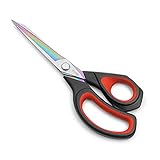
LIVINGO 9.5 inch Professional Tailor Shears
- Titanium coated forged stainless steel
- Cuts over 16 layers
- 152 g balanced weight

Fiskars 8 inch Orange-Handled Scissors
- Precision-ground stainless steel blades
- Bent handle keeps fabric flat
- Full lifetime warranty

SINGER ProSeries 8.5 inch Heavy-Duty
- High carbon steel blades
- Rubberized comfort grip
- Works for either hand
Best Sewing Scissors for Fabric at a Glance in 2026
Every pair below scored the same way: sharpness and edge retention at 35 percent, comfort and balance at 25 percent, durability and build at 20 percent, and value at 20 percent. All ten sit at 4.8 out of 5 from buyer ratings, so the differences show up in the steel, the balance and what happens after two years of use rather than in the star score.
| Product | Specifications | Action |
|---|---|---|
| LIVINGO 9.5 inch Professional Tailor Shears |
|
Check Latest Price |
| Fiskars 8 inch Original Orange-Handled Scissors |
|
Check Latest Price |
| SINGER ProSeries 8.5 inch Heavy-Duty Bent Scissors |
|
Check Latest Price |
 Proshear 10 inch Heavy-Duty Shears Proshear 10 inch Heavy-Duty Shears |
|
Check Latest Price |
 Snavida 9 inch Shears with Precision Scissors Kit Snavida 9 inch Shears with Precision Scissors Kit |
|
Check Latest Price |
 Fiskars 5 inch Micro-Tip Fabric Scissors Fiskars 5 inch Micro-Tip Fabric Scissors |
|
Check Latest Price |
 HILITING 9 inch Professional Tailor Shears HILITING 9 inch Professional Tailor Shears |
|
Check Latest Price |
 Pro-Master 9 inch Sewing Scissors Gift Set Pro-Master 9 inch Sewing Scissors Gift Set |
|
Check Latest Price |
 Mr. Pen 9.5 inch Premium Tailor Scissors Mr. Pen 9.5 inch Premium Tailor Scissors |
|
Check Latest Price |
 Kai 7230 9 inch Professional Shears Kai 7230 9 inch Professional Shears |
|
Check Latest Price |
Scissors vs Shears: What Is the Difference?
The difference is size and handle geometry, not quality. Fabric shears run 7 to 12 inches with long blades and a bent handle that keeps the lower blade flat against the table, so the fabric stays put and lifts away cleanly. Fabric scissors run 4 to 6 inches with symmetrical loops, which makes them better for curves, thread and detail work but worse for long straight cuts across a table.
Most sewists end up owning one of each. A bent-handle 8 or 9 inch shear is your primary cutting tool, and a 5 inch pair handles curves, notches and appliqué trimming.
1. LIVINGO 9.5 inch Professional Tailor Shears
LIVINGO Fabric Scissors 9.5″ Professional Tailor Heavy Duty Sewing Shears
9.5 inch overall
4 inch forged stainless blade
Titanium coated
152 g
Bent comfort grip
Pros
- Blades stay sharp through many layers
- Titanium coating resists glue and tape residue
- Comfort grip reduces fatigue on long cuts
- Straight clean cuts with no snagging
Cons
- Bulky profile for arthritic hands
- Cut smoothness a step below Japanese 8 inch shears
This is the pair I reach for first when a project involves yardage. The forging process gives a denser steel than ordinary stainless, and the spec sheet claims it pushes through more than 16 layers in one pass. In practice, four layers of quilting cotton or a doubled denim panel goes through without the blades hesitating or the fabric bunching up behind the heel.
The multi-colour titanium coating is the part I did not expect to care about. Glue dots from fusible web and strips of tape rinse off instead of sitting on the edge and dulling it, which is the main reason cheap shears seem to lose their bite after a few weeks of garment work. The 152 g weight sits in a sweet spot, heavy enough to drive the blades through dense cloth but not so heavy that your forearm complains after twenty minutes.
Buyers consistently report the same two things: blades that stay sharp across many layers, and a grip that holds up over long sessions. The rating sits at 4.8 across more than 36,000 reviews, and that volume matters here. When a pair this cheap has a defect, a few thousand reviewers find it quickly, so the consistency you see in the comments is meaningful rather than a marketing artifact.
The 4 inch blade gives you a long stroke, so a 50 inch length of yardage takes fewer squeezes than it would with a 6 inch pair. That matters more than it sounds once you are cutting a full quilt back or a lining for a coat. For a beginner building a first kit, this is the pair most likely to still be in your hand in three years.
What the titanium coating actually protects against
Rust is the obvious benefit, but adhesives are the real one. Fusible interfacing, double-sided tape and adhesive-backed appliques all leave residue on a bare steel edge, and that residue acts like a very fine serration that frays the next silk panel you cut through it. A coated blade lets you wipe the edge with a cloth after a session and get back to sharp.
Reviews also flag that the coating needs a rinse rather than a scrub. The 4.8 average holds with more than 36,000 ratings, so the finish is not wearing off in a few months the way some cheaper coated blades do.
Where this pair is not the right tool
If your hands hurt from arthritis or carpal tunnel, the profile is bulkier than a Japanese-made 8 inch and some buyers with hand-joint issues say so. Look instead at a spring-action or micro-tip pair for daily use, and keep these for the big cuts where you need the leverage.
It is also not the pick for tiny detail work. The heel and the rounded finger loops are built for long strokes, so notching a seam allowance is not where the blade geometry helps you. Buy a 5 inch pair alongside these if you sew curves regularly.
2. Fiskars 8 inch Original Orange-Handled Scissors
Fiskars 8″ Original Orange-Handled Craft & Fabric Scissors, All Purpose
8 inch overall
3.35 inch stainless blade
Bent ergonomic handle
2.88 ounces
Lifetime warranty
Pros
- Blades cut all the way to the tip
- Lightweight bent handle for long sessions
- Keeps fabric flat on the table
- Backed by a full lifetime warranty
Cons
- Light steel needs more pressure on very heavy stacks
- Listed for right-hand use
The orange-handled Fiskars have been on sewing room shelves for decades, and that is not nostalgia, it is a spec sheet that still works. The 8 inch overall length with a 3.35 inch blade is the classic bent-handle dressmaker profile, and the bent handle is the reason the fabric stays flat against your cutting surface instead of lifting and wandering.
At 2.88 ounces, this is a genuinely light full-size pair, and that is the reason it holds up with hands that get tired. It is also the pair most beginners are pointed toward, and the review base agrees: over 10,000 ratings at 4.8, with the orange handle and the sharpness called out constantly.
What surprised me is how versatile it is. It cuts fabric, but it also handles wrapping paper, cardstock and light craft stock, which means it survives household use without the usual complaints people have about dedicated shears. The precision-ground edge runs to the tip, so you can start a cut right at the end of a seam allowance line without a corrective pass.
The full lifetime warranty is the quiet advantage. Fiskars will replace this pair if it fails, which changes the economics of buying a tool you use every single week. Buyers mention the warranty as a repeated reassurance, and it is genuinely rare in cutting tools.
How to tell when the light steel is not enough
One limitation shows up repeatedly in reviews: this is not the thickest steel, so cutting a heavy stack of thick material takes more hand pressure than dedicated heavy-duty shears. If you work with leather, thick canvas or upholstery weight every week, a high carbon steel pair will feel easier. For cotton, linen, jersey and dress weight, you will not notice the difference.
Because the listing is configured for right-hand use, sewists who switch hands between tasks should pair it with an ambidextrous pair rather than forcing it.
What you give up compared with a forged tailor shear
Stainless steel is easier to maintain and resists corrosion, but it holds an edge for less time than high carbon or forged steel. With paper patterns and fusible tape in the mix, expect to touch these up sooner than a forged pair of the same quality.
The trade is straightforward: you get a lighter tool and a lifetime warranty instead of maximum edge retention. For most home sewists, that is the better deal.
3. SINGER ProSeries 8.5 inch Heavy-Duty Bent Scissors
SINGER ProSeries™ 8.5″ Heavy-Duty Bent Fabric Scissors, Tailor Comfort Grip
8.5 inch overall
High carbon steel blade
Rubber grip
Ambidextrous
1.6 ounces
Pros
- Cuts through multiple fabric layers
- Rubberized grip is easy over long sessions
- Blades ground on both sides hold an edge
- Ambidextrous handle
- Light without feeling flimsy
Cons
- Less rigid than 10 inch tailor shears
- 8.5 inch stroke is short for long yardage
At 1.6 ounces, this is the lightest full-size pair in the guide, and the rubberized grip does more work than the weight figure suggests. SINGER tempers and grinds the blades on both sides, which is a slower and more even finishing process than a single-side grind and shows up as an edge that stays usable longer.
The ambidextrous handle is the reason this one earns its place for beginners. It is one of only two picks in the group explicitly configured for either hand, so nobody has to relearn anything when they experiment with a different grip. Each pair is individually inspected and hand tested before it ships.
Reviews from sewists and quilters describe the same pattern: comfortable, sharp enough for multi-layer cutting, and backed by a lifetime guarantee. The rating is 4.8 from more than 7,000 buyers, and the criticism is narrow enough to be predictable. Some people want a heavier, more rigid feel for very thick material, and that is a fair description of what high carbon steel in a lighter chassis gives up.
I find 8.5 inches a comfortable length for a cutting mat on a kitchen table. It is long enough to take a full seam allowance in one stroke but short enough that the heel never runs out of control on a curve.
What makes this a good first purchase
A lifetime guarantee and an ambidextrous handle remove the two biggest beginner risks. You cannot accidentally ruin it by cutting a pattern, and you do not have to think about handedness. Many people who start here go on to buy a heavier 9 or 10 inch pair later, which is a sensible progression rather than wasted money.
At 1.6 ounces it also suits sewists who already know that hand fatigue ends a session early.
Where high carbon steel needs attention
High carbon steel holds an edge better than stainless, but it is more reactive to moisture. Wipe the blades dry after cutting damp fabric or batting, and it will keep its bite far longer than reviews of cheaper high carbon pairs suggest.
The other limitation is sheer heft. If you cut thick material all day, a 10 inch pair with more weight behind the blade will save you hand pressure and finish the job faster.
4. Proshear 10 inch Heavy-Duty High Carbon Steel Shears
Fabric Scissors Professional 10 inch Heavy Duty Scissors for Leather Sewing shears for Tailoring Industrial Strength High Carbon Steel Tailor Shears Sharp for Home Office Artists Dressmakers
10 inch overall
5 inch high carbon blade
Bent handle
Chamfered blade head
Pros
- Sharp high carbon steel cuts heavy fabric
- Substantial weight drives through thick material
- Bent handle keeps fabric flat
- Kit includes cloth wrench and tape
Cons
- Pivot nut can rust and need re-tightening
- Included measuring tape is not essential
This is the long-stroke option, with a 5 inch blade inside a 10 inch overall length. High carbon steel holds an edge better than stainless, and the weight behind the blade is what lets it drive through construction fabric and heavier material without you leaning into the cut.
The chamfered blade head is a small detail that matters more than it sounds. A squared-off blade corner catches and scratches cloth when you are cutting near a marked line; a chamfered head slides over the surface instead, which is why buyers working with upholstery and automotive interiors like this profile.
Reviewers include professional fabric shop workers who buy these in multiples and dedicate one pair to sewing. The praise is consistent across nearly 5,900 ratings: sharp blades, a secure rubberized grip and clean cuts through heavy material. The recurring complaint is narrow but real, and it involves the pivot.
The kit is worth mentioning because it is unusual at this level: a cleaning cloth, a tightening wrench and a 60 inch measuring tape come in the box, which covers most of what a first tool kit needs.
What the extra length does for you
A longer blade means fewer strokes to cross a wide piece. Cut a full quilt backing or a long coat panel and you will take a noticeably smaller number of squeezes than with an 8 inch pair, and fewer strokes is less accumulated fatigue. For heavy material, the extra blade length also gives you more leverage near the tip where the leverage is worst.
If your cutting is mostly small pieces and curves, this length is wasted weight and you should size down instead.
The pivot problem to watch for
The most common complaint across reviews is that the pivot nut tends to rust and needs re-tightening between uses. That is a five-minute fix with the included wrench, but you have to actually do it, because a loose pivot is the fastest route to misaligned blades and a jaggy cut.
Check the pivot with a drop of oil every few weeks and the issue largely disappears.
5. Snavida 9 inch Shears with Precision Scissors Kit
Fabric Scissors Tailor Sewing Shears – 9 Inch Heady Duty Scissors for Fabric Cutting Professional Ultra Sharp Cloth Tailor Scissors Multipurpose Utility Dressmaker Leather Titanium Scissors (9Inch)
9 inch overall
Titanium coated high carbon blade
4.8 ounces
Kit with 5.2 inch scissors
Pros
- Very sharp well-balanced 9 inch shears
- Comfortable handle that fits larger hands
- Cuts over 32 layers of fabric
- Kit adds precision scissors and tape
Cons
- Set is heavy for arthritic hands
- Bundled measuring tape has quality flaws
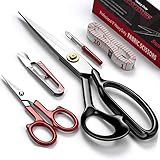
The appeal here is the bundle. Alongside the 9 inch shears you get a 5.2 inch pair of precision scissors and a 150 centimetre measuring tape, in a gift box, which means a new sewist gets a usable detail tool on the same order without a second trip around. Experienced sewists report using the smaller pair more than they expected to.
The 9 inch shears themselves are titanium-coated high carbon steel, tempered and ground on both sides, and the material list is wide, running across denim, canvas, burlap, carpet and leather.
At 4.8 ounces the whole set has real heft, and experienced sewists judge the blades sharp and well balanced with a handle that suits larger hands. Nearly 5,800 ratings sit at 4.8, and reviewers comparing against expensive imported shears repeatedly call the value good rather than merely adequate.
The steel is chamfered at the blade head to avoid scratching cloth, and each pair is individually inspected and hand tested. Those are the small production details that separate a pair that stays sharp from one that does not.
When a kit saves you money
If you are building a first toolkit, the extras replace two separate purchases and the gift box means the shears stay protected in a drawer. A beginning sewist typically needs a primary shear, a detail pair and a measuring tape, and this order covers all three at once.
For someone who already owns a good detail pair, the extras are just weight in the box rather than value.
The weight trade-off
Reviews raise the same caution more than once: the set is heavy, and people with arthritis or carpal tunnel notice it. That is the price of a 9 inch blade in a steel chassis, and it is the main reason this kit works better for confident users than for anyone whose grip is already limited.
The bundled measuring tape also draws occasional complaints about manufacturing flaws. Treat it as a bonus item and buy your own tape for accurate cutting.
6. Fiskars 5 inch Micro-Tip Fabric Scissors
Fiskars 5″ Orange-Handled Micro-Tip Fabric Scissors, No. 5
5 inch overall
2 inch micro-tip blade
27 g
Ambidextrous double loop
Lifetime warranty
Pros
- Micro tips reach tight corners and small spaces
- Excellent for appliqué felt and cardstock
- Sharpness holds with repeated use
- Compact and easy to keep in several rooms
Cons
- Made in China rather than Finland
- Thumb holes run small for larger fingers
This is not a cheaper version of the 8 inch pair, it is a different instrument. The 2 inch micro-tip blade is narrow and pointed, which is exactly what you need to get inside the corner of an appliqué shape or clip a thread bundle right at a seam without disturbing the stitching around it.
At 27 grams it is the lightest tool in this guide, and machine embroiderers in particular buy several so one lives in each room. The ambidextrous double-loop handle gives good control for such a small pair, and the full lifetime warranty applies here too.
Reviews from crafters, sewists and machine embroiderers call the tips razor sharp for intricate work, including heavy cardstock, and the sharpness holds up over repeated use. Just over 4,300 ratings sit at 4.8, and the repeated complaint is about provenance rather than performance: these are made in China, not Finland, which disappoints buyers who assume the whole Fiskars line is Finnish.
Keep this pair separate from your shears and use it for what shears cannot do. Curves, notches, appliqué trimming and thread cleanup. That division of labour is how a sewing room stays organised.
Why detail scissors earn their own slot
Bent-handle shears are built to keep a large flat panel against a table. That geometry actively works against you on a tight curve, because the fabric lifts away and the long blade cannot follow the line. A 5 inch micro-tip pair drops the heel out of the way and puts a short, precise blade exactly where the cut needs to happen.
Anyone sewing curved seams, bias binding or appliqué shapes will notice the difference within a single seam.
Who should skip it
If you have larger fingers, the double-loop thumb holes can feel cramped, and that shows up as hand fatigue rather than as a cutting problem. Larger hands are usually better served by a 6 inch symmetrical-handle pair with bigger loops.
It is also a poor tool for yardage. Cutting a length of fabric with a 2 inch blade means a lot of strokes and no leverage.
7. HILITING 9 inch Professional Tailor Shears
Professional Tailor Scissors 9 Inch for Cutting Fabric Heavy Duty Scissors for Leather Cutting Industrial Sharp Sewing Shears for Home Office Artists Dressmakers
9 inch overall
4.5 inch high carbon blade
Rubberized rounded handle
Ambidextrous
Pros
- Sharp high carbon steel with good edge retention
- Rounded profile reduces hand fatigue
- Bent handle keeps fabric flat
- Chamfered head avoids scratching cloth
Cons
- Generic listing name rather than a heritage brand
- One 60 inch tape included
This one sits in the middle of the group on paper and above it in practice. High carbon steel blades with a bent handle and a rubberized rounded grip is the same core design as the pairs costing several times more, and the 4.5 inch blade inside a 9 inch body gives a good compromise between stroke length and control.
The rounded ergonomic profile is the feature that shows up most in reviews. Buyers describe it as reducing hand fatigue, and the rubberized grips stay secure on damp or oily hands, which matters when you are cutting fabric straight off a bolt.
The size range is a genuine advantage. This design appears in 8, 9, 10, 11 and 12 inch versions plus ambidextrous and one-handed variants, so if you later decide you want a longer stroke you are not starting over with a different brand. More than 4,000 ratings at 4.8 report clean cuts through multiple layers and a comfortable grip.
The chamfered blade head avoids scratching cloth, and the bent handle holds material flat for smooth tabletop cuts, which is the combination that keeps long cutting sessions accurate rather than merely fast.
Why the size options matter
Blade length is the one spec that changes the tool’s character, so having options inside one design is worth paying attention to. An 11 or 12 inch version is a serious yardage cutter for long panels. An 8 inch version suits a smaller cutting surface. The 9 inch here is the middle answer and the safest starting point if you are unsure.
A 60 inch measuring tape is included, which quietly completes a basic kit.
What you are trading for the lower tier
The honest drawback is brand. This is a generic listing with a long, unfamiliar name rather than a heritage maker with a sharpening network behind it, and if you plan to send your shears out for professional sharpening, confirm your local sharpener works with this steel before you commit.
Edge retention is still strong, but expect to service these sooner than a pair you can resharpen repeatedly.
8. Pro-Master 9 inch Sewing Scissors Gift Set
Professional 9 Inch Sewing Scissors for Fabric Cutting – Ultra Sharp, Heavy Duty Fabric Shears for Smooth, Precise Cuts on All Fabrics and Leather, for Tailors, Dressmakers, Crafters, and Artists
9 inch overall
Forged high carbon blade
23 cm blade length
Storage sleeve and box
Pros
- Forged high carbon steel holds an edge
- Cuts over 32 layers plus leather and vinyl
- Rubberized handles reduce wrist strain
- Thread snips sewing picks and tape included
Cons
- Bundle is bulkier than a single shear
- Storage box takes extra drawer space
Forged high carbon steel is the headline spec here, and it is the one that determines how the edge behaves over months rather than weeks. Forging compacts the steel so the blade resists dulling and can be ground back into shape when it finally goes blunt, which is why professional shops lean on forged shears.
The claim is cuts through more than 32 layers of fabric at once, and the material list reads like an upholstery kit: leather, denim, canvas, burlap, rope, carpet and vinyl. The ambidextrous configuration means it works for either hand.
The accessory kit is genuinely useful rather than decorative. You get thread snips, three sewing picks, a tape measure and a safety sleeve, all inside a deluxe storage box that protects the blades between sessions. Tailors and dressmakers rate the edge retention and heavy-material cutting ability highly, and roughly 3,900 ratings at 4.8 describe clean cuts from tip to handle.
Rubberized ergonomic handles come up repeatedly in reviews as the reason long sessions stay comfortable, with buyers specifically mentioning less finger soreness and wrist strain.
What the picks and snips are good for
Sewing picks let you unpick or separate seams without the risk of a blade catching a thread and pulling a fold out of shape. The thread snips handle the small clips at the machine, where full-size shears are too clumsy to place accurately. Together they cover the two fiddly jobs that beginners most often do with the wrong tool.
Between the snips, the picks and the storage sleeve, this is a well-rounded first order for a new sewist.
The bulk factor
The main criticism in reviews is size. A full set with a box takes more drawer space than a single pair of shears, and the sleeve and packaging are the parts you will use least. If you already own thread snips and picks, this order is a duplicate.
Buy it as a complete starter kit or as a gift, not as an upgrade to a sewing room that is already well equipped.
9. Mr. Pen 9.5 inch Premium Tailor Scissors
Mr. Pen- Premium Tailor Scissors, 9.5 Inch, Heavy Duty Stainless Steel
9.5 inch overall
High-density stainless steel blade
Soft-grip handle
Ambidextrous
Pros
- Sharp blades for fabric quilting and dressmaking
- Soft-grip handle supports precision control
- Stainless steel resists rust and adhesive
- Lifetime warranty
Cons
- Odd listed package dimensions
- Value tier rather than a heritage brand
The lowest-cost way into a 9.5 inch tailor shear. High-density stainless steel gives you a blade that resists rust and adhesive residue, and the soft-grip handle is comfortable enough for detail work that you would not expect from an entry pair. The listing states it is designed for both right- and ambidextrous use.
It is also an easy first introduction to what a real tailor shear feels like. The size is the same class as the premium 9 inch pairs, the handle profile is sensible, and the rating holds steady at 4.8 across more than 3,200 buyers.
The reviews are consistent about what works: sharpness on fabric, sewing, quilting and dressmaking, plus a soft-grip handle that gives good precision control. The lifetime warranty is unusual at this tier and means the effective cost of the tool is lower than the tag suggests.
Stainless steel is the right call for a first pair. It forgives the storage conditions a beginner has, where shears live in a general sewing box next to pins and clips, and it does not need the careful drying routine high carbon steel does.
What a first pair has to give up
Stainless steel holds an edge for less time than high carbon or forged steel, so expect more frequent touch-ups than with a heavier professional pair. The soft-grip handle is also a comfort feature rather than a forged steel loop, so it will not give the same leverage on very thick material.
Buyers describe it honestly as a value option rather than a heritage brand, and that framing is fair.
One documentation quirk to ignore
The listing shows an unusual 9.5 inch by 9.5 inch package dimension, which is almost certainly a data entry artefact rather than the physical footprint. Judge the actual size from the 9.5 inch overall length, which matches the other 9 to 9.5 inch shears in this guide.
If you want a longer-serving tool and plan to send it for sharpening, spend up on a high carbon or forged pair instead.
10. Kai 7230 9 inch Professional Shears
Kai 7230 9 Inch Professional Shears
9 inch overall
3.75 inch high carbon stainless blade
Finer edge
7.2 ounces
Pros
- Consistent performance across all fabric types
- Excellent balance minimizes fatigue
- Smooth lightweight action through full stroke
- Finer edge handles delicate precision work
Cons
- Right-hand configuration only
- Sits at the premium end of this list
The Kai 7230 is the one we recommend when the budget stretches and you want a tool built for a working lifetime. High carbon stainless steel with a finer edge than most tailor shears, which is why it handles both thick wool and delicate finishing work in the same pair.
Balance is the headline. At 7.2 ounces the weight is real, but it is distributed so the scissors feel lighter through the stroke than the number suggests, and experienced sewists consistently credit that with fatigue-free cutting over long sessions. The smooth, lightweight action runs the full length of the blade.
This is the pair that comes up most often when sewists describe what professional tailors actually reach for. On r/sewing, the Kai 7000 series and the 7230 specifically are described as effortlessly sharp through thick material like wool and denim, and as better balanced in the hand than the alternative heritage brand. The review base here is smaller at just over 1,000 ratings, but it carries the highest share of 5-star reviews in the whole group.
The reason to pay up is resharpening. High carbon stainless steel with a fine edge can be ground back repeatedly, so a professional sharpening service extends its working life rather than ending it. If you sew heavily, that changes the calculation completely.
How to judge the weight honestly
Seven ounces is noticeably heavier than the 2.88 ounce Fiskars and the 1.6 ounce SINGER. For a tailor cutting suiting wool or coat canvas, that weight is leverage, and it is why the blade cuts through without the hand pressure that would fatigue you. For someone working on small pieces all day, it is simply a heavy tool.
Try a pair in a shop before you commit if your hands tire easily. That advice comes up constantly in sewing forums and it is the correct one.
What the right-hand configuration means
This listing is configured for right-hand use only, so if you sew with your other hand, this specific pair will not serve you. Several picks in this guide are ambidextrous, and the Kai brand produces left-hand versions of other models, so the fix is to look within the brand rather than accept a compromise on the steel.
For anyone cutting heavy fabric regularly, the finer edge on this pair is the strongest argument in the roundup.
How to Choose Fabric Shears: Blade, Handle and Fit
Blade material decides edge retention, and the choice is narrower than the marketing suggests. High carbon steel holds an edge longest and can be resharpened, but it needs to be kept dry. Forged stainless, like the Pro-Master here, is a middle ground with good toughness. Plain stainless is the most forgiving and the least demanding to maintain. Titanium coating is a surface finish rather than a steel type, and its real benefit is that glue and tape residue wipe off instead of dulling the edge.
Blade length sets the character of the tool. Under 6 inches is detail work. Eight to nine inches is the everyday range that suits most cutting tables. Ten inches and above is for yardage, long panels and heavy material, where the long stroke and added leverage earn their weight.
Handle design matters more than most buyers expect. A bent handle keeps the lower blade flat on the table, so the fabric stays put and lifts away without distorting. A straight handle is more common on office scissors and works fine for paper, but fabric tends to rotate and wander.
Then fit, which nobody can judge from a photograph. Bigger shears need bigger hands. If your fingers barely clear the loops, your hand does the work instead of the blades. Sewists with arthritis or limited grip strength should look at lighter pairs or spring-action and micro-tip tools, and r/sewing recommends exactly that for reduced hand strength.
Handedness is the last check. If you cut with your other hand, buy an ambidextrous model. The SINGER ProSeries, the HILITING shears and the Mr. Pen pair are all configured for either hand.
Warranty is the quiet differentiator. Fiskars, SINGER and Mr. Pen all back their scissors with a lifetime guarantee, which for a tool you use weekly is worth more than an extra inch of blade length. If you are still building out a room, our beginner sewing machine guide covers the other core tool you will use just as often.
Care, Sharpening and Storage
Wipe the blades with a dry cloth after every session. That single habit prevents almost every complaint we read about dull, gummed-up shears, because it removes lint, thread and adhesive before they settle into the edge.
Put a drop of oil on the pivot screw when the blades start feeling stiff. It takes thirty seconds and it is the difference between smooth action and a pair that grinds through fabric. Forum sewists recommend checking the pivot tension periodically, since a loose screw is the fastest way to misalign blades and produce a jaggy cut.
How often to sharpen depends entirely on what you cut. A pair used on cotton weekly needs attention every year or two. A pair used daily on denim, canvas or leather can need it within months. The test is simple: if the blades need hand pressure to get through, they are done, and forcing it is what causes the jagged edges people complain about.
Store them closed and dry, away from humidity, with the sheath if you have one. Keep a dedicated paper pair, too, and label your good shears so nobody borrows them for wrapping a parcel. It is unglamorous and it prevents the most common way good shears get ruined.
If you want a single pair to sharpen rather than replace, buy forged or high carbon steel and use a professional service. Cheap plated shears often cannot be ground back into shape without losing the plating, which is the real reason the cost-per-year of a decent pair beats replacing budget shears every few years.
Fabric weight also changes the answer. If you are sewing upholstery rather than garments, our fabric guide for pet owners covers the heavy weaves that wear best in high-traffic homes, and those always call for a high carbon or forged pair over a lightweight stainless one.
Frequently Asked Questions
What are the best quality sewing scissors for sewing?
The best quality sewing scissors for fabric are forged or high carbon steel shears in the 8 to 10 inch range with a bent handle, because that combination holds a sharp edge and can be resharpened repeatedly. Our top pick is the LIVINGO 9.5 inch Professional Tailor Shears, with the Kai 7230 9 inch Professional Shears as the premium professional option.
What are the best shears for cutting fabric?
The best shears for cutting fabric are 8 to 10 inch bent-handle dressmaker shears with long blades. They keep the fabric flat against the table and take long straight cuts in few strokes. The LIVINGO 9.5 inch, Fiskars 8 inch Original and SINGER ProSeries 8.5 inch are all strong choices depending on weight and hand size.
What scissors do professional tailors use?
Professional tailors use 8 to 10 inch bent-handle shears made from forged or high carbon steel, and they choose pairs they can send out for professional sharpening. Sewists on r/sewing name the Kai 7000 series and the Kai 7230 9 inch most often for thick material, with heritage forged shears as the alternative for maximum edge retention.
What are the best quality fabric cutting scissors?
Best quality fabric cutting scissors pair a long high carbon or forged steel blade with a bent handle and a comfortable grip. Look for blades ground on both sides, a chamfered head that will not scratch cloth, and a manufacturer that offers a lifetime warranty or accepts professional resharpening. Those four checks eliminate most of the value tier.
Are Fiskars or Westcott scissors better?
For fabric, Fiskars has the stronger showing because the fabric lines are built for a bent-handle profile and carry a full lifetime warranty, while Westcott leans toward general craft and office scissors. If you want the fabric-specific geometry plus a warranty, choose the Fiskars 8 inch Original for everyday cutting or the 5 inch Micro-Tip for detail work.
Which is better, stainless steel or titanium scissors?
They are not competing materials, because titanium scissors usually means titanium-coated stainless steel. The coating resists rust and wipes adhesive residue off the edge, while high carbon steel holds an edge longer. For most home sewists the coating is the more useful property, so coated stainless steel is the practical answer.
What is the difference between fabric scissors and fabric shears?
Fabric shears are larger, usually 7 to 12 inches, with long blades and a bent handle that keeps the lower blade flat on the table for long straight cuts. Fabric scissors are smaller, usually 4 to 6 inches, with symmetrical loops for curves, notches and thread. Most sewists own one of each and use them for different jobs.
What should ambidextrous sewists look for in fabric shears?
Look for shears explicitly listed as ambidextrous, with a symmetric handle that works equally well from either side. In this roundup the SINGER ProSeries 8.5 inch, the HILITING 9 inch and the Mr. Pen 9.5 inch are all configured for either hand. The Kai 7230 9 inch on this listing is configured for one hand only, so check before buying.
Final Verdict: Which Fabric Scissors Should You Buy?
Buy the LIVINGO 9.5 inch Professional Tailor Shears if you want one pair that handles cotton, denim and canvas, and carries a titanium coating that shrugs off glue and tape, at 152 g. It is the best sewing scissors for fabric overall and the pair we recommend to most people without knowing more about their projects.
Buy the Fiskars 8 inch Original if you are starting out, cutting mostly dress weight fabric, and want a lifetime warranty with a genuinely light handle. Buy the SINGER ProSeries 8.5 inch if you want the same idea with high carbon steel and an ambidextrous grip. Buy the Kai 7230 9 inch if you cut heavy material often and intend to have it sharpened professionally over its life.
Whatever you choose, add a 5 inch detail pair for curves and notches, keep fabric shears away from paper, and wipe the blades clean after each session. That last habit does more for the life of your scissors than any spec on the box.
Once your cutting setup is sorted, the next tool worth choosing carefully is your machine, and our beginner serger guide covers the finishing side of the same problem.